Context
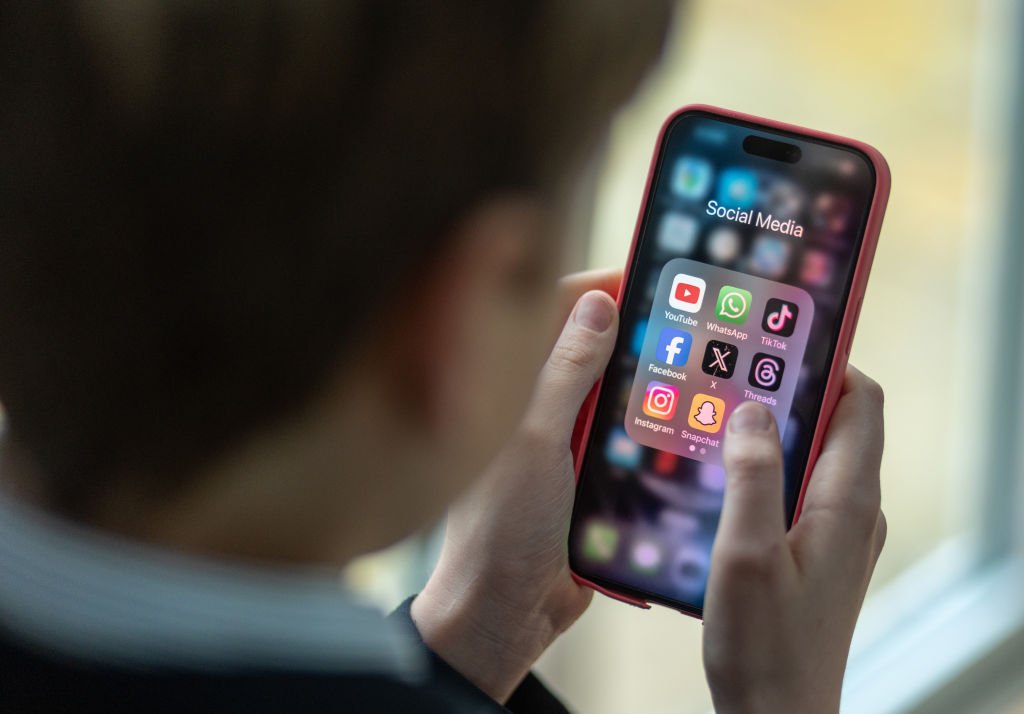
Australia has become the first country in the world to enforce a minimum age of 16 for using major social media platforms. From December 2025, platforms like Instagram, YouTube, TikTok, Snapchat, X must block or deactivate under-16 accounts. The move has triggered global debate on online safety, children’s rights, Big Tech regulation, and global policy alignment.
What Is the New Australian Law?
- The law, called the Online Safety Amendment (Social Media Minimum Age) Act, requires platforms to:
- Take “reasonable steps” to find existing under-16 accounts and deactivate them
- Prevent new accounts by under-16s, including blocking workarounds
- Provide a mechanism to correct errors if someone is wrongly included or excluded
- Face fines up to $33 million for non-compliance
- Platforms covered include Facebook, Instagram, Reddit, Snapchat, TikTok, Twitch, YouTube, X, Threads, Kick, and others that enable social interaction, user-generated content, and user-to-user linking.
- Important exclusions:
- Dating apps
- Gaming platforms
- AI chatbots (for now, though concerns exist about inappropriate interactions)
- Australia initially exempted YouTube because of educational value but reversed the exemption after evidence showed it was the most common platform for harmful content exposure among children.
Why did Australia Introduce the Ban (Rationale)?
- The government wants to protect young users from:
- Cyberbullying
- Stalking and grooming
- Harmful and hateful content
- Excessive screen-time pressures
- Algorithm-driven harmful content that affects mental health
- A national safety regulator found that over half of Australian children had faced harmful online content.
- The central idea: When children log in to social media, platform design increases exposure to risks that under-16s are not developmentally prepared to manage.
How Tech Companies Reacted?
- Tech companies publicly opposed the law but are complying.
- YouTube says removing accounts will eliminate parental controls and safety filters, making kids less safe.
- Meta (Facebook, Instagram) calls the law inefficient and believes it won’t truly improve safety.
- Snapchat argues that disconnecting teens could push them to less safe, unregulated apps.
- X raises concerns about freedom of expression and access to information for young people.
- This reveals a tension between Big Tech business models (which rely on young users) and government safety regulations.
How Australia’s Approach Differs from India?
- India does not ban children from social media.
- Under the Digital Personal Data Protection Act, 2023:
- Children = below 18 years
- Platforms must obtain verifiable parental consent before processing data
- No targeted advertising, behavioural tracking, or profiling of children
- Safety provisions are notified but not yet fully operational
- Thus:
- Australia restricts access
- India regulates usage
How the Law Works (Mechanism)?
- Platforms use age verification tools, AI-based detection, and self-declaration checks
- Under-16 users’ accounts are identified and deactivated
- Attempts to reopen accounts through VPNs, fake ages, or alternate sign-ups must be prevented
- Platforms maintain error-correction systems
- This makes Australia’s model a practical test for age-gating technology, which many countries may adopt.
Implications
- For Australia
- A new global precedent for strong online safety regulation
- Higher compliance costs for Big Tech
- Debates on children’s digital rights and freedom of expression
- For Big Tech
- Loss of millions of young users
- Need to build costly age-verification systems
- Possible shift of young users to unregulated platforms
- Global Impact
- Many countries may consider similar bans
- Raises debate on whether children’s digital safety outweighs access rights
- Accelerates global demand for stronger tech accountability
Challenges and Way Forward
| Challenges | Way Forward |
| Young users may move to unregulated apps | Develop safe, regulated digital alternatives for under-16s |
| Difficulty in accurate age verification | Build robust, privacy-preserving age-check systems |
| Restrictions may affect children’s access to information | Create safe-learning digital spaces for minors |
| Tech companies argue it will not reduce harm | Continuous monitoring and evidence-based review of outcomes |
| Global inconsistency in regulations | Develop international frameworks on children’s online safety |
Conclusion
Australia’s ban marks a major shift in global digital governance by prioritising children’s online safety over unrestricted access. As more countries review their own policies, balancing child protection, digital rights, and technological feasibility will shape the future of youth internet regulation.
| Ensure IAS Mains Question
Q. Discuss the significance of Australia’s minimum-age social media law in the global debate on online safety. How should countries balance child protection, digital rights, and the responsibilities of Big Tech? (250 words) |
| Ensure IAS Prelims Question
Q. Consider the following statements about Australia’s new social media minimum-age law: 1. Platforms must take reasonable steps to block and deactivate accounts of users under 16 years. 2. YouTube has been permanently exempted from the restrictions due to its educational value. 3. India’s data protection law requires parental consent for processing children’s data but does not ban social media access. Which of the statements are correct? a) 1 and 2 only b) 1 and 3 only c) 2 and 3 only d) 1, 2 and 3 Answer: b) 1 and 3 only Explanation Statement 1 is correct: Platforms must detect, block, and remove accounts of users under 16, prevent new sign-ups, and maintain error-correction processes. Non-compliance can attract heavy penalties. Statement 2 is incorrect: YouTube was initially exempt but the government reversed the exemption after findings showed it exposed children to significant harmful content. Statement 3 is correct: India does not ban social media for minors. Instead, it requires verifiable parental consent and prohibits tracking, profiling, and targeted ads for users under 18. |