- Recently, researchers discovered a new species of Cobra Lily – Arisaema siahaense hidden in the rugged, mist-covered mountains of Northeast India.
- About Arisaema siahaense:
- Discovered in the Siaha District of Mizoram. The region is known for steep mountainous terrain and high rainfall & misty conditions.
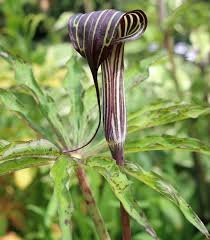
- It is commonly called cobra lilies because their flowering structure (spathe) looks like a cobra’s raised hood.
- Physical Characteristics
- It is an evergreen herb.
- It can reach a height of about 1.08 metres (around 3.5 feet).
- Its most distinctive trait is the spadix appendix — a thin structure that emerges from the flower. The appendix is exceptionally long, reaching up to 21 centimetres. It is covered with brownish-green, hair-like bristles.
- How It Differs from Related Species (found in China and Southeast Asia): It grows from a rounded tuber, not from a creeping root system. Its leaves are divided into exactly three segments, a rare and diagnostic trait.
- Origin of the Name
- The species name “siahaense” comes directly from Siaha District, where it was first discovered.
- Importantly, the naming also honours the efforts of local communities—especially families like the Kompa family—who have actively protected the biodiversity of their ancestral lands.
- Conservation Status and Threats: At present, the species is classified as Data Deficient under international assessment standards. However, scientists observed several pressures on its natural habitat:
- Road construction in forested areas
- Grazing by animals such as goats and mithuns
- Spread of invasive weed species
- If these continue unchecked, they could threaten the survival of this newly discovered plant.
FAQs
Q1. Where was Arisaema siahaense discovered?
In the mist-covered mountains of Siaha District, Mizoram, Northeast India.
Q2. Why is Arisaema siahaense called a “cobra lily”?
Its flowering structure (spathe) resembles a cobra’s raised hood.
Q3. What are the distinctive traits of Arisaema siahaense species?
It grows up to 1.08 m tall, with a spadix appendix reaching 21 cm, covered in brownish-green bristles.
Q4. How does Arisaema siahaense differ from its related species found in China and Southeast Asia?
It grows from a rounded tuber (not creeping roots) and has leaves divided into exactly three segments — a rare diagnostic feature.
Q5. What threats does Arisaema siahaense face?
Road construction, grazing by goats and mithuns, and invasive weeds threaten its fragile habitat though they are currently classified as Data Deficient.