Context
A study from South Africa has found that protective HLA-B genetic variants, which once helped improve survival and lower HIV transmission rates, are now showing a reduced impact on natural genetic selection because the widespread use of antiretroviral therapy (ART) has changed the course of the disease.
About Allele
- An allele is simply a different version of the same gene.
- These gene variants sit at the same position (locus) on a chromosome.
- Humans are diploid organisms, meaning each gene is present in two copies—one from each parent.
- The combination of these two alleles forms the genotype of an individual for a trait.
Genotype Types & Expression
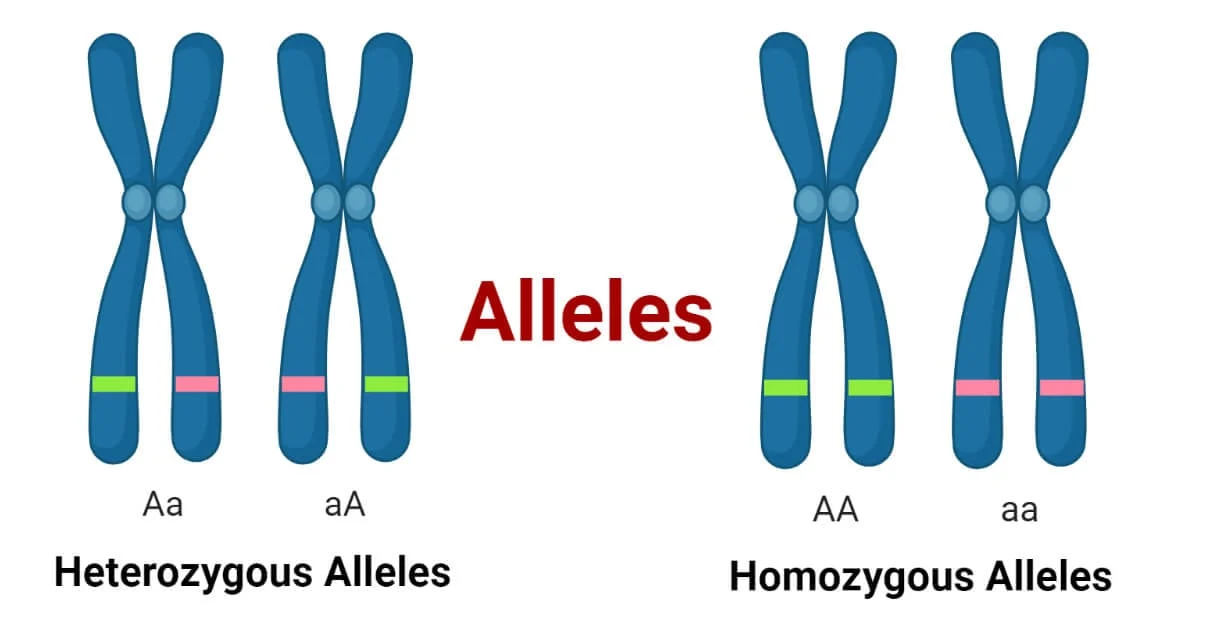
- If both alleles are the same, the condition is called homozygous.
- When the two alleles differ, it is known as heterozygous.
- The observable trait or feature produced is called the phenotype.
- In heterozygous conditions, a dominant allele can mask a recessive one, determining the visible trait.
Inheritance & Variation
- Offspring inherit a mix of genetic traits from both parents, leading to variation in characteristics.
- For example, in hair colour, dark hair often dominates over light hair, and light hair appears only if both recessive alleles are inherited.
- All traits in an organism arise from interactions between different alleles.
Change in Populations
- Genetic variation in populations is influenced by processes like mutation and crossing over.
- Environmental factors can also affect how traits and allele frequencies change over time.
- Together, these factors drive evolutionary changes in populations.