| You will learn very important aspects for following important questions for UPSC Pre/ Mains/ Interview:
1. Why did gig and platform workers protest in December? 2. Why is the 10–20 minute delivery model controversial? 3. Has quick commerce become economically and socially significant? 4. Why is regulation of gig platforms necessary? 5. Are the four Labour Codes sufficient for gig workers’ protection? 6. What are the counter-arguments against strict regulation? 7. What does the future hold for gig work amid AI and automation? |
Context
India’s gig and platform economy has expanded rapidly. While the Union government considers the four Labour Codes as a step towards protecting gig workers, recent protests by platform workers have highlighted serious concerns related to safety, income security, regulation, and the future of work.
Why did gig and platform workers protest in December?
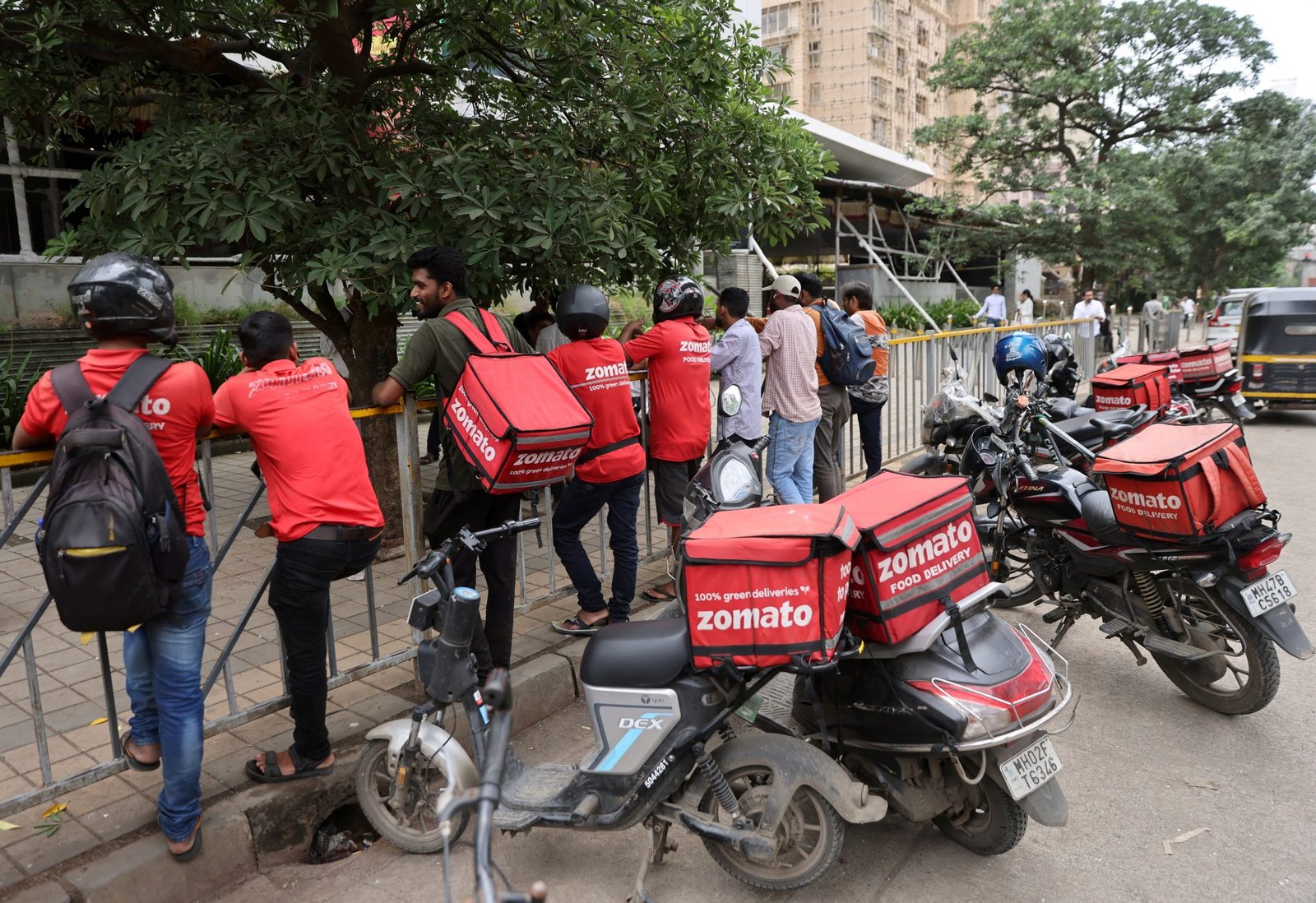
- On December 31, more than one lakh gig and platform workers across India went on strike.
- They submitted a memorandum to the Union Labour Minister demanding:
- Withdrawal of the 10–20 minute delivery model
- Greater focus on worker safety
- Protection from arbitrary penalties and account deactivations
- The protest reflected wider issues of job insecurity, unsafe working conditions, and lack of social protection.
Why is the 10–20 minute delivery model controversial?
- Nature of the Model
- Ultra-fast delivery is driven by competition among platforms, not by essential consumer needs.
- Companies adopted it to gain market share rather than improve welfare.
- Impact on Workers
- Speed is extracted from human labour, not created by technology.
- Delivery workers face:
- Time pressure
- Increased accident risks
- Unstable and unpredictable pay
- Unequal Cost Distribution
- Technology and marketing budgets are treated as fixed costs.
- Labour is treated as a flexible and adjustable variable.
- Workers bear the hidden cost of “convenience”.
Has quick commerce become economically and socially significant?
- Rapid Market Growth
- From 2024 to 2027, quick commerce is projected to grow nearly threefold.
- The sector may reach ₹1–1.5 lakh crore in value.
- Online grocery is growing at 40–50% annually.
- Employment Generation
- Platforms provide large-scale employment for low-skill workers.
- India adds nearly 20 million new workers annually but creates only about 2 million formal jobs.
- For many, gig work is the only immediate livelihood option.
- Core Dilemma
- The debate is whether insecure work is better than unemployment.
- Economic necessity has turned fast delivery into a perceived “need”.
Why is regulation of gig platforms necessary?
- Nature of Platform Control
- Platforms decide:
- Pay rates
- Task allocation
- Platforms decide:
- Incentives and penalties
- Ratings and account deactivation
- Workers are not truly independent.
- Worker Demands
- Predictable minimum income
- Fair and transparent pay structures
- Protection from sudden ID blocking
- Accident insurance and basic social security
- Transparency in algorithmic decisions
- Key Principle
- If platforms control work, they must carry legal and social obligations.
- This approach aligns with global regulatory trends.
Are the four Labour Codes sufficient for gig workers’ protection?
- Limited Coverage
- Gig workers are mentioned under the Social Security Code.
- Benefits such as insurance and maternity support are discretionary, not enforceable rights.
- Non-Mandatory Nature
- Welfare schemes depend on future government notifications and funding.
- Registration on the e-SHRAM portal does not guarantee tangible benefits like pensions or medical cover.
- Exclusion from Labour Rights
- Gig workers are not classified as employees.
- They are denied:
- Minimum wages
- Regulated working hours
- Paid leave and overtime
- Collective bargaining rights
- Algorithmic Blind Spots
- Labour Codes do not regulate:
- Algorithmic pay cuts
- Task allocation logic
- Labour Codes do not regulate:
- Automated penalties or deactivation
- No clear grievance redressal or appeal mechanism exists.
What are the counter-arguments against strict regulation?
- Risk of Killing Job Creation
- Making gig work equivalent to full-time employment may reduce platform hiring.
- High worker turnover suggests flexible labour supply.
- Investment Concerns
- Platforms are still struggling for profitability.
- Over-regulation may deter public and private investment.
- Evolving Legal Framework
- Labour Codes are still being operationalised.
- Gradual strengthening is preferred over rigid rules.
What does the future hold for gig work amid AI and automation?
- Projected Growth
- A report by NITI Aayog estimates that 2.35 crore workers may join the gig economy by 2029–30.
- Impact of AI
- AI may automate task allocation, ratings, and worker replacement.
- This could increase efficiency but reduce worker voice and security.
- Long-Term Employment Challenge
- Sustainable employment growth requires strengthening manufacturing, construction, and labour-intensive sectors.
- Quick commerce offers immediate jobs, but not long-term security.
Conclusion
The gig economy cannot remain a labour vacuum. Employment growth must be matched with enforceable social security, algorithmic accountability, and clear legal responsibility, ensuring technology enhances efficiency without eroding worker dignity.