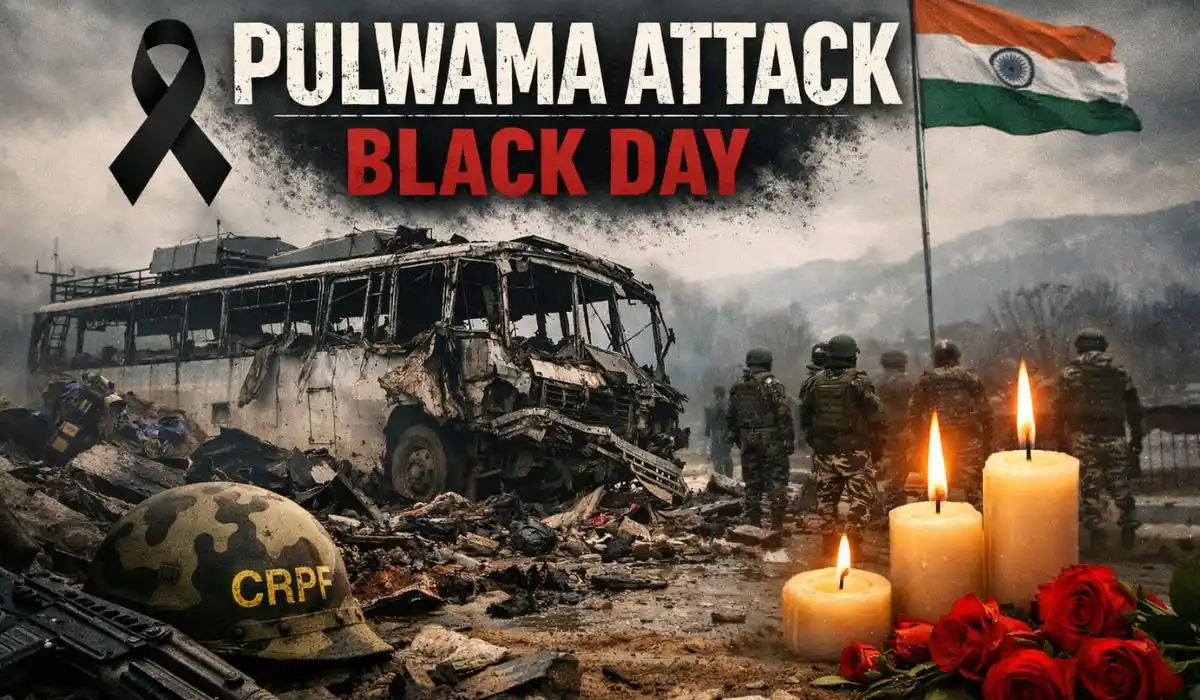
February 14, 2026, marks the seventh anniversary of the Pulwama attack, when a suicide bomber struck a convoy of 78 vehicles carrying more than 2,500 CRPF personnel along the Jammu–Srinagar National Highway in 2019; the assault killed 40 jawans and injured over 35 others, and stands as a solemn reminder of the ultimate sacrifice made by our soldiers.
The Historical Context and Background
To understand why this day is so significant, we must look at the long-standing conflict in Kashmir. Since the late 1980s, terrorism in the region has been a constant challenge, often fueled by cross-border support. Since 1989, the conflict has claimed approximately 70,000 lives, including civilians, security forces, and terrorists. It was against this backdrop of persistent tension that the tragedy of February 14, 2019, unfolded.
The black Events of February 14, 2019
On that afternoon, at approximately 3:15 PM, a massive convoy of the Central Reserve Police Force (CRPF) was moving from Jammu toward Srinagar. Because the highway had been closed for two days prior due to bad weather, a larger-than-usual group was traveling together. The convoy consisted of 78 vehicles carrying nearly 2,500 personnel.
As the convoy reached the Avantipora area in Pulwama, a local resident named Adil Ahmad Dar, who had been radicalized by terror groups, drove a vehicle filled with explosives into one of the CRPF buses. The resulting explosion was devastating. 40 brave jawans lost their lives instantly, and over 35 others were left injured. The Pakistan-based terror organization Jaish-e-Mohammed (JeM) immediately claimed responsibility for the attack.
The Conspiracy and Intelligence Alerts
The investigation later revealed a deep-rooted conspiracy. While Adil Ahmad Dar was the face of the suicide bombing, the planning was executed by Pakistan-based handlers associated with JeM. Interestingly, intelligence agencies had issued at least 11 alerts about a potential strike prior to the incident. Just two days before the attack, JeM had even released a video showing a suicide bombing in Afghanistan, warning that a similar event would take place in Kashmir. The challenge lay in the specific execution of the “lone wolf” style suicide mission using a local recruit.
The NIA Investigation and Legal Action
Following the attack, the National Investigation Agency (NIA) formed a 12-member team to conduct a forensic and technical investigation. They discovered that approximately 300 kilograms of explosives, including 80 kilograms of high-grade RDX, were used to cause such massive destruction.
The legal battle for justice has been rigorous:
- In August 2020, the NIA filed a comprehensive charge sheet against 19 accused terrorists and conspirators.
- By August 2021, security forces had successfully neutralized seven key conspirators in various operations.
- Seven other individuals involved in the logistics and planning were apprehended and brought to trial.
India’s Multi-Dimensional Response
The nation’s outrage was not met with silence. The Indian government launched a response that spanned military, economic, and diplomatic channels.
- Military Action: The Balakot Airstrike
On February 26, 2019, just 12 days after the attack, the Indian Air Force carried out a mission. Mirage-2000 fighter jets crossed the Line of Control and targeted a major JeM training camp in Balakot, located in Pakistan’s Khyber Pakhtunkhwa province. India reported that the strike neutralized 300–350 terrorists, sending a clear message that terror would no longer go unpunished.
- Economic Retaliation
India took immediate steps to hit back economically by revoking Pakistan’s Most Favored Nation (MFN) trade status. Furthermore, a 200% import duty was imposed on all Pakistani goods, effectively cutting off major trade links.
- Diplomatic Pressure and FATF
On the global stage, India moved to isolate Pakistan. One major success was ensuring that the Financial Action Task Force (FATF) kept Pakistan on its “grey list,” which restricted its access to international financial aid due to its failure to curb terror funding.
The Collective Outrage and Social Impact
The impact of Pulwama was felt in every household. Widespread protests, candlelight marches, and anti-Pakistan demonstrations occurred across the country. In a symbolic move, the Indian film and television industry imposed a complete ban on Pakistani artists, reflecting the national mood that “business as usual” could not continue while soldiers were being targeted.
Conclusion: Honoring the Martyrs
As we remember the 40 martyrs today, we must recognize that February 14th is not just a date on the calendar. It is a day of national mourning and a day of resolve. The Pulwama attack reminded the world of the resilience of the Indian security forces and the unity of the Indian people. By honoring these heroes, we recommit ourselves to the safety and integrity of our nation.