| Important Questions for UPSC Prelims / Mains / Interview
1. Why does the Union Budget 2026–27 have limited room for major policy changes despite marking a new financial year? 2. Why is nominal GDP growth more important than real GDP growth for Budget planning? 3. What does current data indicate about India’s nominal GDP growth, and why is it a concern for Budget 2026–27? 4. What is tax buoyancy, and how does weak tax buoyancy affect the government’s fiscal position? 5. What do current tax collection trends reveal about revenue mobilisation in 2025–26? 6. Why does weak private corporate investment remain a persistent challenge for India’s growth strategy? 7. How has the government attempted to revive private investment since 2019, and why have results been limited? 8. What dilemma does weak investment and revenue growth pose for the Union Budget 2026–27? 9. What broad policy signals can be expected from Budget 2026–27 given these macroeconomic constraints? |
Context
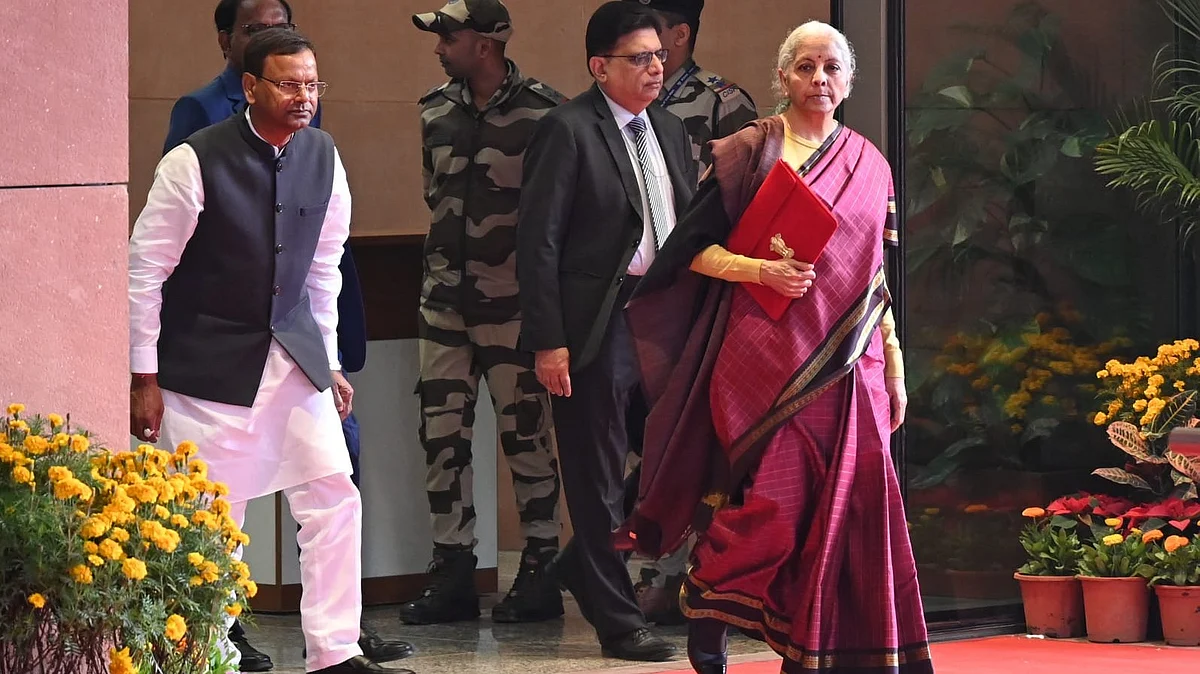
The Union Budget for 2026–27, to be presented by Finance Minister Nirmala Sitharaman, will set out the government’s growth expectations, expenditure priorities, revenue projections, and borrowing needs. However, budgets are rarely prepared on a clean slate. Existing commitments, fiscal stress from the ongoing year, and inherited economic trends significantly constrain policy choices. Current-year macroeconomic data highlight three major challenges—weak nominal GDP growth, low tax buoyancy, and sluggish private investment—that are likely to shape the contours of Budget 2026–27.
Q1. Why does the Union Budget 2026–27 have limited room for major policy changes despite marking a new financial year?
- A large portion of government spending is already committed to salaries, pensions, interest payments, and subsidies.
- These expenditures cannot be easily reduced or redesigned in the short term.
- Tax rates and structures are changed cautiously to avoid economic disruption.
- Fiscal decisions are heavily influenced by the performance of the ongoing financial year.
- Economic shocks, such as export losses due to global trade tensions, carry forward into the next Budget.
- Existing policy commitments limit the scope for radical new initiatives.
- As a result, budgets focus more on adjustment than transformation.
- Reviewing current-year data becomes crucial to understanding Budget priorities.
Q2. Why is nominal GDP growth more important than real GDP growth for Budget planning?
- Nominal GDP measures the total value of output at current prices.
- Government tax revenues are directly linked to nominal incomes and prices.
- Expenditure planning and fiscal deficit calculations are based on nominal GDP.
- Even strong real growth delivers weak revenues if inflation and prices are low.
- Slower nominal growth reduces the tax base.
- This directly limits the government’s spending capacity.
- Borrowing needs rise when nominal growth underperforms.
- Hence, nominal GDP growth is central to Budget arithmetic.
Q3. What does current data indicate about India’s nominal GDP growth, and why is it a concern for Budget 2026–27?
- India’s nominal GDP growth for the current year is estimated at around 8%.
- This is significantly lower than the 10.1% assumed in the previous Budget.
- It reflects a long-term deceleration in nominal growth.
- Slower nominal growth reduces expected tax collections.
- Fiscal space for new spending becomes constrained.
- The government faces pressure to either borrow more or cut expenditure.
- Both options have economic and political costs.
- Reviving nominal growth becomes a key Budget challenge.
Q4. What is tax buoyancy, and how does weak tax buoyancy affect the government’s fiscal position?
- Tax buoyancy measures how responsive tax revenues are to GDP growth.
- A buoyancy of 1 means taxes grow at the same rate as GDP.
- Budgets usually assume buoyancy above 1 to fund higher spending.
- Weak buoyancy means taxes grow slower than GDP.
- Revenue shortfalls widen when GDP growth also slows.
- Fiscal deficits rise if spending is not reduced.
- Borrowing requirements increase under weak buoyancy.
- Overall fiscal flexibility declines.
Q5. What do current tax collection trends reveal about revenue mobilisation in 2025–26?
- Actual tax collections are falling short of Budget estimates.
- Year-to-date tax growth is below the assumed targets.
- Tax revenue growth is even lower than nominal GDP growth.
- The Budget assumed tax buoyancy of about 1.1.
- Actual buoyancy is closer to 0.6.
- This means tax revenues are growing at roughly half the expected pace.
- Revenue stress limits spending expansion.
- Budget planning becomes more cautious as a result.
Q6. Why does weak private corporate investment remain a persistent challenge for India’s growth strategy?
- Private investment is critical for long-term growth and job creation.
- Despite strong GDP numbers, firms remain cautious.
- Sales growth has not been strong enough to justify new capacity.
- Demand recovery remains uneven across sectors.
- Global uncertainty affects investor sentiment.
- Foreign investment inflows have weakened recently.
- This puts pressure on the currency and financial markets.
- Weak investment slows future growth potential.
Q7. How has the government attempted to revive private investment since 2019, and why have results been limited?
- Corporate tax rates were sharply reduced in 2019.
- Public capital expenditure was increased to crowd in private investment.
- Production Linked Incentive (PLI) schemes lowered manufacturing costs.
- Demand-side measures like income tax cuts were introduced later.
- GST rate rationalisation aimed to boost consumption.
- However, demand recovery remained fragile.
- Firms delayed investment due to uncertain sales prospects.
- Structural investment revival has therefore been limited.
Q8. What dilemma does weak investment and revenue growth pose for the Union Budget 2026–27?
- The government must revive growth without overshooting fiscal limits.
- Revenue shortfalls restrict expansionary spending.
- Excessive borrowing risks higher interest rates.
- Cutting expenditure may weaken growth further.
- Supporting private investment requires confidence-building measures.
- External investor sentiment adds pressure on policy choices.
- The Budget must balance growth support with fiscal discipline.
- Trade-offs become unavoidable under these constraints.
Q9. What broad policy signals can be expected from Budget 2026–27 given these macroeconomic constraints?
- The Budget is likely to remain cautious rather than expansionary.
- Focus may stay on capital expenditure rather than consumption giveaways.
- Labour-intensive export sectors could receive targeted support.
- Fiscal discipline will remain a priority.
- Structural reforms may be incremental rather than radical.
- Monetary policy support will continue to complement fiscal measures.
- The Budget will aim to stabilise growth rather than transform it.
- Managing expectations will be as important as announcing policies.
Conclusion
The Union Budget 2026–27 will be shaped less by political ambition and more by economic constraints. Weak nominal GDP growth, low tax buoyancy, and sluggish private investment have narrowed fiscal space and complicated policy choices. Rather than dramatic shifts, the Budget is likely to focus on careful calibration—supporting growth while preserving fiscal stability. In this environment, reviving confidence, sustaining demand, and restoring investment momentum remain the central challenges for India’s economic policy.