

28-01-2026 Mains Question Answer
What are Biodiversity Hotspots? What are the different factors leading to biodiversity loss in these hotspots in India?
A Biodiversity Hotspot is a biogeographic region with significant levels of biodiversity that is threatened by human habitation. The concept was first introduced by Norman Myers in 1988. To qualify as a hotspot, a region must meet two strict criteria:
- Endemism: It must contain at least 1,500 species of vascular plants (>0.5% of the world’s total) as endemics.
- Threat Level: It must have lost at least 70% of its original primary vegetation.
India hosts 4 out of the 36 global biodiversity hotspots: The Himalayas, Indo-Burma (North-East India), The Western Ghats, and Sundaland (Nicobar Islands).
These hotspots harbor more than 50% of endemic plant species, making them crucial for ecological security.
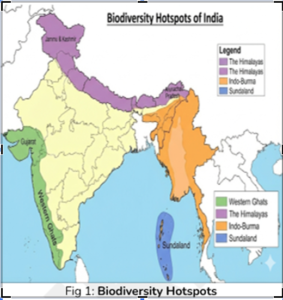
Factors Leading to Biodiversity Loss in Indian Hotspots
- Deforestation and Habitat Fragmentation
○ Expansion of agriculture, shifting cultivation, and logging in the Himalayas and North-East.
○ Encroachment in Western Ghats due to plantations, urbanization, and infrastructure projects.
- Urbanization and Industrialization
○ Mining, hydroelectric projects, and road construction disrupt fragile ecosystems.
○ Rapid urban growth in biodiversity-rich regions like Western Ghats and North-East.
- Overexploitation of Resources
○ Unsustainable harvesting of timber, medicinal plants, and non-timber forest produce.
○ Overfishing and coral reef destruction in Andaman & Nicobar Islands.
- Pollution
○ Industrial effluents, pesticides, and plastic waste degrade soil, water, and marine ecosystems.
○ Air pollution affecting sensitive Himalayan flora.
- Invasive Alien Species
○ Species like Lantana camara, Eichhornia crassipes (water hyacinth), and Prosopis juliflora outcompete native species.
- Climate Change
○ Rising temperatures and erratic rainfall patterns alter species distribution.
○ Glacial retreat in the Himalayas threatens alpine biodiversity.
- Poaching and Illegal Wildlife Trade
○ Hunting of species like hornbills, pangolins, and tigers.
○ Smuggling of orchids and medicinal plants from North-East India.
- Developmental Pressures
○ Dams, mining, and tourism projects fragment habitats in Western Ghats and Himalayas.
○ Infrastructure expansion in fragile coastal ecosystems
Consequences of Biodiversity Loss
- Extinction of endemic species.
- Loss of ecosystem services (pollination, soil fertility, water regulation).
- Increased vulnerability to climate change and natural disasters.
- Threat to indigenous communities dependent on biodiversity for livelihood.
Way Forward
- Strict enforcement of Wildlife Protection Act (1972) and Biological Diversity Act (2002).
- Expansion of Protected Areas Network and community reserves.
- Promotion of eco-sensitive zones and sustainable tourism.
- Restoration of degraded ecosystems through afforestation and invasive species control.
- Strengthening community participation via Joint Forest Management and traditional conservation practices.
- Integration of biodiversity concerns into climate adaptation and development planning.
Conclusion
India’s biodiversity hotspots are ecological treasures that safeguard climate resilience, water security, and cultural heritage. Addressing anthropogenic pressures through conservation, sustainable development, and community stewardship is essential to prevent irreversible biodiversity loss and ensure ecological sustainability for future generations.