Important questions for UPSC Pre/ Mains/ Interview:
|
Context
In December 2025, Israel formally recognised Somaliland as an independent sovereign state. This decision has altered regional geopolitics and pushed Somaliland into the centre of great-power competition in the Horn of Africa.
Q1. Why is Israel’s recognition of Somaliland geopolitically significant?
- Diplomatic Rupture
- Israel’s move breaks with the long-standing international position that treats Somaliland as part of Somalia.
- It risks encouraging other states to reconsider Somaliland’s status.
- Regional Security Risks
- The decision may intensify proxy rivalries in the Horn of Africa.
- It could further militarise the Red Sea-Gulf of Aden maritime corridor.
- Great-Power Implications
- The recognition has direct consequences for China, the United States, and Middle Eastern powers with strategic interests in the region.
Q2. Why does Israel’s move pose a major dilemma for China?
For China, Somaliland lies at the intersection of three core strategic interests:
- Protection of the “One China” Principle
- China strongly opposes any form of separatism due to its position on Taiwan.
- Security of the Red Sea Trade Route
- The Red Sea is vital for Chinese energy imports and global trade.
- Managing Great-Power Competition in Africa
- China seeks to prevent rivals from gaining strategic footholds near its overseas assets.
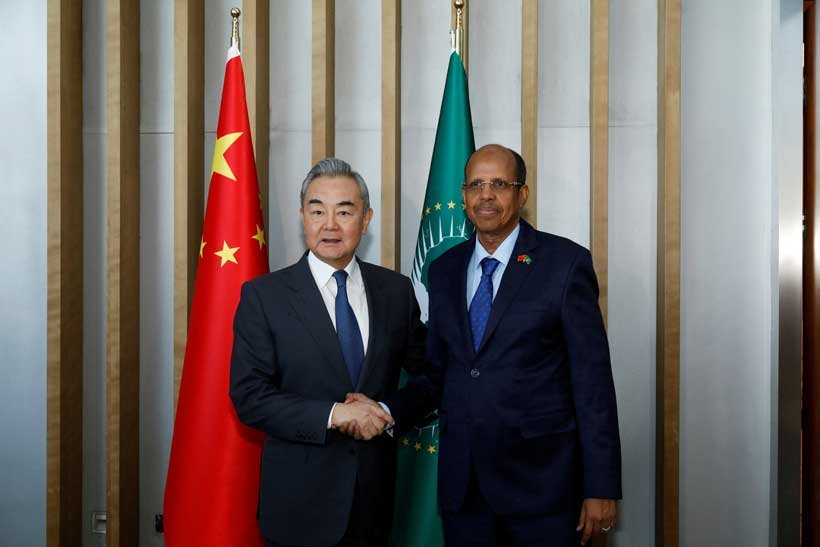
Q3. How has China officially responded to Israel’s recognition?
- China condemned Israel’s decision as legitimising separatism.
- Beijing reiterated that Somaliland is an inseparable part of Somalia.
- This stance is consistent with China’s rigid sovereignty doctrine and domestic concerns regarding Taiwan.
Q4. Why does Somaliland challenge China’s sovereignty doctrine?
- De Facto Statehood
- Somaliland has maintained internal peace, built institutions, and held elections for over 30 years.
- This contrasts sharply with Somalia’s prolonged instability.
- Limits of Rigid Sovereignty
- China does not accept internal legitimacy as a basis for statehood.
- However, Somaliland’s sustained governance exposes the practical limits of this approach.
Q5. How does the Taiwan factor deepen China’s discomfort?
- In 2020, Somaliland established official ties with Taiwan.
- Taiwan opened a representative office in Hargeisa and expanded cooperation.
- Apart from Eswatini, Somaliland is the only African entity openly aligned with Taipei.
- This directly challenges China’s diplomatic red lines.
Q6. Why is the Bab el-Mandeb region strategically crucial for China?
- The Bab el-Mandeb Strait connects the Red Sea with the Gulf of Aden.
- It is a critical maritime chokepoint under China’s Maritime Silk Road.
- China established its first overseas military base in Djibouti in 2017 to secure this route.
- Any rival security presence near this corridor threatens China’s leverage.
Q7. How could Israel’s move alter regional power dynamics?
- International legitimacy for Somaliland could transform it into:
- A logistics hub
- A security and intelligence node
- Possible backing from Israel, the UAE, and the United States would weaken China’s strategic dominance near Djibouti.
- China risks losing its monopoly influence in the western Indian Ocean region.
Q8. What strategic options are available to China?
- Diplomatic Blocking
- Use its position at the UN Security Council to prevent wider recognition.
- Hybrid Measures
- Economic pressure
- Political lobbying
- Information campaigns through Chinese media networks such as StarTimes
- Strategic Restraint
- Excessive coercion may push Somaliland closer to Taiwan and Western powers.
- Heavy-handed actions could damage China’s non-interference image.
Q9. How do wider geopolitical developments complicate China’s position?
- Middle East Politics
- China’s pro-Palestinian stance strengthens its criticism of Israel.
- However, it risks entangling Beijing in West Asian political rivalries.
- Growing Support for Somaliland
- Ethiopia’s 2024 MoU offering port access in exchange for recognition
- Rising interest in the U.S. Congress
- Tacit support from the UAE
- Each new endorsement raises the cost for China of maintaining diplomatic isolation.
Conclusion
Israel’s recognition has transformed Somaliland from a marginal entity into a focal point of great-power rivalry. For China, the challenge is to balance sovereignty principles with strategic pragmatism in a region vital to global trade and security.