Context
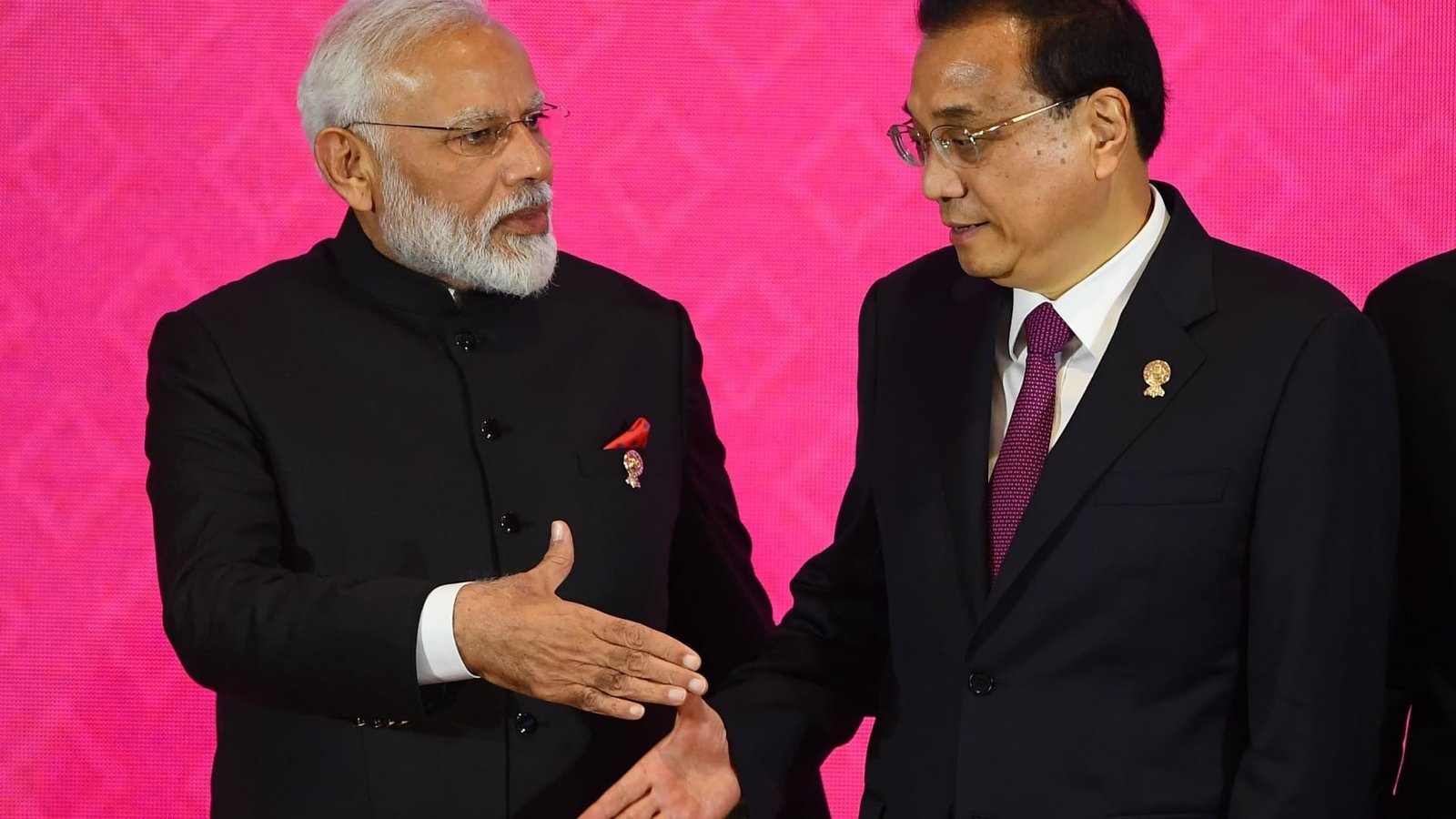
A little more than six years after India stepped away in 2019 from joining the Regional Comprehensive Economic Partnership (RCEP), India is in a position to reap the benefits such a grouping would have provided it, without exposing itself to the risks.
What is RCEP?
The Regional Comprehensive Economic Partnership (RCEP) is a comprehensive free trade agreement being negotiated between the 10 ASEAN Member States and ASEAN’s free trade agreement (FTA) partners.
Members of RCEP
RCEP includes 15 Asia-Pacific countries: the 10 ASEAN nations (Brunei, Cambodia, Indonesia, Laos, Malaysia, Myanmar, Philippines, Singapore, Thailand, Vietnam) and their five free trade partners: Australia, China, Japan, South Korea, and New Zealand.
| What are free trade agreements?
A free trade agreement is an arrangement where two or more countries commit to opening up their markets to one another by lowering or removing tariffs, quotas, and other trade barriers, making it easier for goods and services to move between them. |
Significance of RCEP:
- It is the world’s largest free trade bloc comprising world’s 30% GDP
- Boosts Asia-Pacific economic integration by cutting tariffs
- It is streamlining supply chains with unified rules of origin.
- It is increasing market access for goods, services, and investment among 15 member countries.
Why did India withdraw from RCEP?
- Growing Trade Deficits: Since the implementation of RCEP, trade deficits have risen significantly for several member nations.RCEP would have exacerbated India’s trade deficit, as seen in other countries.
- For Example: ASEAN countries collectively run a significant and growing trade deficit with China, which acts as their dominant trading partner and primary source of imports, reaching around $164 billion in 2024
- Dumping of Chinese Goods: India was concerned of an influx of cheap Chinese products, which could harm domestic industries. The country’s trade deficit with China has already expected to reach USD 106 billion in 2025-26
- Protection of Domestic Industry and Rules of Origin Norm:
- India’s withdrawal from RCEP was partly due to concerns over protection of domestic industries, particularly in sectors like dairy and steel, where tariff reductions from 35% to zero would expose them to competition from Australia and New Zealand.
- There were concern over trade deflection, fearing Chinese goods would enter India tariff-free by being routed through other RCEP nations with weaker Rule of origin, bypassing India’s higher tariffs and hurting its domestic industries, especially given the large existing trade deficit and lack of strong safeguards like auto-trigger mechanisms.
- China Plus One” Strategy: India’s decision aligns with the global trend of the “China Plus One” strategy, which aims to reduce over-reliance on China by diversifying supply chains and trade relationships.
| What is the rule of origin?
Rules of Origin (RoO) are the criteria countries use to determine a product’s “economic nationality,” defining where it was made, crucial for applying trade policies like tariffs (lowering them under FTAs or raising them for anti-dumping). |
How India is Balancing this Withdrawal?
- India and New Zealand in December 2025 announced the conclusion of negotiations on a Free Trade Agreement (FTA).
- Once the FTA comes into act, India would have such FTAs with all the countries in the RCEP except for China.
- Trade experts say this strategy has given India market access without surrendering tariff control to China.
- India is strengthening domestic sectors (MSMEs, dairy, manufacturing) via initiatives like PLI, Make in India, etc.
- India is engaging in new frameworks like IPEF(Indo-Pacific Economic Framework).
- India is keeping the door open for future RCEP entry if concerns (China factor, Rules of Origin, import surges) are addressed, focusing on strategic autonomy over full regional integration for now.
Would joining RCEP be beneficial for India in the long run?
Long-term strategic and economic perspective, joining RCEP could be both an opportunity and a challenge, depending on India’s preparedness potential Long-Term Benefits for India
- Integration into Asian Supply Chains: RCEP could help India integrate with East Asian value chains, especially in manufacturing, electronics, and pharmaceuticals, which are currently dominated by China and ASEAN.
- Market Access: Membership would provide preferential access to a market covering nearly one-third of global GDP and population, boosting exports of services, IT, and skilled labour.
- Strategic Presence in Indo-Pacific: Joining RCEP would strengthen India’s economic footprint in the Indo-Pacific, complementing its Act East Policy and preventing marginalisation in regional trade architecture.
- Trade Facilitation: Common rules of origin under RCEP would simplify trade procedures and reduce transaction costs for Indian exporters.
Conclusion
India’s RCEP withdrawal was a strategic recalibration to safeguard domestic industry, maintain tariff autonomy, and pursue flexible regional engagement for long-term economic resilience.
| Ensure IAS Mains Question
Q. “The Regional Comprehensive Economic Partnership (RCEP) reflects a shift in the centre of gravity of global trade towards Asia.” Discuss the significance of RCEP and examine its implications for India. (250 words) |
| Ensure IAS Prelims Question
Q. With reference to the Regional Comprehensive Economic Partnership (RCEP), consider the following statements: 1. RCEP is a free trade agreement involving ASEAN and its FTA partners. 2. India is a founding member of RCEP. 3. RCEP has a common set of rules of origin applicable to all its members. Which of the statements given above is/are correct? a) 1 and 3 only b) 1 only c) 2 and 3 only d) 1, 2 and 3 Answer: a) 1 and 3 only Explanation: Statement 1 is correct: RCEP was negotiated under the ASEAN framework and includes 10 ASEAN countries, and 5 of ASEAN’s FTA partners: China, Japan, South Korea, Australia, and New Zealand. Statement 2 is incorrect: India participated in negotiations from 2012 but withdrew in 2019 due to concerns over: ● Rising trade deficits ● Inadequate safeguards against import surges ● Impact on agriculture and MSMEs ● Therefore, India is neither a founding member nor a signatory. Statement 3 is correct: One of RCEP’s key features is a single, unified rule of origin, which: ● Allows products made using inputs from multiple RCEP countries to qualify for preferential tariffs ● Simplifies regional value chains ● Reduces compliance costs for exporters |