Context
Violence erupted in Karbi Anglong and West Karbi Anglong districts of Assam in December 2025 following long-standing tensions over land rights and eviction from protected grazing lands.
What is the chronological background of the Karbi Anglong dispute related to land rights under the Sixth Schedule?
- Constitutional and Administrative Setting
- Karbi Anglong and West Karbi Anglong are tribal-majority hill districts.
- They are governed under the Sixth Schedule of the Constitution, which provides:
- Special protection to tribal land
- Self-governance through autonomous councils
- Administrative authority in these areas is exercised by the Karbi Anglong Autonomous Council (KAAC).
- Historical Roots of Tension
- Since the late 1980s, parts of Karbi Anglong have witnessed ethnic mobilisation and insurgency, primarily centred on demands for:
- Greater political autonomy
- Protection of tribal land and identity
- Over time, while armed activity declined, land-related grievances remained unresolved.
- A key source of tension has been the settlement of non-tribal communities on certain categories of protected land.
- Since the late 1980s, parts of Karbi Anglong have witnessed ethnic mobilisation and insurgency, primarily centred on demands for:
- Nature of disputed land (PGR and VGR)
- Professional Grazing Reserve (PGR) and Village Grazing Reserve (VGR) lands are areas:
- Set aside mainly during the colonial period
- Intended for livestock grazing and community use
- Professional Grazing Reserve (PGR) is land reserved for grazing by professional cattle rearers, while Village Grazing Reserve (VGR) is land reserved for the grazing needs of a village.
- These lands are legally restricted from permanent settlement.
- Tribal organisations have repeatedly raised concerns about encroachment on these lands.
- Settlers living on such land argue that they have resided there for several decades.
- Professional Grazing Reserve (PGR) and Village Grazing Reserve (VGR) lands are areas:
- Events leading up to the present unrest
- In February 2024, protests were held by local tribal organisations demanding eviction from PGR and VGR lands.
- During this period, KAAC authorities stated that a large number of families were residing on protected grazing land in certain administrative areas.
- Eviction plans were not implemented due to a Public Interest Litigation (PIL) pending before the Gauhati High Court, with authorities citing the risk of contempt of court.
What was the immediate build-up to the violence in December 2025 related to hunger strike and removal of protestors?
- Hunger strike at Phelangpi
- In early December 2025, a hunger strike (fast unto death) began at Phelangpi in West Karbi Anglong.
- Nine protesters participated, demanding:
- Eviction of alleged encroachers from PGR and VGR lands within KAAC areas
- The protest continued for more than two weeks, drawing local attention.
- Removal of protesters from the site
- On December 23, 2025, the hunger-striking individuals were removed from the protest site.
- According to police officials, they were taken to Guwahati for medical treatment, citing concerns over their deteriorating health after prolonged fasting.
- However, among sections of the local population, there was a perception that the protesters had been detained.
How did the violence break out and unfold, involving arson and clashes?
- Following the removal of the protesters, tensions escalated rapidly.
- Misunderstandings and rumours contributed to:
- Stone-pelting
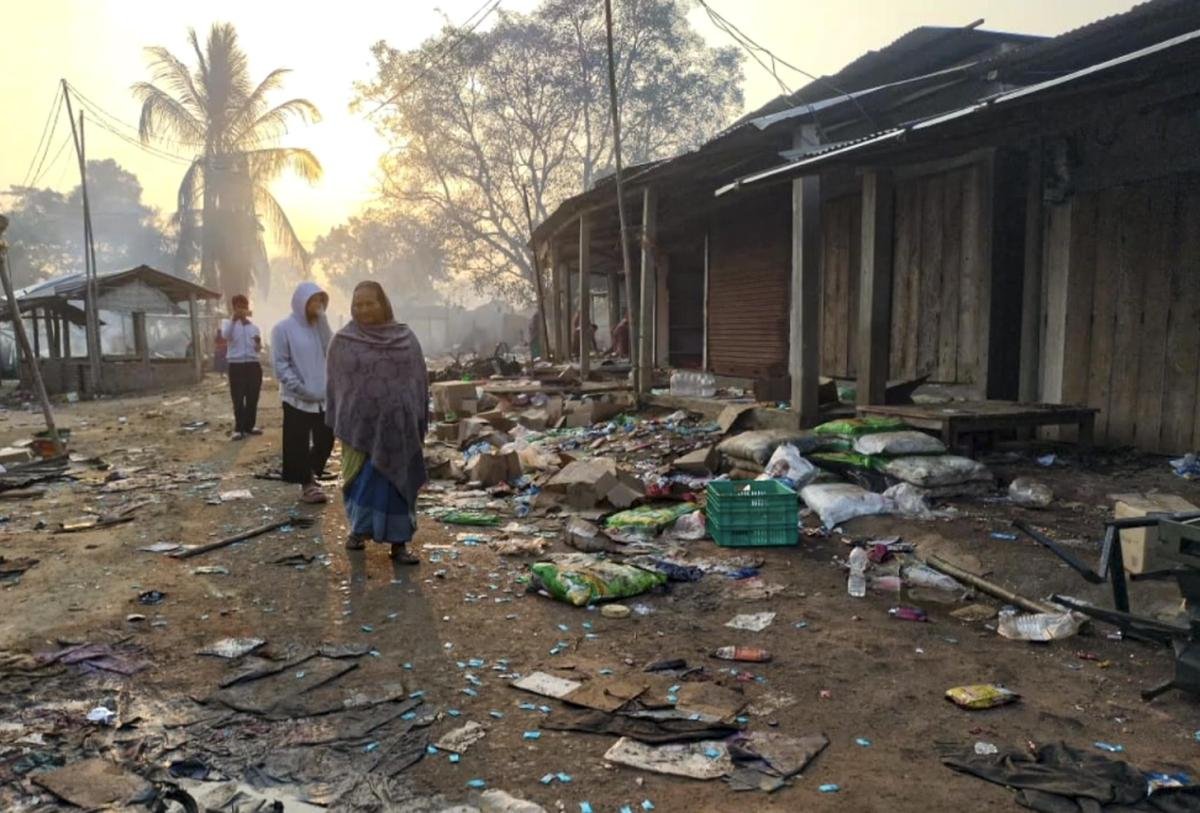
- Arson of shops and market areas
- On the preceding day, the ancestral residence of a senior KAAC office- holder in Dongkamukam was set on fire.
- Clashes in the Kheroni area led to:
- Two deaths
- Injuries to several people, including police personnel
What administrative response was taken by the State, including security deployment, internet suspension, and prohibitory orders?
- Security forces were deployed to restore order.
- Mobile internet services were suspended in Karbi Anglong and West Karbi Anglong.
- Prohibitory orders were imposed to prevent further violence.
What are the underlying causes of repeated unrest, including land disputes, tensions and legal delays in Sixth Schedule areas?
- Unresolved land disputes involving protected grazing lands
- Tension between:
- Tribal land protections under the Sixth Schedule
- Long-term settlement claims
- Legal delays due to ongoing court proceedings
- High sensitivity surrounding land, identity, and autonomy in tribal areas
What is the way forward through administrative, legal, and social & political measures to prevent such conflicts?
- Administrative Measures
- Authorities should ensure clear communication during protests and law-and-order actions to prevent rumours and misunderstandings.
- District administration and autonomous council officials must adopt early-warning and conflict-management mechanisms in sensitive areas.
- Temporary measures such as internet suspension should be used proportionately and reviewed regularly.
- Strengthening coordination between State government, KAAC, and district police is essential for timely response.
- Legal Measures
- Pending land-related cases, especially involving PGR and VGR lands, should be fast-tracked in courts to reduce prolonged uncertainty.
- Clear and uniform guidelines on eviction procedures in Sixth Schedule areas should be framed, ensuring compliance with court orders.
- Any eviction or rehabilitation action must strictly follow due process of law to avoid contempt and unrest.
- Social and Political Measures
- Dialogue and consultation with all stakeholders, including tribal bodies and long-term settlers, should be institutionalised.
- Peace committees and local mediation mechanisms can help defuse tensions before they escalate.
- Rehabilitation and livelihood alternatives should be explored for affected families to ensure social stability.
- Greater public awareness about the legal status of grazing lands can reduce misinformation.
Conclusion
The Karbi Anglong violence was immediately triggered by developments surrounding a hunger strike over eviction from protected grazing lands, but it is rooted in decades-old issues of land rights, autonomy, and governance under the Sixth Schedule. The episode highlights the need for legal clarity, transparent communication, and sustained dialogue to prevent misunderstandings from escalating into violence in constitutionally protected tribal regions.
| Ensure IAS Mains Question
Q. Assam’s Karbi Anglong violence highlights the complex interaction between tribal land rights, autonomous governance under the Sixth Schedule, and long-term settlement claims. Examine the immediate causes and historical background of the dispute, and suggest measures to prevent such conflicts in the future. (250 words) |
| Ensure IAS Prelims Question
Q. With reference to the Karbi Anglong Autonomous Council (KAAC) and the recent violence in West Karbi Anglong, consider the following statements: 1. Karbi Anglong is governed under the Sixth Schedule of the Constitution, which provides special protection to tribal land and self-governance. 2. Professional Grazing Reserve (PGR) and Village Grazing Reserve (VGR) lands are meant for permanent residential settlement. 3. Eviction drives in Sixth Schedule areas can be carried out even when related cases are pending before the High Court. Which of the statements given above is/are correct? [A] 1 only [B] 1 and 2 only [C] 2 and 3 only [D] 1, 2 and 3 Answer: [A] 1 only Explanation: Statement 1 is correct: Karbi Anglong comes under the Sixth Schedule, which provides constitutional safeguards for tribal land and allows governance through autonomous councils like KAAC. Statement 2 is incorrect: PGR and VGR lands are reserved grazing lands, not meant for permanent settlement. Statement 3 is incorrect: Carrying out evictions while a related case is pending before the High Court can amount to contempt of court and is generally avoided. |