Context
In November 2025, the Supreme Court of India settled on a uniform definition of the Aravalli hills and ranges and paused the grant of fresh mining leases across Delhi, Haryana, Rajasthan, and Gujarat. The decision followed concerns over excessive and illegal mining and the ecological degradation of the Aravalli range.
What is the Aravalli Range and Its Significance?
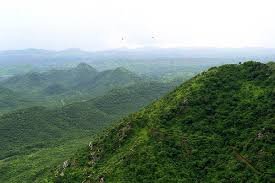
- The Aravalli Range is India’s oldest mountain range, nearly two billion years old.
- It stretches for about 650 km, from Delhi to Gujarat.
- It acts as a natural ecological barrier, preventing the eastward spread of the Thar Desert into Haryana, Rajasthan, and western Uttar Pradesh.
- The range plays a key role in:
- Preventing desertification of the Indo-Gangetic Plain
- Climate regulation and biodiversity support
- Groundwater recharge and maintenance of aquifers
- It is the source of important rivers such as the Chambal, Sabarmati, and Luni.
- The region is rich in minerals like sandstone, limestone, marble, granite, lead, zinc, copper, gold, and tungsten.
- While mining has existed historically, the last four decades saw excessive and often illegal quarrying, leading to: Falling groundwater levels, poor air quality and ecological damage.
- India is also bound by the UN Convention to Combat Desertification (UNCCD) to protect vulnerable ecosystems like the Aravallis.
Why is Protection of the Aravalli Range Necessary?
- Unregulated mining weakened the range’s ability to stop desertification.
- Illegal stone and sand mining caused irreversible ecological damage.
- Groundwater recharge declined sharply in surrounding regions.
- Different States followed different definitions of the Aravallis, allowing mining through legal loopholes.
- Without intervention, continued degradation would threaten food security, water security, and climate stability in northern India.
How the Aravalli Range is Being Protected?
- Judicial Intervention on Mining
- Since the early 1990s, the Environment Ministry restricted mining to sanctioned projects, but rules were widely violated.
- In 2009, the Supreme Court imposed a blanket mining ban in Faridabad, Gurugram, and Mewat (Haryana).
- In May 2024, the Court:
- Stopped new mining leases and renewals in the Aravalli range.
- Asked the Central Empowered Committee (CEC) to examine the issue in detail.
- Based on CEC recommendations, the Court passed a detailed order in November 2025.
- Central Empowered Committee (CEC) Recommendations: The CEC suggested a comprehensive and scientific approach, including:
- Scientific mapping of the entire Aravalli range across States
- Macro-level environmental impact assessment of mining activities
- Complete prohibition of mining in ecologically sensitive zones such as:
- Protected forests and wildlife habitats
- Water bodies
- Tiger corridors
- Aquifer recharge zones
- Areas within the National Capital Region (NCR)
- Strict regulation of stone-crushing units
- No new mining leases or renewals until mapping and assessments are completed.
- Need for a Uniform Definition of the Aravallis
- States used inconsistent criteria, enabling mining in fragile areas.
- The Forest Survey of India (FSI) earlier used slope-based and buffer- based definitions (2010).
- To resolve confusion, the SC set up a committee including: Environment Ministry, FSI, Geological Survey of India, State Forest Departments and CEC.
- In October 2025, the committee submitted its findings.
- The Court accepted the definition that only hills above 100 metres would be considered part of the Aravalli range.
- While concerns were raised that this may exclude lower hills, the Court held the definition to be more inclusive and workable.
- Other Supreme Court Directions
- The Court ordered the preparation of a Management Plan for Sustainable Mining (MPSM) for the entire Aravalli range.
- The plan must:
- Identify no-mining zones
- Specify areas where limited, tightly regulated mining may be allowed
- Map wildlife corridors and sensitive habitats
- Assess cumulative ecological impacts
- Determine ecological carrying capacity
- Provide for restoration and rehabilitation
- Why Mining Was Not Completely Banned
- The Court observed that total bans often lead to illegal mining and sand mafias.
- Hence, it adopted a calibrated approach:
- Existing legal mining continues under strict regulation
- New mining is paused until scientific planning is completed
- Ecologically sensitive areas remain permanently off-limits
Aravalli Green Wall Initiative
- In June 2025, the Centre launched the Aravalli Green Wall Project.
- Aim: Expand green cover in a 5-km buffer zone across 29 districts in Gujarat, Rajasthan, Haryana, and Delhi.
- Target: Help restore 26 million hectares of degraded land by 2030.
Implications of the Decision
- Strengthens protection against desertification and groundwater depletion.
- Brings uniformity and clarity across States.
- Balances environmental protection with economic realities.
- Reinforces India’s commitment under international environmental agreements.
- Encourages science-based and sustainable mining practices.
Challenges and Way Forward
| Challenges | Way Forward |
| Illegal mining and weak enforcement | Strengthen monitoring, surveillance, and penalties |
| Conflicting State interpretations | Implement the SC’s uniform definition strictly |
| Pressure for mineral extraction | Prioritise ecological carrying capacity |
| Risk of mining mafias | Regulated mining with transparency and accountability |
| Degraded ecosystems | Restore forests through projects like the Aravalli Green Wall |
Conclusion
Protecting the Aravalli range requires scientific planning, strict regulation, and ecological restoration. The Supreme Court’s balanced approach marks a crucial step toward safeguarding northern India’s environmental and water security.
| Ensure IAS Mains Question
Q. Explain the ecological significance of the Aravalli range. Discuss the role of the Supreme Court in ensuring its protection while balancing developmental needs. (250 words) |
| Ensure IAS Prelims Question
Q. Consider the following statements regarding the Aravalli Range: 1. The Aravalli Range acts as a barrier against the spread of the Thar Desert. 2. The Supreme Court has imposed a permanent and complete ban on all mining activities in the Aravallis. 3. The Aravalli Range is the source of rivers such as Chambal and Sabarmati. Which of the statements are correct? a) 1 and 3 only b) 1 and 2 only c) 2 and 3 only d) 1, 2 and 3 Answer: a) 1 and 3 only Explanation Statement 1 is correct: The Aravallis prevent desertification of the Indo-Gangetic plains. Statement 2 is incorrect: The Court has paused new mining but allowed existing legal mining under regulation. Statement 3 is correct: Rivers like Chambal and Sabarmati originate in the Aravalli range. |