Context
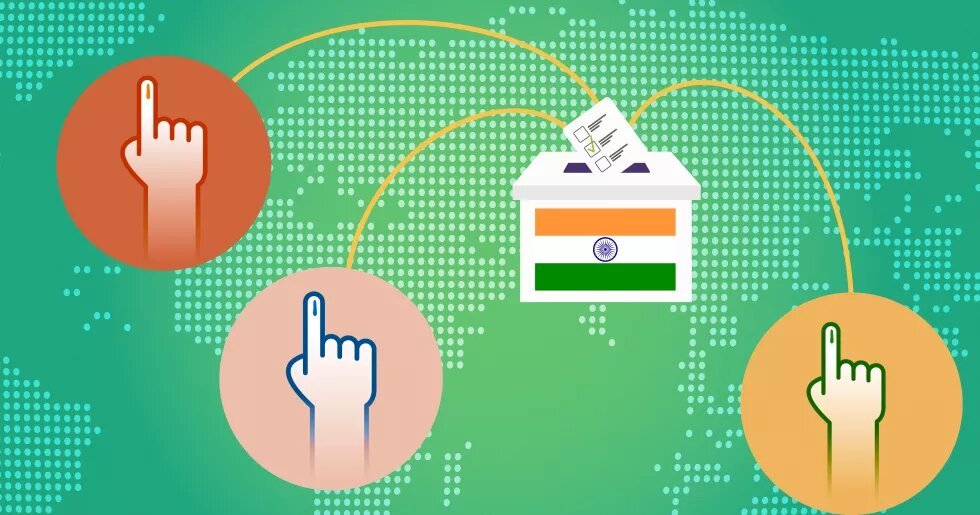
- The Election Commission of India (ECI) has initiated a Special Intensive Revision (SIR) of electoral rolls, starting with Bihar.
- The move is justified on the grounds of rapid migration and duplicate voter registrations.
- Similar debates are unfolding globally, especially in the United States, where voter lists, citizenship proof, and migration have become politically contentious.
- These developments highlight the growing tension between citizenship, mobility, voting rights, and democracy.
Citizenship and the Assumption of Territorial Residence
- Citizenship is traditionally linked to residence within a clearly defined territorial boundary, where individuals are expected to live and participate politically.
- Voting rights, welfare entitlements, and political representation are structured around the assumption that citizens remain settled in one place.
- Migration, whether internal or international, disrupts this assumption by separating physical residence from legal and political identity.
Why Migration Creates Governance and Electoral Challenges
- Migrants often move for education, employment, marriage, or safety, but electoral systems struggle to keep pace with these movements.
- Some individuals remain registered as voters in their place of origin while residing elsewhere, increasing the possibility of duplicate entries.
- Others lose the practical ability to vote because voting rights are tied to a fixed polling booth based on ordinary residence.
- These administrative gaps generate public anxiety about electoral integrity and political manipulation.
Global Trends in Migration
- The proportion of migrants in the global population has remained relatively stable over decades, but the absolute number of migrants has increased sharply.
- The number of people living outside their country of birth rose from around 154 million in 1990 to over 300 million by 2024.
- This growth has occurred faster than overall population growth, intensifying political and social pressures in host countries.
Migration and Politics in Developed Democracies
- Many developed countries have witnessed a significant rise in foreign-born populations, reshaping electoral politics.
- In the United States, about 14–15% of the population is foreign-born, while the United Kingdom has seen this share rise to around 16%.
- Countries like Canada and Australia have even higher proportions, with Australia having nearly one-third of its population born overseas.
- Immigration has become one of the top electoral issues in most developed democracies, contributing to the rise of nativist and populist political movements.
Temporary Labour and Restricted Political Rights
- Wealthy countries increasingly seek migrant labour without granting full political membership.
- Migrants are often encouraged to work temporarily and leave rather than settle permanently and claim citizenship.
- Examples include H-1B workers in the United States, migrant workers in Gulf Cooperation Council countries, and foreign labour regimes in Singapore.
- These models create a class of workers who contribute economically but lack political voice.
India’s Migration Landscape
- India sends migrants abroad and experiences large-scale internal migration as well.
- There are approximately 4 million Overseas Indians, of whom 15.8 million are Indian citizens and 19.6 million are Persons of Indian Origin.
- Internal migration within India is extensive, with migrants accounting for about 31% of the population in 2001 and rising to 38% by 2011.
- The majority of internal migrants are women who migrate due to marriage, while male migration is largely driven by economic reasons and involves longer distances.
Electoral Implications of Internal Migration
- Voting rights in India are linked to the place where a citizen is ordinarily resident, which creates difficulties for migrant populations.
- The Special Intensive Revision exercise not only determines voter eligibility but also decides the geographical location where a person can vote.
- Migrant-receiving States such as Maharashtra and Kerala gain political weight, while migrant-sending States like Bihar may lose influence.
- These shifts have long-term implications for national politics, particularly during delimitation.
Urban Transformation and Identity Politics
- Migration has altered the demographic composition of major cities, affecting traditional identity-based politics.
- In Mumbai, for example, Marathi speakers now form less than 40% of the population, while Hindi speakers constitute around 30%.
- As a result, nativist political movements have weakened, and political parties increasingly field candidates from migrant communities.
- Electoral strategies are adapting to reflect changing population realities.
Overseas Indians and Voting Rights
- Indian citizens living abroad are allowed to register as voters under the Representation of the People (Amendment) Act, 2010.
- However, they must be physically present in India to exercise their vote, which limits effective participation.
- A petition before the Supreme Court argues for remote voting, stating that the current system grants a right without meaningful access.
- The issue raises broader questions about political equality and the nature of citizenship in a mobile world.
State Policies and Domicile Laws
- Government policies have also shaped internal migration patterns, including changes to domicile rules.
- In Jammu and Kashmir, domicile rules were relaxed in 2020, allowing non-locals to gain residency rights after meeting certain criteria.
- Critics argue that such changes may alter demographic and political balances, while the government maintains they promote development and integration.
- Domicile laws in other States similarly restrict access to education and jobs, reinforcing regional identities.
Migration, Culture and Social Change
- Migrants carry languages, beliefs, customs, and political attitudes with them, influencing host societies.
- Historical migration played a key role in spreading religious practices, shaping languages, and expanding cultural boundaries.
- Contemporary migration continues this process, reshaping national identity and political behaviour.
- Cultural practices, festivals, and linguistic patterns in many countries reflect these migratory influences.
Birthright Citizenship Under Strain
- Migration has challenged the idea of birthright citizenship in countries where it was once unquestioned.
- In the United States, attempts have been made to reinterpret the 14th Amendment to restrict citizenship by birth.
- India has also amended its citizenship laws to deny citizenship by birth to children of illegal immigrants.
- These changes signal a shift towards more conditional and regulated forms of citizenship.
Future Implications for India
- Census 2027 is expected to capture the full scale of migration after nearly two decades, revealing its demographic and political impact.
- Delimitation will redistribute parliamentary seats based on population changes, reshaping political power across States.
- Electoral roll revisions, migration patterns, and citizenship rules will collectively redefine democratic participation in India.
Challenges and Way Forward
| Challenges | Way Forward |
| Duplicate and inaccurate voter rolls | Use technology while ensuring due process and transparency |
| Migrants losing effective voting rights | Enable remote or absentee voting with safeguards |
| Politicisation of migration | Base policies on data, not populist narratives |
| Federal tensions over representation | Ensure fair delimitation respecting demographic realities |
| Exclusion of vulnerable groups | Balance electoral integrity with inclusive democracy |
Conclusion
Migration is fundamentally reshaping citizenship, voting rights, and democratic politics in India and across the world. While measures such as electoral roll revision aim to protect electoral integrity, they must be balanced against the risk of voter exclusion. The central challenge lies in ensuring that mobility does not lead to political invisibility. A democratic system must adapt to population movement while preserving inclusiveness, fairness, and trust in institutions.
| EnsureIAS Mains Question
Q. Migration is increasingly challenging the traditional link between citizenship, territory and political participation. Discuss this statement in the context of internal migration, electoral roll revision, and voting rights in India. (250 Words) |
| EnsureIAS Prelims Question
Q. Consider the following statements regarding migration and electoral politics in India: 1. Internal migration affects the geographical location where a citizen can exercise the right to vote. 2. The Special Intensive Revision (SIR) of electoral rolls is intended to address issues arising from population mobility and duplicate voter registrations. 3. Indian citizens residing abroad are allowed to vote remotely from their country of residence. Which of the statements given above are correct? Answer: a) 1 and 2 only Explanation: Statement 1 is correct: In India, the right to vote is linked to the place where a citizen is ordinarily resident. Internal migration therefore determines the polling booth and constituency in which a person can exercise the franchise. Statement 2 is correct: The Special Intensive Revision of electoral rolls is undertaken to address challenges created by rapid migration, such as duplicate voter entries and outdated residential information, in order to improve electoral roll accuracy and integrity. Statement 3 is incorrect: Indian citizens residing abroad are permitted to enrol as voters, but they are required to be physically present in India to cast their vote. Remote or overseas voting facilities are not currently allowed under law. |