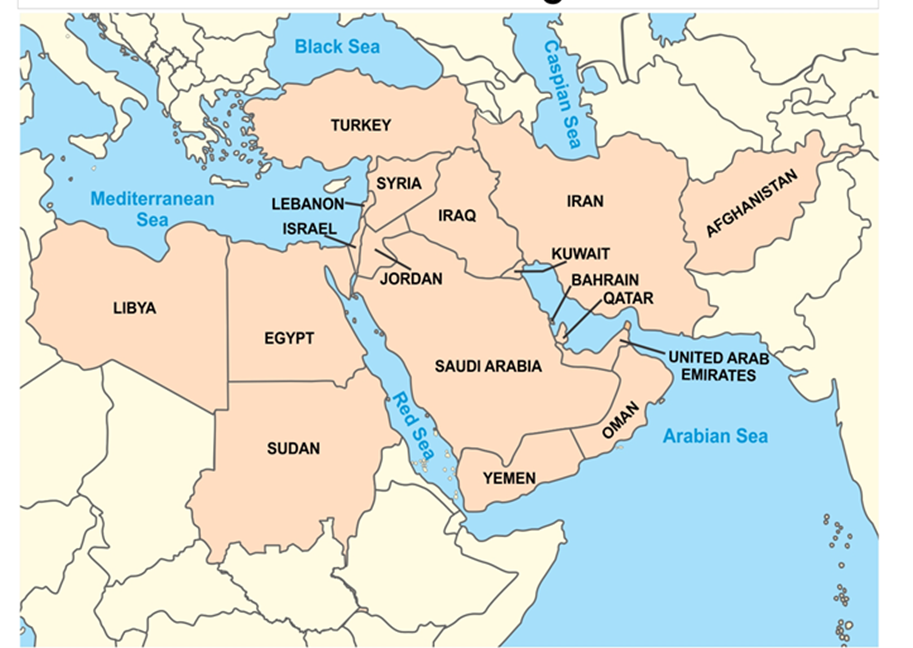
The West Asian region is once again facing violence, especially due to the Israel-Hamas conflict and rising tensions involving Iran and Hezbollah. This turmoil threatens to change global markets and international relationships, with significant effects for India in areas like trade, energy security, and the safety of its expatriates.
Key Issues in West Asia:
- Escalating Conflicts:
- Recent violence has attracted global attention, particularly Israel’s military actions against Hezbollah in Lebanon. This situation marks a serious increase in conflict, raising worries about regional stability.
- In response to the growing risks, the Indian government has advised its citizens to avoid traveling to Lebanon, where over 4,000 Indian nationals work mainly in construction and agriculture. The government is closely watching the situation and urging Indians to leave as soon as possible.
- Diplomatic Relations:
- India has a significant diplomatic history in Lebanon, as it was one of the few countries to keep its embassy open during Lebanon’s civil war from 1975 to 1990. India has built strong ties with Lebanon, particularly through its support for the Palestinian cause, putting it in a delicate position amid rising tensions between Israel and Hezbollah.
- The support Hezbollah receives from Iran complicates matters further, involving various regional players and threatening overall economic stability in West Asia.
Impact on India’s Trade and Logistics
- Trade Disruptions:
- One immediate effect of the rising tensions is the negative impact on global trade. West Asia is a key logistics hub, especially for oil and other goods.
- According to the Federation of Indian Export Organisations (FIEO), the Iran-Israel conflict poses significant risks to important shipping routes, especially the Strait of Hormuz, which is crucial for oil shipments. Any disruptions in these shipping lanes could lead to higher costs, delays, and increased overall transportation expenses.
- Economic Ramifications:
- India’s trade with countries involved in the conflict—Israel, Jordan, Lebanon, and Iran—has already been affected.
- For example, the Global Trade Research Initiative (GTRI) reports that India’s exports to Israel dropped significantly, with a 63.5% decline noted between January and July 2024. Trade with Jordan also fell by 38.5%, while exports to Lebanon saw a 6.8% drop.
- These declines in trade are a direct result of the uncertainty and risks posed by the ongoing conflict, impacting important sectors such as textiles, electronics, agriculture, and oil.
- India’s trade with countries involved in the conflict—Israel, Jordan, Lebanon, and Iran—has already been affected.
Oil Prices and Economic Strain
- Rising Oil Costs:
- The situation in West Asia is particularly critical for India due to its heavy reliance on oil imports, with over 80% of its oil sourced from this region. The Israel-Hamas conflict has already led to an increase in global oil prices, with Brent crude reaching $92.2 per barrel, the highest since October 2023.
- Although Indian consumers have not yet faced significant price increases at fuel stations, oil retailers are experiencing shrinking profit margins as crude prices rise.
- Broader Economic Effects:
- Higher oil prices could worsen India’s fiscal and current account deficits, creating inflationary pressures. Rising oil prices would lead to higher government subsidy costs and increase expenses for industries that depend on oil and gas.
- Additionally, the rising cost of fertilizers—important for India’s agriculture—could have further negative effects on the economy.
- Disruption of Global Supply Chains:
- Global supply chains that rely on stable shipping routes through West Asia are also at risk. The increased threat of attacks on oil tankers and merchant ships has already driven up shipping rates, complicating international trade.
- As shipping routes to Europe and the United States become less reliable, the cost of importing goods into India could rise, affecting prices across various sectors, from electronics to everyday consumer items.
Risks to Expatriates and Remittances
- Vulnerability of Indian Workers:
- West Asia is home to millions of Indian expatriates, especially in the Gulf Cooperation Council (GCC) countries. While nations like Saudi Arabia, the UAE, and Qatar have so far remained uninvolved in the Israel-Hezbollah conflict, there are growing concerns that an escalation could destabilize the entire region.
- In Lebanon and other conflict-affected areas, Indian workers face significant risks. Approximately 900 Indian peacekeepers are stationed in Lebanon as part of the UN peacekeeping force (UNIFIL), underscoring the complexities India must navigate in the region.
- Safety Measures:
- The Indian government has been proactive in ensuring the safety of its citizens and peacekeepers. However, the ongoing conflict poses increasing risks for both Indian workers and military personnel deployed in the region.
Global Economic Fallout and Currency Volatility
- Global Economic Implications:
- The effects of the West Asian conflict extend beyond the region. The global economy, already facing inflation and challenges from the pandemic recovery, is now bracing for further issues due to the crisis.
- Disruptions in oil supplies, rising shipping rates, and attacks on vessels could contribute to increasing global inflation, affecting economies worldwide.
- Currency Stability:
- The instability created by the conflict may also lead to fluctuations in currency values, which could complicate India’s economic situation and its foreign exchange reserves.
Navigating Uncertainty
- Policy Responses:
- Indian policymakers face the challenging task of managing the immediate fallout from rising oil prices, trade disruptions, and risks to expatriate safety. This includes ensuring the safety of Indian citizens in conflict zones and actively monitoring economic impacts.
- Long-term strategies will be necessary to handle inflation, trade deficits, and maintain diplomatic relations as the situation develops.
- Long-Term Considerations:
- The full extent of the conflict’s impact on India remains uncertain, largely depending on how the situation unfolds in the coming weeks. Nevertheless, the Indian economy is likely to feel the effects, whether through direct trade disruptions or broader global economic instability.
Conclusion
The turmoil in West Asia presents multiple challenges for India, including rising oil prices, disruptions in trade, and threats to the safety of expatriates. As the situation develops, India’s ability to manage these challenges will be crucial in reducing risks to its economy and maintaining its strategic interests in the region. As the world watches closely, Indian policymakers must prepare for the complex consequences of a conflict that increasingly affects the global stage.