1. Philippines
Why in the News?
- India and the Philippines have elevated their bilateral relationship to a strategic partnership, enhancing cooperation in defence, maritime security, trade, and connectivity.
- Three Indian naval ships are participating in a naval exercise in the Philippines for the first time.
- Both countries finalized defence mechanisms, including training exchanges and joint maritime activities.
- The two sides launched talks for a preferential trade agreement, announced upcoming direct flights, and India offered free e-tourist visas for Filipinos starting August 2025.
About Philippines
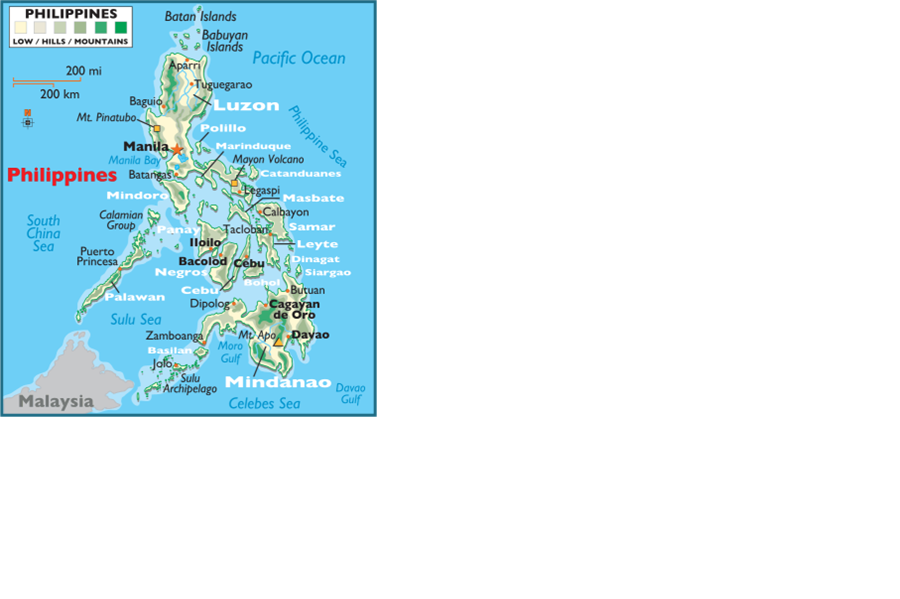
- Location & Political Identity: The Philippines is an archipelagic country in Southeast Asia, located in the western Pacific Ocean. Its capital is Manila, while Quezon City is the largest city.
- Geographical Composition: It comprises around 7,640 islands, grouped into three major regions — Luzon, Visayas, and Mindanao.
- Surrounding Water Bodies: The country is bordered by the Philippine Sea (east), South China Sea (west and north), Celebes Sea (south), and Sulu Sea (southwest).
- Neighbouring Landmasses: Nearby regions include Taiwan (north), Borneo (southwest), Sulawesi (southwest), and Palau (east).
- Topographical Features:
- Highest peak: Mount Apo.
- Longest river: Cagayan River in northern Luzon.
- Major lakes and bays: Laguna de Bay (largest lake), connected to Manila Bay via the Pasig River.
- Volcanic Activity: Located on the Pacific Ring of Fire, the Philippines is prone to frequent earthquakes and volcanic eruptions. Prominent volcanoes include Mayon, Taal, and Mount Pinatubo.
- Natural Wonders: Home to the Puerto Princesa Subterranean River, a UNESCO World Heritage Site.
- Climate: The country experiences a tropical maritime and monsoonal climate, typically hot and humid.
- Biodiversity & Resources: Recognized as a megadiverse country, it ranks as the second-largest producer of geothermal energy globally, after the United States.
2. Hiroshima and Nagasaki
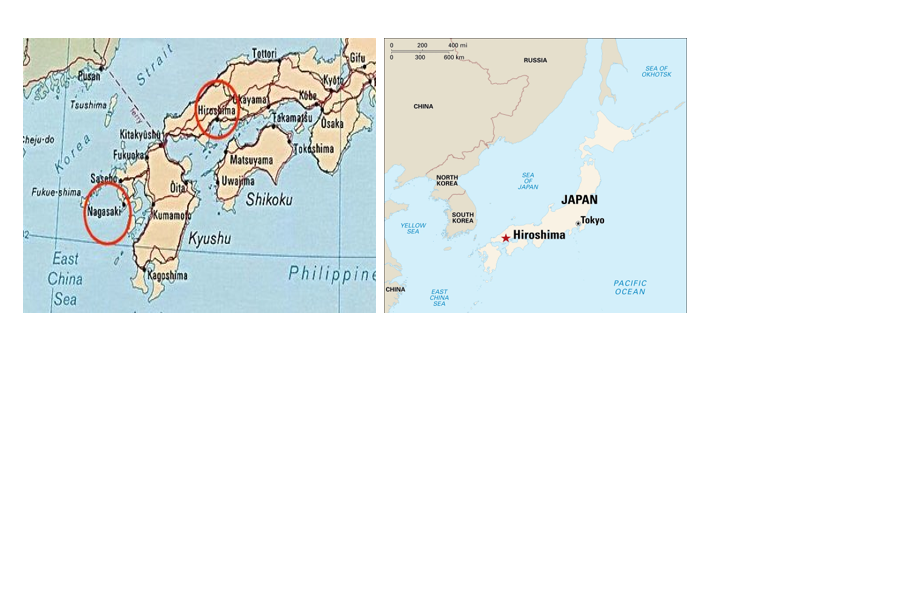
Why in the News?
- August 6, 2025, marks 80 years since the atomic bombing of Hiroshima and Nagasaki, which killed over 2,00,000 people.
- Recent nuclear threats by Russia and tensions in South Asia have raised concerns about the weakening of the norm of non-use.
- Experts warn that growing complacency and the development of more “usable” nuclear weapons may increase the risk of future use.
About Hiroshima and Nagasaki
- Hiroshima and Nagasaki are cities in Japan, located on the islands of Honshu and Kyushu
- Hiroshima was a major military and industrial center with military camps, headquarters, and factories.
- Nagasaki was a key port city and industrial hub, known for its shipbuilding and arms production.
- On August 6, 1945, the U.S. dropped an atomic bomb named “Little Boy” on Hiroshima, killing around 1,40,000 people by the end of 1945.
- On August 9, 1945, the U.S. dropped “Fat Man” on Nagasaki, resulting in around 74,000 deaths by the end of that year.
- The bombings destroyed large parts of both cities, generated radioactive black rain, and caused long-term health effects like cancer, chronic illnesses, and radiation sickness among survivors.
- Hiroshima’s temperature at the time of the blast reached an estimated 4,00,000°C, and Nagasaki saw destruction over an area of 7 sq km.
- Today, both cities stand as global symbols of peace and anti-nuclear advocacy, with memorials like the Hiroshima Peace Memorial (Genbaku Dome) and the Nagasaki Peace Park.