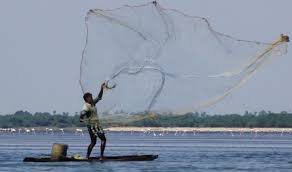
Context
Recently, Pulicat Lake has attracted birdwatchers and photographers from different parts of South India due to the seasonal arrival of flamingos and other migratory birds.
About Pulicat Lake
- Pulicat Lake is the second-largest brackish water lagoon in India after Chilika Lake and spreads across Andhra Pradesh and Tamil Nadu.
- It is a shallow coastal lagoon located along the Bay of Bengal and is separated from the sea by Sriharikota Island.
- The lagoon receives inflows mainly from the Aarani River in the south and the Kalangi River in the northwest, while the Buckingham Canal passes through it.
- Pulicat Lake was designated as a Ramsar Site in 2002 because of its ecological significance.
- It represents an ecotone where freshwater and marine ecosystems interact, supporting rich aquatic biodiversity such as mudskippers, seagrass beds and oyster reefs.
- The lake serves as an important habitat for more than 200 bird species, including migratory birds such as flamingos, Eurasian curlews, oystercatchers, bar-tailed godwits and sand plovers.
- The surrounding region also supports nearly 132 plant species, including Walsura piscida, Manilkara elengi, Excoecaria agallocha, Spinifex littoreus and Calamus viminalis.