Context
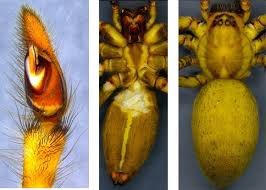
The Zoological Survey of India (ZSI) has recently discovered two new spider species, named Psechrus ntu and Psechrus phenshunyu, in the forested areas of Nagaland.
About Psechrus ntu and Psechrus phenshunyu
- Both belong to the genus Psechrus under the family Psechridae, which is known for building broad horizontal sheet webs in humid forest habitats.
- The species were named after the villages of Ntu and Phenshunyu where they were first recorded.
Key Adaptations and Behaviour
- These spiders possess elongated and flattened body structures that help them move efficiently through dense vegetation.
- Their unusually long front legs and fine sensory hairs assist in detecting vibrations and environmental changes.
- Such features are important adaptations for survival in dimly lit and moisture-rich forest ecosystems.
- The spiders construct expansive sheet-like webs that function both as prey-capturing structures and as sensory platforms for monitoring movement nearby.
- Researchers also observed a rare heterospecific association in which a male Psechrus himalayanus shared a web with Psechrus phenshunyu, despite spiders generally exhibiting territorial behaviour.
Other Significant Findings
- The study recorded Psechrus himalayanus in Northeast India for the first time, extending its previously known Himalayan distribution range.
- ZSI researchers also carried out the first major taxonomic reassessment of Indian whip scorpions in more than a century.
About Whip Scorpions
- Whip scorpions belong to the order Thelyphonida, an ancient arachnid group distinct from true scorpions.
- Although they appear intimidating, they are non-venomous and harmless to humans.
- They possess several specialised adaptations, including whip-like sensory tails, enlarged grasping appendages, defensive acid-spraying glands, and nocturnal burrowing habits.
- Their common name “vinegaroon” comes from the vinegar-like acidic spray they release when threatened.