Context
The Ministry of Environment, Forest and Climate Change has recently notified 326.69 sq. km of area around the Great Himalayan National Park as an eco-sensitive zone, aimed at strengthening environmental protection in the region.
About Great Himalayan National Park
- The Great Himalayan National Park is a high-altitude national park located in the Kullu district of Himachal Pradesh, spread over about 1,171 sq. km with elevations ranging from 1,500 to 6,000 metres.
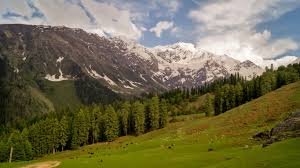
- Situated in the western Himalayas, it includes the Tirthan, Sainj, Parvati, and Jiwa Nal valleys and is surrounded by steep ridges and snow-covered peaks.
- The park shares boundaries with protected areas such as Pin Valley National Park, Rupi-Bhaba Wildlife Sanctuary, and the Tirthan and Sainj Wildlife Sanctuaries.
- Its landscape features a diverse mix of coniferous forests, alpine meadows, glaciers, and high mountain terrain, reflecting rich ecological diversity.
- Vegetation varies with altitude, starting from subtropical forests in lower regions, moving to oak, deodar, and spruce forests, then to subalpine zones with birch and rhododendron, and finally to alpine areas with grasses and shrubs.
- The park supports diverse wildlife, including 31 mammal species such as the snow leopard, Himalayan brown bear, blue sheep (bharal), Himalayan tahr, musk deer, and serow.
- It is also home to around 209 bird species, including the western tragopan, lammergeier, Himalayan griffon vulture, and golden eagle.
- Recognised for its ecological significance, it was declared a UNESCO World Heritage Site in 2014.