Context
Tristan da Cunha was recently in the news after British military medics carried out a rare parachute mission to the remote South Atlantic island to assist a British national suspected of contracting hantavirus from the cruise ship MV Hondius.
About Tristan da Cunha
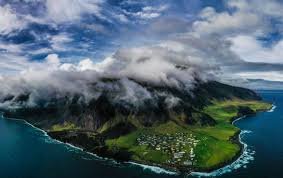
- Tristan da Cunha is an isolated group of volcanic islands situated in the South Atlantic Ocean between Africa and South America.
- The archipelago is administered as part of a British Overseas Territory and was named after Portuguese navigator Tristan da Cunha, who sighted the islands in 1506.
- Due to its remoteness from continental landmasses, it is often described as the most isolated inhabited island group in the world.
- Edinburgh of the Seven Seas, located on the main island of Tristan da Cunha, is the only permanent settlement and is home to around 250 people.
- The islands do not have an airport, making sea transport the primary mode of access, while helicopters are used only occasionally.
- Gough Island and Inaccessible Island are uninhabited parts of the archipelago and have been designated as UNESCO World Heritage Sites.
- Other nearby islands, including Nightingale, Stoltenhoff and Middle Island, are recognised for their important wildlife habitats and biodiversity.
- The local community follows a collective land ownership system, and agriculture remains an important activity for most families.
- Outsiders are generally not allowed to permanently settle or own property on the islands.
- Fishing and government-related services, along with farming, form the backbone of the local economy.