Context
In a remarkable underwater archaeological discovery, researchers working in Lake Issyk-Kul have uncovered the remains of a submerged city, shedding light on a long-lost civilization that dates back nearly seven hundred years.
About Lake Issyk-Kul
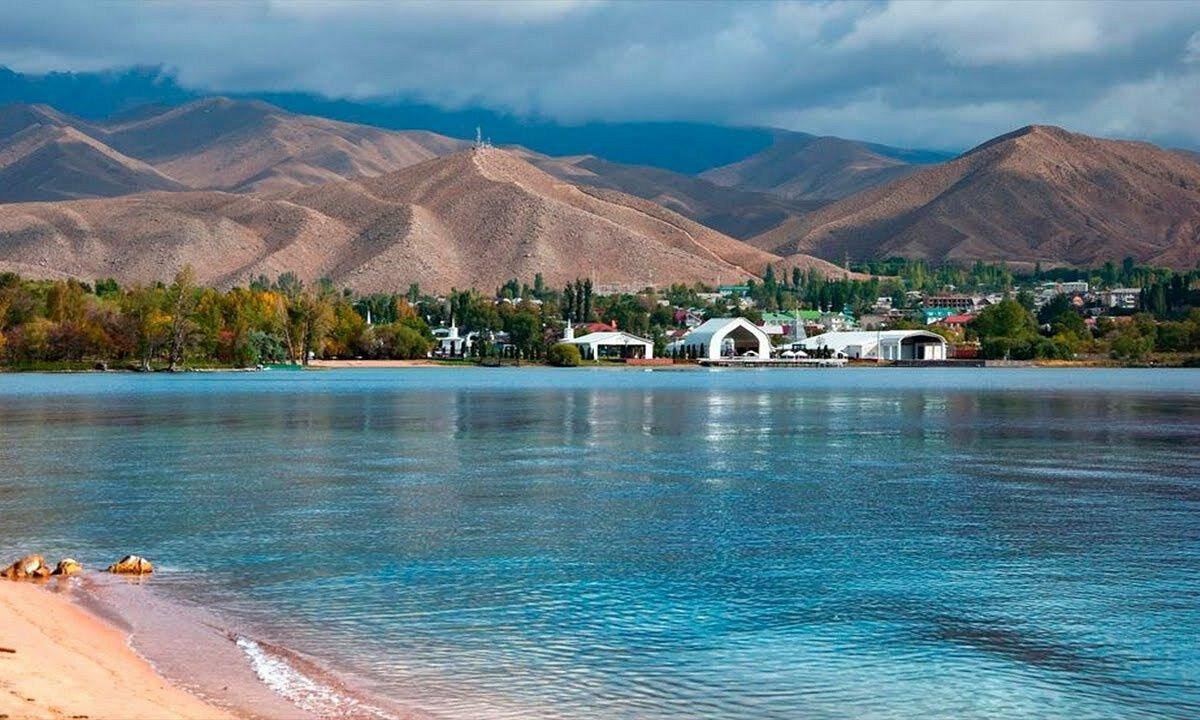
- Lake Issyk-Kul is situated in the northeastern part of Kyrgyzstan and is surrounded by the snow-covered Tian Shan mountain range, often called the “Heavenly Mountains.”
- It is a high-altitude lake located about 1,600 metres above sea level. After Lake Titicaca in South America, it is the second-largest mountain lake in the world.
- The lake is very large, stretching about 182 km in length and up to 61 km in width, covering an area of around 6,280 sq. km.
- In 1976, it was recognized as a wetland of international importance under the Ramsar Convention.
- It is also one of the world’s largest saline lakes, second only to the Caspian Sea, and the biggest lake in Kyrgyzstan.
- The lake contains slightly salty (brackish) blue water and does not freeze in winter due to its depth, mild salinity, and geothermal springs.
- Formed nearly 25 million years ago, it lies in an endorheic basin, meaning it has no river or ocean outlet.
- It is very deep, reaching about 668 metres, with an average depth of around 280 metres, making it one of the deepest lakes globally.
- The name “Issyk-Kul” means “hot lake,” referring to its unfrozen waters even during cold seasons.
- The surrounding region shows a rare mix of ecosystems, where landscapes range from subtropical zones to tundra within short distances.