Context
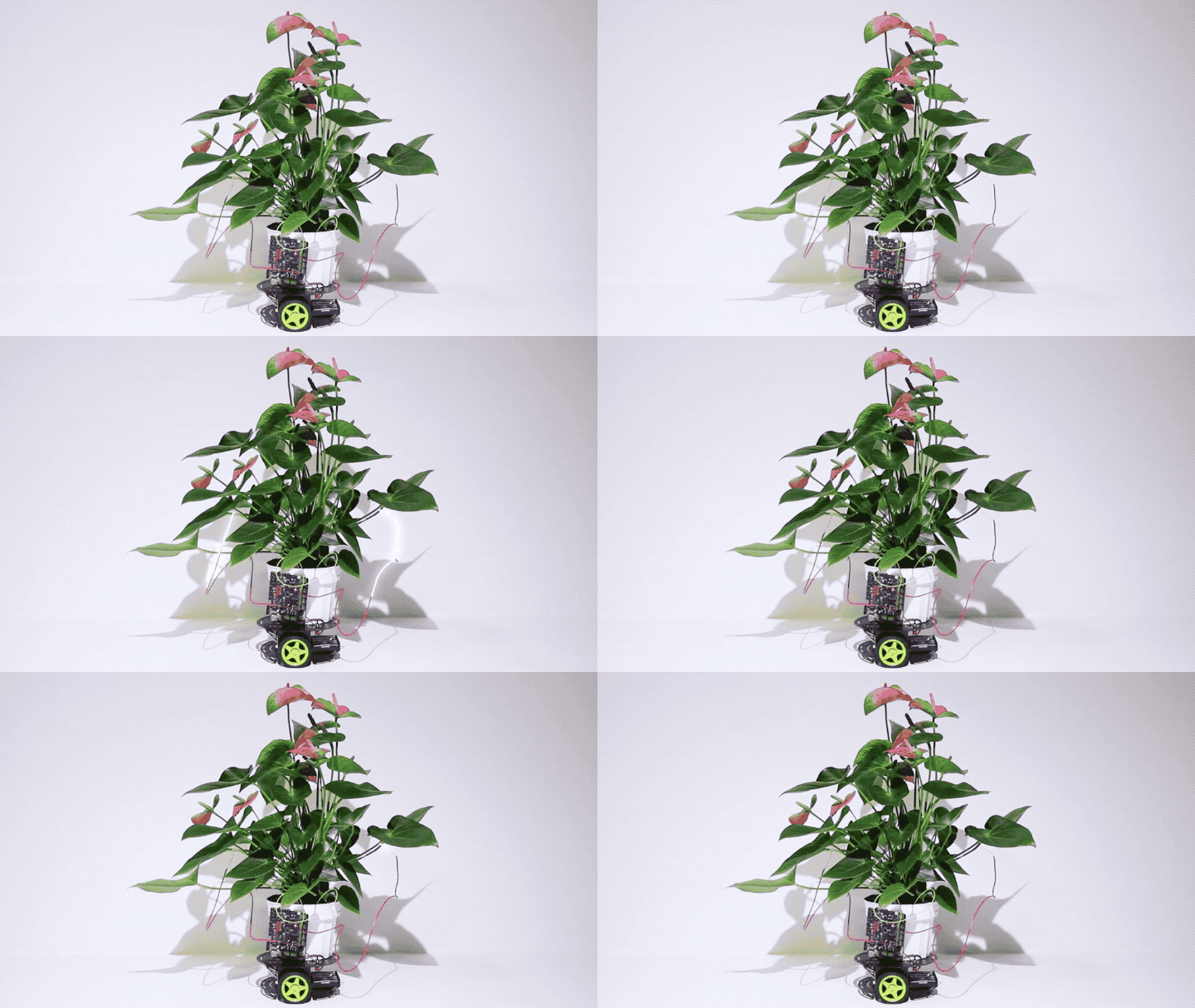
Researchers from multiple institutions are advancing the emerging field of cyborg botany, where plants are engineered to function as living circuit systems, highlighting its growing relevance in recent developments.
About Cyborg Botany
- Origin of the term: The word “cyborg” comes from “cybernetic organism,” a concept popularized in science fiction that describes the integration of biological and artificial systems.
- Cyborg Botany: It refers to a scientific field focused on combining living plants with electronic components to create functional bio-electronic systems.
- Interdisciplinary nature: This area of study draws on biology, materials science, and engineering to design and develop plant-based hybrid technologies.
- Core objective: The main goal is to merge plants’ natural biological processes with electronic functions to enable enhanced, technology-integrated plant systems.
- Working mechanism:
- The system operates by integrating nanoscale and conductive materials into plant structures to enable electronic sensing and signal transmission.
- Embedding nanowires and transistors: Nanoscale wires and electronic transistor elements can be inserted into plant cell walls, where they act as biosensors that monitor biochemical activity in real time.
- Conductive polymers as internal circuits: Biodegradable conductive materials such as PEDOT can function as “living wires” within plant tissue, carrying signals from plant cells to external devices for data interpretation.
Importance
- Early detection using sensors: If crop plants are equipped with embedded sensors, they could potentially detect signs of water shortage or disease much before visible symptoms develop.
- Types of plant stress: Plants typically experience two major categories of stress—biotic stress caused by pests and diseases, and abiotic stress resulting from factors like drought, heat, or extreme temperatures.
- Precision intervention: This early warning system would allow farmers to respond in a targeted manner by supplying water, nutrients, or treatments only where required and at the right time.