Context
Olive Ridley turtles nesting along the Tamil Nadu coast have recently begun migrating toward the Sri Lanka Dome, a relatively lesser-known yet highly productive marine region, drawing attention to its ecological significance in the context of the latest developments.
About Olive Ridley Turtles
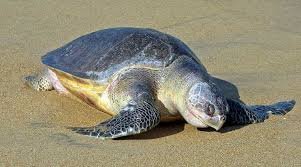
- Olive Ridley Turtle (Lepidochelys olivacea): A marine reptile belonging to the class Reptilia, it is among the smallest sea turtle species, identified by its olive-green to greyish shell and a distinct heart-shaped carapace.
- Feeding and Behavior: These turtles are omnivorous and are well known for arribada—a synchronized mass nesting phenomenon where thousands of females come ashore to lay eggs simultaneously.
- Migration and Reproduction:
- Olive Ridleys undertake long-distance migrations of up to around 9,000 km, travelling from the Pacific Ocean to Indian waters.
- They typically nest between December and March, laying eggs 1–3 times per season, with each clutch containing roughly 100 eggs.
- Key Nesting Locations: The coasts of Gahirmatha and Rushikulya in Odisha rank among the largest nesting grounds globally.
- Major Threats:
- Olive Ridley populations face risks from accidental capture in fishing nets (bycatch), illegal hunting, destruction of nesting habitats, and marine plastic pollution.
- Climate change further impacts them by altering nesting conditions and affecting food availability due to rising sea levels and temperatures.
- Protection Status:
- Olive Ridley turtles are granted the highest level of legal protection under Schedule I of the Wildlife Protection Act, 1972.
- They are listed as Vulnerable on the IUCN Red List.
- They are included in Appendix I of CITES, which prohibits international trade in the species.
Sri Lanka Dome
- It is a relatively lesser-known but highly productive marine region in the Indian Ocean, known for supporting rich biodiversity.
- Formation process: It develops due to seasonal upwelling, where cooler, nutrient-rich waters rise to the surface, leading to plankton blooms that attract diverse marine life such as turtles, fish, whales, and seabirds.
- Seasonal pattern: This process generally begins in May, peaks around July, and declines by September, after which marine species disperse and begin their return migrations.