Important questions for UPSC Pre/ Mains/ Interview:
|
Context
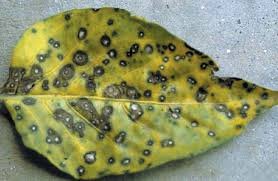
Leaf spot diseases are emerging as a major challenge to agricultural productivity, particularly in plantation crops like arecanut in Karnataka. Their increasing prevalence is linked to humid climatic conditions, monocropping practices, and gaps in disease management.
Q1. What are leaf spot diseases and what causes them?
- Leaf spot refers to a group of plant diseases causing visible spots or lesions on leaves. It affects a wide range of crops including fruits, vegetables, and plantation crops.
- Causative agents: Fungi (major cause, ~85% of plant diseases). Bacteria and other microorganisms.
- Mode of infection: Pathogens enter through natural openings or wounds. Rapid multiplication under favourable conditions.
- Non-pathogenic factors: Water stress, nutrient imbalance, chemical burns. These can mimic leaf spot symptoms but are not infectious.
Q2. Why are leaf spot diseases becoming a major agricultural concern?
- Climatic factors: High humidity and rainfall promote pathogen growth. Climate change is increasing disease spread.
- Agricultural practices: Monoculture cropping increases vulnerability. Poor field sanitation aids disease persistence.
- Economic impact: Reduced crop yield and quality. Increased cost of plant protection measures.
- Regional relevance: Severe impact observed in arecanut plantations in Karnataka. Affects farmer livelihoods in plantation-based economies.
Q3. How do leaf spot diseases affect plant growth and productivity?
- Photosynthesis disruption: Lesions reduce leaf surface area for sunlight absorption.
- Physiological stress: Leads to yellowing, browning, and premature leaf drop.
- Growth impact: Weakens plant vigour and reduces overall productivity.
- Long-term damage: Severe infection can lead to plant death in extreme cases.
Q4. What are the different types of leaf spot diseases?
| Basis | Fungal Leaf Spot | Bacterial Leaf Spot |
| Causative agent | Fungi | Bacteria |
| Prevalence | Most common | Less common |
| Spread | Spores via wind/water | Water splashes, tools |
| Conditions | Warm and humid climate | Moist environments |
| Control | Fungicides, resistant varieties | Bactericides, sanitation |
Q5. What are the broader implications of leaf spot diseases?
- Administrative Implications: Need for agricultural extension services, government-led demonstration and awareness programmes.
- Technological Implications: Development of resistant crop varieties, use of disease monitoring and forecasting systems.
- Environmental Implications: Excessive pesticide use may harm ecosystems. Need for sustainable disease management practices.
- Economic Implications: Loss of farmer income. Impact on plantation-based regional economies.
Q6. What are the benefits and concerns in managing leaf spot diseases?
- Benefits of Effective Management
- Improved crop yield and quality.
- Reduced economic losses for farmers.
- Enhanced food security and agricultural sustainability.
- Concerns and Challenges
- Overuse of chemical pesticides leading to resistance.
- Limited awareness among small farmers.
- High cost of integrated disease management practices.
- Climate variability complicating control measures.
Q7. What are the key safeguards and management strategies?
- Cultural practices: Crop rotation and field sanitation. Proper spacing to reduce humidity.
- Biological methods: Use of bio-control agents to suppress pathogens.
- Chemical control: Judicious use of fungicides and bactericides. Avoid over-reliance to prevent resistance.
- Technological interventions: Disease-resistant varieties. Early detection via monitoring systems.
- Institutional support: Government-led field demonstrations and farmer training. Strengthening extension services.
Conclusion
Leaf spot diseases represent a persistent challenge to agricultural productivity, particularly under changing climatic conditions. While effective management can significantly reduce crop losses, it requires an integrated approach combining scientific practices, farmer awareness, and institutional support. Balancing productivity with environmental sustainability remains key to long-term agricultural resilience.