Context
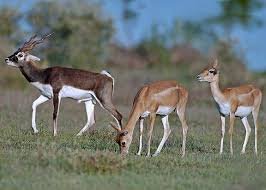
Following a reintroduction programme launched in 2018, Chhattisgarh’s Barnawapara Wildlife Sanctuary has seen a consistent rise in its blackbuck population
About Blackbuck
- The blackbuck (Antilope cervicapra), also called the Indian antelope, is a fast and active animal mainly found in India and Nepal.
- It is a day-active (diurnal) species known for its agility and elegant appearance.
- It usually lives in open grasslands and dry scrub areas, especially in states like Rajasthan, Gujarat, Madhya Pradesh, Tamil Nadu, and Odisha.
- The blackbuck is considered an important indicator species for healthy grassland ecosystems, highlighting the need to protect such habitats.
- Key protected areas for blackbuck in India include Velavadar Blackbuck Sanctuary, Point Calimere Wildlife Sanctuary, and Tal Chhapar Sanctuary.
- It has been officially designated as the state animal of Punjab, Haryana, and Andhra Pradesh by their respective governments.
Protection status
- According to the International Union for Conservation of Nature Red List, the blackbuck is listed under category of Least Concern, meaning it is not currently at high risk of extinction.
- Under India’s Wildlife Protection Act, 1972, it is placed in Schedule I, which provides the highest level of legal protection against hunting and exploitation.
- It is also included in Appendix III of CITES, which helps regulate its international trade.
Barnawapara Wildlife Sanctuary
- The sanctuary is situated in the northeastern part of Raipur district, Chhattisgarh, and gets its name from the nearby forest villages of Bar and Nawapara.
- The area has uneven terrain with small hills and elevated patches, creating a suitable natural habitat for wildlife.
- It is influenced by Mahanadi river system, with several small tributaries passing through it.
- The Balamdehi River forms its western boundary, while the Jonk River marks its northeastern side.
- The forest is mainly made up of teak, sal, and mixed vegetation, supporting rich biodiversity.
- Common wildlife found here includes gaur (Indian bison), chital (spotted deer), sambar deer, nilgai, and wild boar.