Context
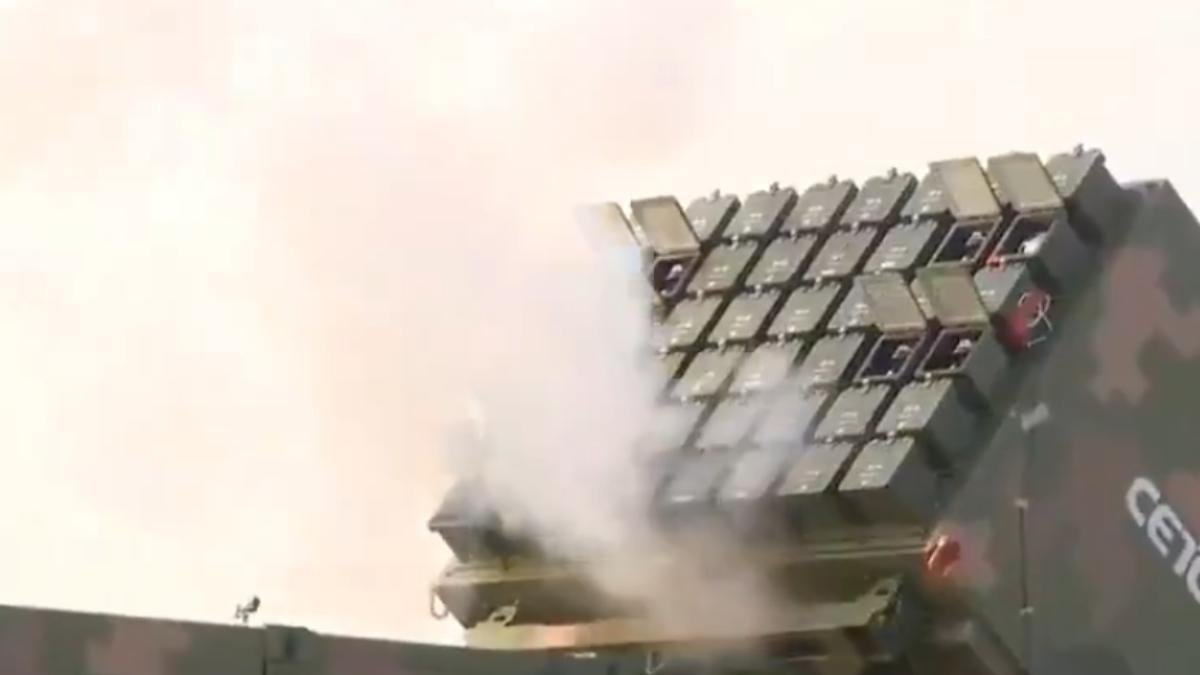
China has unveiled the Atlas Drone Swarm System, a mobile battlefield platform designed to deploy and coordinate large numbers of drones for reconnaissance and combat operations.
Q1. What is the Atlas Drone Swarm System, and what is its purpose?
- It is a mobile military platform developed to deploy and manage large groups of drones from a single command point. It has been developed by China Electronics Technology Group Corporation in collaboration with the People’s Liberation Army.
- The system is mounted on vehicles, making it suitable for rapid deployment in battlefield conditions. Its primary purpose is to enable reconnaissance, electronic warfare, and coordinated strikes using drone swarms.
Q2. What are the structural components of the Atlas Drone Swarm System?
- The system is built around three main components:
- Swarm-2 combat vehicle (for drone launching)
- Command vehicle (for centralised control)
- Support vehicle (for logistics and operations)
- The Swarm-2 platform can carry and launch up to 48 fixed-wing drones.
- A single command unit can control up to 96 drones simultaneously, ensuring coordinated operations. This allows seamless coordination between launch, control, and support functions.
Q3. What are the key operational features of the Atlas Drone Swarm System?
- The system follows a rapid launch sequence, deploying drones at intervals of around three seconds, enabling full deployment within minutes.
- It supports flexible grouping of drones into formations such as defensive shields or precision strike patterns. The drones operate with swarm-level coordination, meaning they act collectively while maintaining individual operational capability.
- The system allows real-time adaptation of drone formations based on mission requirements.
Q4. What types of payloads and roles can the drones perform?
- Each drone can carry different payloads, making the system highly versatile. These include:
- Electro-optical sensors for surveillance and reconnaissance
- Strike munitions for offensive operations
- Communication relay systems to extend battlefield connectivity
- As a result, the swarm can perform multiple roles such as intelligence gathering, electronic disruption, coordinated attacks, and communication support.
Q5. What are the advantages of drone swarm technology in modern warfare?
- Scalability: Large numbers of drones can be deployed quickly to overwhelm enemy defenses.
- Redundancy: Loss of individual drones does not significantly impact mission success.
- Flexibility: Swarms can be reconfigured dynamically for different missions.
- Cost-effectiveness: Compared to traditional systems, drones are relatively cheaper & expendable.
- Enhanced situational awareness: Multiple sensors provide real-time battlefield intelligence.
Conclusion
The Atlas Drone Swarm System highlights the growing importance of autonomous and swarm-based warfare technologies. Its development reflects a major shift in modern military strategy towards speed, coordination, and technological superiority.