Context
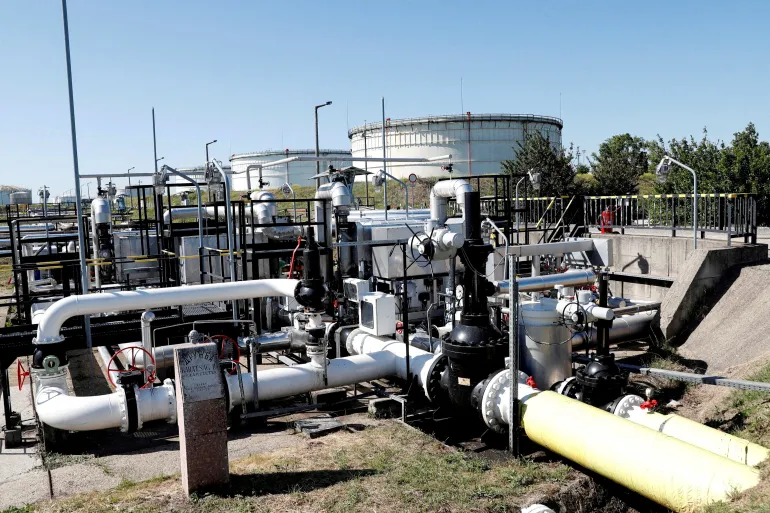
The Druzhba Pipeline has resumed operations after repairs, restoring oil supply from Russia through Ukraine to European countries like Hungary and Slovakia.
About Druzhba Pipeline
- Also known as the “Friendship Pipeline”, it is one of the largest crude oil pipeline networks in the world, playing a key role in Europe’s energy supply.
- It was constructed in the 1960s during the Soviet era to transport oil from the USSR to various European countries.
- Today, it remains a major route for transporting Russian and Kazakh crude oil across Europe, acting as a crucial energy corridor.
- The pipeline system extends for about 5,500 km, including all its branches.
- It originates at Almetyevsk in Russia, where oil from Siberia, the Urals, and the Caspian region converges before being transported westward.
- At Mozyr in Belarus, the pipeline splits into two major branches – the northern branch passing through Belarus and Poland to Germany, and the southern branch passing through Ukraine.
- The southern route further divides at Uzhgorod, supplying oil to Slovakia, the Czech Republic, and Hungary, with a current capacity of 1.2–1.4 million barrels per day, expandable up to 2 million barrels per day.