Important questions for UPSC Pre/ Mains/ Interview:
|
Context
India has been classified as a high-risk country for doping, with rising violations raising concerns about sports integrity and its global sporting ambitions.
Q1. What is doping in sports?
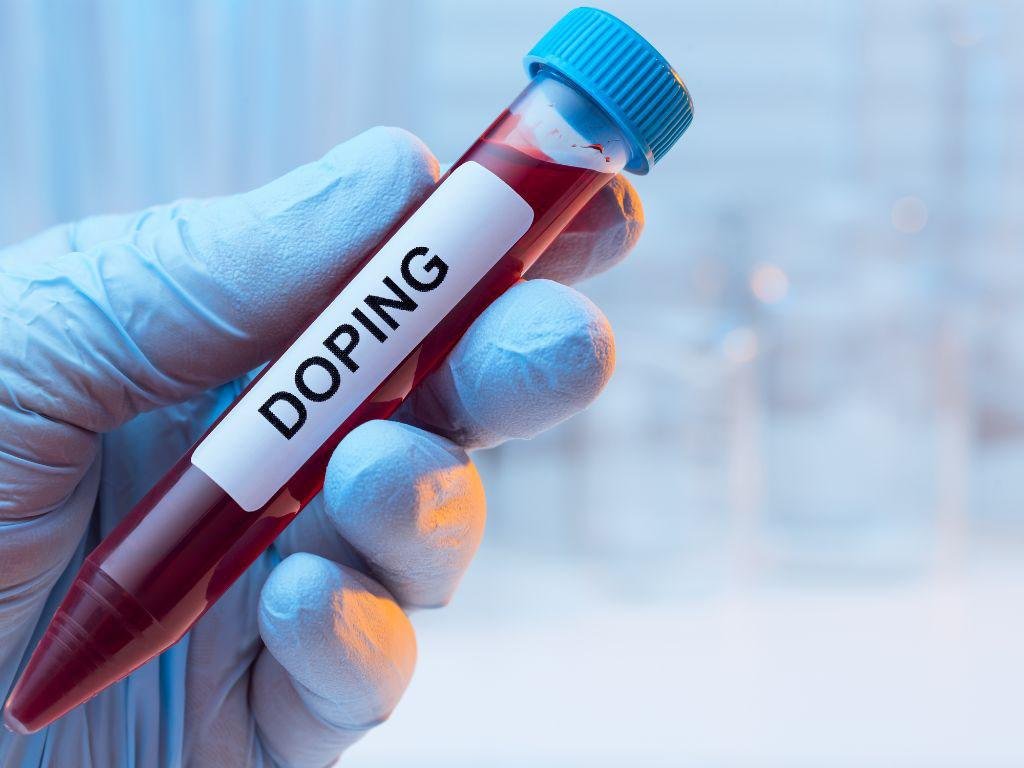
- Doping refers to the use of banned substances or unfair techniques by athletes to artificially improve performance.
- It violates the principles of fair play, ethics, and sporting integrity.
- The global anti-doping framework is governed by the World Anti-Doping Agency.
- Prohibited substances include steroids, stimulants, hormones, and masking agents, while methods include blood manipulation and genetic enhancement techniques.
- Detection is done through urine and blood testing, both during and outside competitions.
- Violations include positive tests, refusal to test, sample tampering, and involvement in supply networks.
Q2. Why is doping a serious concern?
- It creates unfair advantage, undermining merit-based competition.
- Damages the credibility of sports and institutions.
- Leads to penalties such as suspension, disqualification, and loss of medals.
- Can attract legal consequences depending on national laws.
- Causes severe health risks, including heart problems, liver damage, hormonal imbalance, and psychological disorders.
- Thus, it is both an ethical issue and a public health concern.
Q3. What is India’s current doping situation?
- India has been placed in “Category A” (high-risk) by the Athletics Integrity Unit.
- Violations have increased steadily:
- 48 cases (2022)
- 63 cases (2023)
- 71 cases (2024)
- Around 260 athletes tested positive in 2024, the highest globally.
- India’s positivity rate (~3.6%) is significantly higher than many countries.
- The scale of violations indicates that anti-doping efforts are not proportionate to the problem.
Q4. What action has been taken by global authorities?
- India’s athletics system has been downgraded and placed under strict monitoring.
- Athletes are subject to enhanced testing protocols, including:
- Pre-competition testing
- Out-of-competition testing
- Greater emphasis on compliance with international anti-doping standards.
- Increased scrutiny due to India’s ambitions to host major global events like the Olympics.
Q5. What steps has India taken to control doping?
- Establishment of the National Anti-Doping Agency (NADA) for testing, result management, and enforcement.
- Enactment of the National Anti-Doping Act, 2022, giving legal backing to anti-doping measures.
- Expansion of testing infrastructure, including more in-competition and out-of-competition tests.
- Increased focus on state and district-level testing.
- Awareness programmes for athletes, coaches & support staff to prevent unintentional violations.
- Improved coordination between Ministry of Sports, NADA, and sports federations.
- Proposal to criminalise doping, targeting suppliers, coaches, and trafficking networks.
Q6. What are the key challenges?
- Rapid rise in anti-doping rule violations, indicating systemic issues.
- Weak intelligence and detection of supply chains.
- Lack of awareness and education, especially at grassroots levels.
- Gaps between testing capacity and scale of the problem.
- Continued availability of banned substances through illegal networks.
- Risk to India’s international reputation and credibility in global sports.
Q7. What is the way forward?
- Strengthen intelligence-based anti-doping systems and surveillance.
- Ensure strict enforcement and accountability, including criminal action.
- Expand testing coverage and frequency across all levels.
- Enhance education and awareness programmes for athletes.
- Disrupt supply chains of banned substances through coordinated action.
- Align domestic practices more closely with global anti-doping standards.
- Promote a culture of clean sports and athlete welfare.
Conclusion
India’s doping crisis reflects a systemic governance challenge in sports. Stronger enforcement, awareness, and institutional reforms are essential to ensure fair competition and global credibility.