Important questions for UPSC Pre/ Mains/ Interview:
|
Context
A new Lyme disease vaccine candidate by Pfizer and Valneva has shown over 70% efficacy, renewing focus on this tick-borne infection.
Q1: What is Lyme disease?
- Lyme disease, or Lyme borreliosis, is an infectious bacterial disease.
- It is caused by the bacterium Borrelia burgdorferi.
- It affects multiple systems including the skin, joints, nervous system, and heart.
- It was first identified in Lyme, Connecticut (USA) in 1976.
- It is most common in North America, Europe, and parts of Asia.
Q2: How is Lyme disease transmitted?
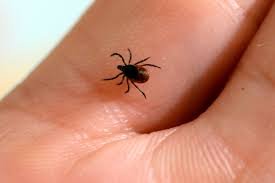
- It spreads through the bite of infected ticks, specifically deer ticks (black-legged ticks).
- These ticks are found in grassy, wooded, and bushy areas.
- The bacteria enter the bloodstream after a tick bite and spread within the body.
- It does not spread from person to person, animals to humans, or through air, food, or water.
- Other insects like mosquitoes, fleas, or flies do not transmit it.
Q3: What are the symptoms of Lyme disease?
- The disease occurs in multiple stages, with overlapping symptoms.
- Early symptoms include a characteristic “bull’s-eye” rash (erythema migrans).
- Other early symptoms: Fever and fatigue, Body aches and Swollen lymph nodes
- If untreated, it can lead to:
- Severe arthritis
- Neurological disorders
- Heart complications
Q4: How is Lyme disease treated?
- Lyme disease is treatable with antibiotics, especially if diagnosed early.
- Early treatment leads to complete recovery in most cases.
- In delayed diagnosis, recovery may be slower and more complicated.
- Some patients may experience persistent symptoms even after treatment.
Q5: What is the significance of the new Lyme disease vaccine?
- The vaccine has shown over 70% efficacy in late-stage trials.
- It could help prevent infections in high-risk regions.
- It represents progress in combating vector-borne diseases.
- It may reduce the long-term health burden of untreated cases.
Conclusion
Lyme disease is a growing public health concern, and advances like vaccines, along with early detection and awareness, are key to effective prevention and control.