Important questions for UPSC Pre/ Mains/ Interview:
|
Context
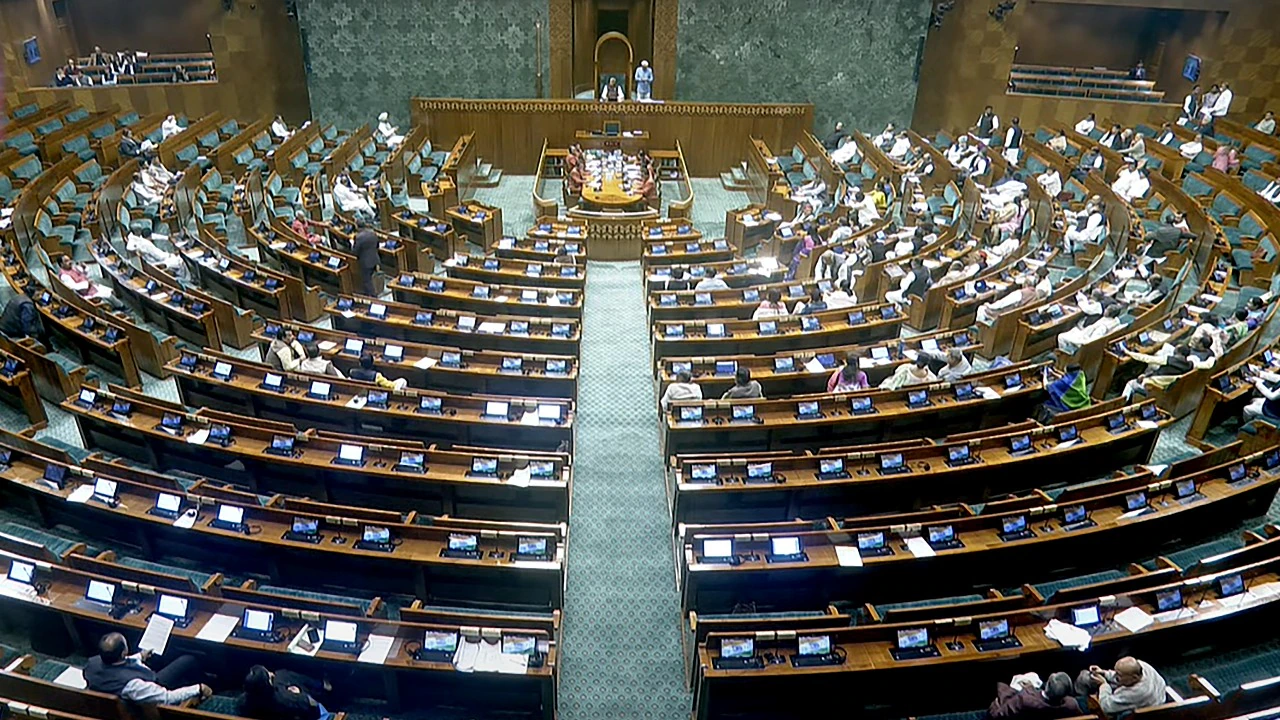
The government has proposed increasing Lok Sabha seats from 543 to 816 to implement the Women’s Reservation Act, 2023, but the move faces major constitutional and federal challenges.
Q1. What is the proposal to expand Lok Sabha seats and what are its key features?
- The proposal aims to increase Lok Sabha seats from 543 to 816 (about 50% increase).
- It includes 33% reservation for women (273 seats) under the Women’s Reservation Act.
- Delimitation is proposed to be based on the 2011 Census instead of a fresh Census.
- It seeks to maintain the existing proportional representation among states.
- A similar expansion is also proposed for State Legislative Assemblies.
Q2. Why has the government proposed using the 2011 Census for delimitation?
- The Women’s Reservation Act links implementation to delimitation based on Census data.
- Using the 2011 Census allows faster implementation without waiting for a new Census.
- It helps avoid the politically sensitive issue of seat redistribution.
- A fresh Census-based delimitation may lead to northern states gaining seats and southern states losing share.
- Thus, it is seen as a temporary political and administrative solution.
Q3. What are the constitutional provisions governing Lok Sabha seat allocation and delimitation?
- Article 81 ensures equal representation based on population.
- It requires that the ratio of seats to population across states remains uniform.
- It also mandates equal population across constituencies within a state.
- Article 82 provides that delimitation must follow every Census.
- An exception exists for small states (population < 6 million), allowing slight deviation.
- These provisions are based on the principle of “one person, one vote, one value.”
Q4. What is the delimitation freeze and why was it introduced?
- Delimitation has been frozen since 1971 through constitutional amendments.
- The 1976 Amendment froze seat allocation based on the 1971 Census for 25 years.
- The 2001 Amendment extended the freeze until after the Census post-2026.
- The freeze was introduced to protect southern states from losing representation.
- Southern states had successfully controlled population growth, unlike some northern states.
- It ensured states were not penalised for better demographic performance.
Q5. What is the process of delimitation in India?
- A Census is conducted and data is published.
- Parliament enacts a Delimitation Act under Article 82.
- The government sets up a Delimitation Commission.
- The Commission redraws constituency boundaries and allocates seats.
- Its decisions have the force of law and are generally not subject to executive modification.
Q6. What are the constitutional challenges in expanding Lok Sabha seats?
- Any change must comply with Article 81’s principle of equal representation.
- Arbitrary increase in seats without population balance may violate “one person, one vote”.
- Amending Article 81 could be challenged under Article 14 (Right to Equality).
- Such changes may be tested against the Basic Structure doctrine.
- Using outdated Census data may raise questions of fairness and representation.
- Actions of the Delimitation Commission can be subject to judicial review if unconstitutional.
Q7. What are the possible legal and policy options available to address these challenges?
- One option is to amend the Women’s Reservation Act to delink it from delimitation.
- Another option is to amend Articles 81 and 82, though this may invite legal challenges.
- A compensatory mechanism can be designed to protect southern states’ representation.
- Efforts can be made to build political consensus among states.
- A balanced approach should ensure both representation equity and federal fairness.
Q8. What are the challenges and what measures can ensure a balanced expansion of Lok Sabha seats?
| Challenges | Way Forward |
| 1. Conflict between population-based representation and federal balance | Introduce a compensatory principle to protect states losing representation |
| 2. Risk of violating equality and basic structure principles | Ensure constitutional amendments are narrowly tailored and justified |
| 3. Political tensions between northern and southern states | Build consensus through inter-state dialogue and cooperative federalism |
| 4. Delay in Census affecting delimitation process | Conduct timely Census and ensure reliable population data |
| 5. Legal uncertainty and judicial challenges | Frame reforms carefully with strong constitutional backing |
Conclusion
Expanding Lok Sabha seats requires carefully balancing democratic representation, federal equity, and constitutional principles, making consensus and legal clarity essential for reform.