Important questions for UPSC Pre/ Mains/ Interview:
|
Context
The ongoing West Asia conflict has entered a critical phase, impacting global energy markets, trade routes, and diaspora safety. India’s response reflects concerns over energy security, economic stability, and protection of citizens abroad, while maintaining a balanced diplomatic approach.
Q1. Why is the West Asia conflict significant for India?
- Energy Dependence
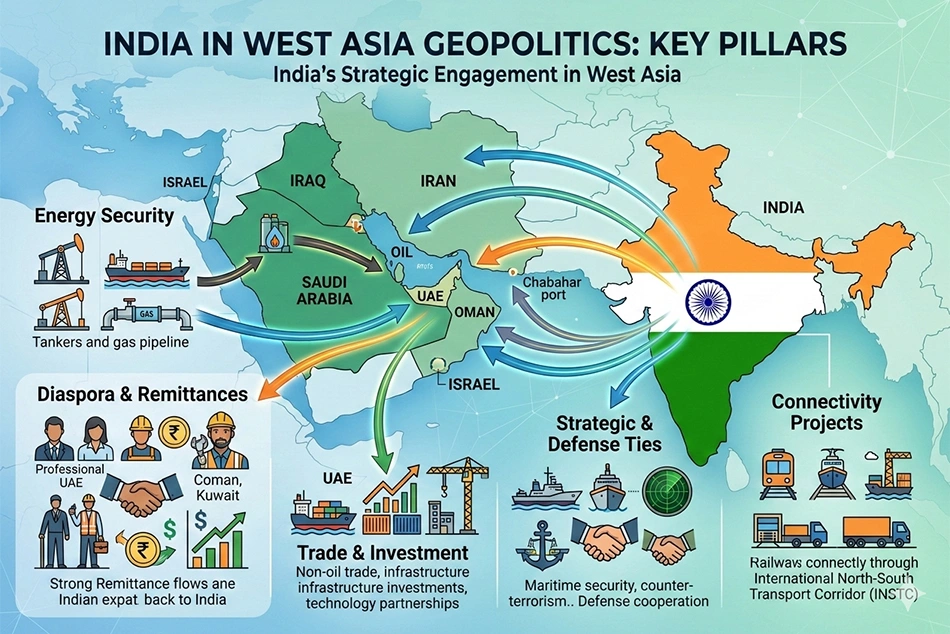
- Large share of India’s oil and gas imports come from West Asia
- Disruptions directly affect fuel supply and prices
- Trade Linkages
- Strong trade relations with Gulf countries
- Supply chain disruptions impact domestic economy
- Strategic Geography: Strait of Hormuz handles a major share of global energy flow which is vital for India’s maritime trade.
- Diaspora Presence
- Around 1 crore Indians reside in Gulf region
- Remittances and livelihoods at risk
Q2. What are the key elements of India’s diplomatic position?
- Neutral and Balanced Approach
- No direct condemnation of any party
- Avoids taking sides
- Dialogue-Centric Policy
- Emphasis on diplomacy over conflict
- Calls for peaceful resolution
- Strategic Autonomy: Independent foreign policy decisions and engagement with all stakeholders
- High-Level Engagement: PM held talks with leaders of Iran, Saudi Arabia, UAE, Qatar, Oman, Kuwait, Bahrain.
Q3. How does the conflict affect India’s energy security?
- Strait of Hormuz Risk
- Handles ~1/5 of global energy supply
- Any disruption is “unacceptable” for India
- LPG and Fuel Supply
- India imports significant LPG requirements
- Government prioritising domestic production
- Strategic Petroleum Reserves
- Current reserves: 53+ lakh metric tonnes
- Planned expansion to 65+ lakh metric tonnes
- Diversification Strategy
- Import sources increased from 27 to 41 countries
- Reduces dependence on single region
Q4. What measures has India taken to protect its citizens abroad?
- Evacuation Efforts
- Over 3.75 lakh Indians returned safely
- Around 1,000 evacuated from Iran
- Support for Students
- CBSE cancelled exams in Gulf region
- Ensuring academic continuity
- Consular Assistance
- 24/7 helplines and control rooms
- Active embassy support
- Seafarer Safety
- ~700 Indian seafarers stranded
- Government monitoring maritime routes
Q5. What are the economic implications for India?
- Inflationary Pressures: Rising oil prices increase fuel costs
- Trade Disruptions: Supply chain interruptions affect goods availability
- Current Account Impact: Higher import bills widen deficit
- Remittance Risks: Conflict may affect income of Indian diaspora
Q6. What is the significance of India’s “strategic silence”?
- No Direct Condemnation: Avoided criticism of US/Israel
- No Explicit Support: No overt alignment with Iran
- Diplomatic Signalling: Maintains relations with all sides
- Policy Logic
- Protects national interests
- Ensures flexibility in foreign policy
Q7. What challenges does India face in this situation?
- Security Challenges
- Threat to sea lanes and shipping routes
- Risks to Indian nationals abroad
- Energy Challenges
- Dependence on imports
- Vulnerability to price shocks
- Diplomatic Challenges
- Balancing relations with competing powers
- Managing regional instability
- Economic Challenges
- Inflation and fiscal pressure
- Trade and supply disruptions
Conclusion
India’s response to the West Asia conflict reflects a pragmatic balance between national interest, energy security, and diplomatic neutrality. While short-term measures focus on supply stability and citizen safety, long-term resilience depends on diversification and strategic autonomy in foreign policy.