Important Questions for UPSC Prelims, Mains and Interview
|
Context
A Parliamentary Committee has recommended introducing breakfast and extending PM POSHAN coverage up to Class 12, aiming to strengthen nutrition and learning outcomes.
Q1. What are the objectives, features, and significance of the PM POSHAN Scheme, and how does it contribute to nutrition and education outcomes in India?
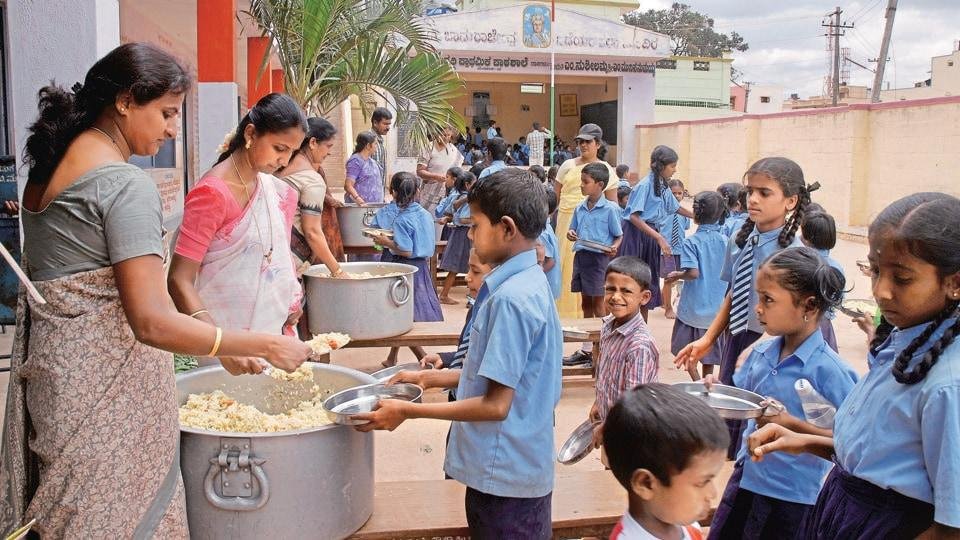
- The scheme aims to improve nutritional status, physical growth and cognitive development of school children by providing one hot cooked meal daily in schools .
- It promotes enrollment, attendance, and retention in schools.
- It reduces dropout rates among disadvantaged groups.
- It encourages social equity through common meals.
- Overall, it integrates nutrition with education policy for inclusive development.
Q2. What are the key components and implementation mechanisms of the PM POSHAN Scheme, including nutritional standards and monitoring systems?
- Hot Cooked Meals: Prepared daily in schools and ensures regular nutrition.
- Nutritional Standards: Primary – 450 calories, 12g protein and Upper Primary – 700 calories, 20g protein .
- Supplementary Nutrition: Use of local and seasonal foods
- School Nutrition Gardens: Promote locally grown vegetables & community participation.
- Monitoring Systems: Use of technology for real-time tracking, quality checks and inspections.
- Funding Pattern: Centrally sponsored scheme – shared cost between Centre and States .
- Covers around 11.8 crore children, making it one of the largest schemes globally.
Q3. What recommendations has the Parliamentary Standing Committee made regarding expansion of PM POSHAN, and what is their rationale?
- Introduction of light breakfast in schools.
- Immediate expansion up to Class 10 and gradual extension up to Class 12 within five years.
- Focus on improving morning nutrition for better learning outcomes.
- Addressing nutritional gaps beyond Class 8 and emphasis on holistic development of students.
- Aim to strengthen the link between education and nutrition policies.
Q4. Why is adolescent nutrition critical, and how does the current design of PM POSHAN create a policy gap?
- Adolescence is a key phase for physical and mental development.
- Nutritional needs increase due to rapid growth and hormonal changes
- The current scheme ends at Class 8, leaving a gap. This affects students in Classes 9–12.
- Poor nutrition can lead to long-term health issues and reduced productivity.
- Girls are particularly vulnerable to malnutrition and school dropout.
- Thus, the existing design creates a critical policy gap in adolescent care.
Q5. How does nutrition influence educational outcomes, particularly in the context of school-going children?
- Proper nutrition improves concentration (cognitive development) & memory (learning capacity).
- Reduces fatigue and improves classroom participation.
- Supports better performance in exams and academic activities as it helps maintain regular school attendance. Especially important during Board exam years (Class 10 & 12)
- Nutrition and education together drive overall student development.
Q6. What are the challenges in expanding PM POSHAN to include breakfast and higher classes, including financial and administrative concerns?
- Expansion will require a significant increase in financial allocation.
- Additional infrastructure needed for breakfast preparation, storage and logistics.
- Increased burden on school administration and staff.
- Ensuring consistent quality and hygiene standards.
- Coordination challenges between centre and states.
- Risk of delays in fund disbursement and implementation.
- Monitoring expanded coverage may require advanced tracking systems.
Q7. What is the broader significance of PM POSHAN reforms for human capital development and social equity in India?
- Helps reduce malnutrition among children and adolescents.
- Improves learning outcomes and educational attainment.
- Promotes gender equality by supporting girls’ education.
- Strengthens inclusive development across socio-economic groups.
- Builds a healthier and more skilled future workforce.
- Enhances long-term economic productivity and growth.
- Contributes to holistic human capital formation in India.
Conclusion
Expanding PM POSHAN to include breakfast and higher classes can significantly strengthen India’s nutrition and education systems. While challenges exist, the reform has the potential to transform human capital development and social equity, making it a critical policy priority for the future.