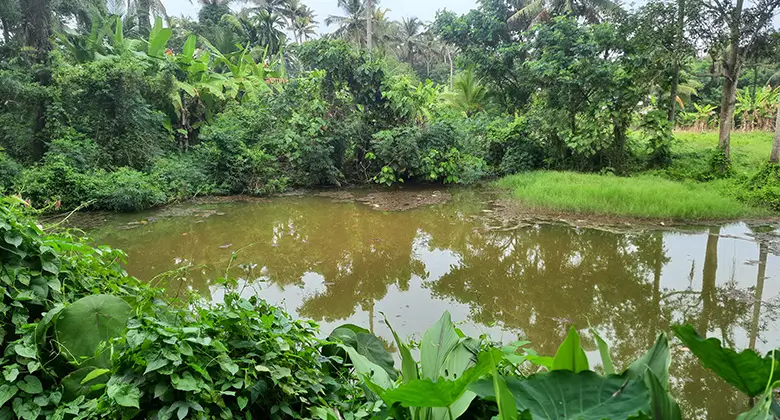
India’s commitment to environmental conservation is prominently reflected in its extensive network of Ramsar Sites. As of March 2026, India boasts 98 wetlands of international importance, covering a diverse range of ecosystems from the high-altitude lakes of the Himalayas to the mangrove swamps of the Sundarbans. These sites are not only critical for biodiversity but also serve as the backbone for local livelihoods, climate regulation, and flood control.
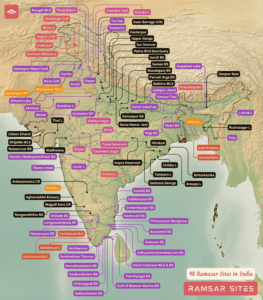
What is a Ramsar Site? Understanding the Framework
A Ramsar Site is a wetland designated to be of international importance under the Ramsar Convention, an intergovernmental environmental treaty established in 1971 in Ramsar, Iran.
The Strategic Importance of Wetlands
Wetlands are often described as the “kidneys of the earth” due to their ability to filter water and regulate hydrological cycles. Their key functions include:
- Biodiversity Hubs: Providing critical habitats for migratory birds on the Central Asian Flyway and endangered species like the Irrawaddy Dolphin and Sangai Deer.
- Climate Regulation: Acting as highly efficient carbon sinks.
- Disaster Management: Functioning as natural buffers against floods and storms.
- Livelihood Support: Sustaining millions through fisheries, agriculture, and eco-tourism.
National Records: Largest, Smallest, and Oldest Ramsar Sites
India’s Ramsar network is characterized by extreme geographical and biological diversity.
- Largest Ramsar Site: The Sundarban Wetland in West Bengal is the undisputed leader, covering a staggering 4,230 km².
- Smallest Ramsar Sites: Renuka Lake in Himachal Pradesh and the Vembannur Wetland Complex in Tamil Nadu share this title, both measuring approximately 2 km².
Historical Designations
- First Ramsar Sites (1981): India entered the convention by designating Chilika Lake (Odisha) and Keoladeo Ghana National Park (Rajasthan) in 1981. These remain the oldest sites in the country.
| Category | Site Name | State | Details |
| Largest | Sundarban Wetland | West Bengal | 4,230 km² |
| Smallest | Renuka Lake / Vembannur | HP / TN | 0.2 km² |
| Oldest | Chilika Lake | Odisha | Designated 1981 |
Newly Added Ramsar Sites (2025–2026)
In a significant push for conservation, India added 13 new sites during 2025 and early 2026.
- Sakkarakottai Bird Sanctuary (Tamil Nadu, 2025)
- Therthangal Bird Sanctuary (Tamil Nadu, 2025)
- Khecheopalri Wetland (Sikkim, 2025)
- Udhwa Lake (Jharkhand, 2025)
- Khichan (Phalodi) (Rajasthan, 2025)
- Menar (Udaipur) (Rajasthan, 2025)
- Gokul Jalashay (Bihar, 2025)
- Udaipur Jheel (Bihar, 2025)
- Gogabeel Lake (Bihar, 2025)
- Siliserh Lake (Rajasthan, 2025)
- Kopra Jalashay (Chhattisgarh, 2025)
- Patna Bird Sanctuary (Uttar Pradesh, 2026)
- Chhari-Dhand (Kutch, Gujarat, 2026)
State-wise Distribution of Ramsar Sites
India’s 98 sites are spread across nearly every corner of the country. Tamil Nadu currently holds the distinction of having the highest number of Ramsar sites in India.
North India
- Himachal Pradesh: Chandra Taal, Pong Dam Lake, Renuka Lake.
- Punjab: Beas Conservation Reserve, Harike Wetland, Kanjli, Keshopur-Miani, Nangal WLS, Ropar Wetland.
- Uttar Pradesh: Bakhira WLS, Haiderpur Wetland, Nawabganj, Parvati Arga, Saman, Samaspur, Sandi, Sarsai Nawar Jheel, Sur Sarovar, Upper Ganga River, Patna Bird Sanctuary (2026).
East and Northeast India
- West Bengal: East Kolkata Wetlands, Sundarban Wetland.
- Odisha: Chilika Lake, Bhitarkanika Mangroves, Ansupa Lake, Hirakud Reservoir, Satkosia Gorge, Tampara Lake.
- Bihar: Kanwar Taal, Nagi Bird Sanctuary, Nakti Bird Sanctuary, Gokul Jalashay (2025), Udaipur Jheel (2025), Gogabeel Lake (2025).
- Northeast: Deepor Beel (Assam), Loktak Lake (Manipur), Pala Wetland (Mizoram), Khecheopalri Wetland (Sikkim, 2025).
West and Central India
- Gujarat: Nalsarovar, Khijadia, Thol Lake, Wadhvana, Chhari-Dhand (2026).
- Rajasthan: Keoladeo NP, Sambhar Lake, Khichan (2025), Menar (2025), Siliserh Lake (2025).
- Madhya Pradesh: Bhoj Wetland, Sakhya Sagar, Sirpur Wetland, Yashwant Sagar, Tawa Reservoir.
South India
- Tamil Nadu: (18+ sites) Including Gulf of Mannar, Pichavaram Mangroves, Pallikaranai Marsh, Vedanthangal BS, and Sakkarakottai (2025).
- Kerala: Ashtamudi, Sasthamkotta, Vembanad-Kol.
- Karnataka: Ranganathituu BS, Magadi Kere, Ankasamudra, Aghanashini Estuary.
The Montreux Record: Wetlands in Danger
The Montreux Record is a register of Ramsar sites where changes in ecological character have occurred, are occurring, or are likely to occur as a result of technological developments, pollution, or other human interference.
Currently, only two Indian sites are on this list:
- Keoladeo Ghana National Park (Rajasthan): Listed in 1990 due to water shortage and invasive species.
- Loktak Lake (Manipur): Listed in 1993 due to pollution and deforestation in the catchment area.
(Note: Chilika Lake was once on the record but was removed in 2002 after successful restoration).
FAQs
WHICH IS THE LARGEST RAMSAR SITE IN INDIA?
The Sundarban Wetland in West Bengal is the largest, covering approximately 4,230 square kilometers of mangrove forest and water bodies.
HOW MANY RAMSAR SITES ARE THERE IN INDIA AS OF 2026?
India currently has 98 designated Ramsar Sites across 28 states and union territories.
WHICH STATE HAS THE MAXIMUM NUMBER OF RAMSAR SITES?
Tamil Nadu holds the record for the highest number of Ramsar sites in India.
WHICH WERE THE FIRST TWO SITES IN INDIA TO BE RECOGNIZED UNDER THE CONVENTION?
Chilika Lake in Odisha and Keoladeo Ghana National Park in Rajasthan were the first Indian sites designated in 1981.
WHAT IS THE SMALLEST RAMSAR SITE IN INDIA?
Renuka Lake in Himachal Pradesh and Vembannur Wetland Complex in Tamil Nadu are the smallest, both being around 0.2 km² in area.
WHAT IS THE MONTREUX RECORD?
It is a register of Ramsar sites facing ecological threats. In India, Keoladeo Ghana National Park and Loktak Lake are currently listed on the Montreux Record.
WHICH RAMSAR SITE IS KNOWN FOR FLOATING ISLANDS CALLED PHUMDIS?
Loktak Lake in Manipur is famous for its floating vegetation called “phumdis” and is home to the world’s only floating national park, Keibul Lamjao.
WHERE IS THE CHHARI-DHAND WETLAND LOCATED?
Chhari-Dhand is located in the Banni grasslands of the Kutch district in Gujarat and was designated as a Ramsar site in 2026.
WHAT IS THE SIGNIFICANCE OF KHECHEOPALRI WETLAND ADDED IN 2025?
Located in Sikkim, it is a sacred lake for both Hindus and Buddhists and is vital for preserving the biodiversity of the eastern Himalayan region.
DOES THE RAMSAR CONVENTION ONLY PROTECT LAKES?
No, the convention defines “wetlands” broadly to include lakes, rivers, underground aquifers, swamps, marshes, wet grasslands, peatlands, oases, estuaries, deltas, tidal flats, mangroves, and even human-made sites like fish ponds and reservoirs.