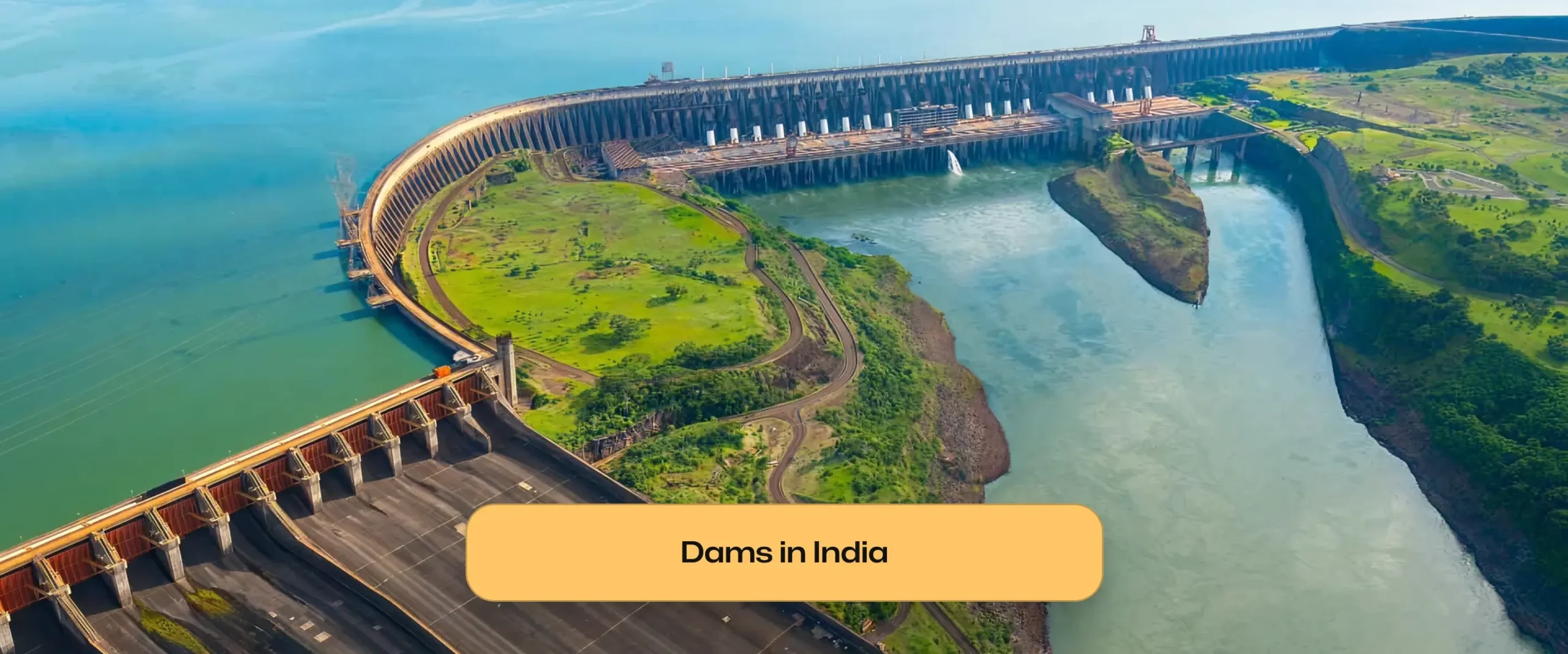
India, a land defined by its vast river systems, is home to some of the world’s most sophisticated water management structures. From the snow-fed torrents of the Himalayas in the north to the rain-dependent rivers of the Deccan plateau and the Ghats in the south, the country’s varied terrain offers the perfect geographical setting for dam construction.
With over 4,300 large dams currently operational and several more under development, these structures serve as the “Temples of Modern India,” a term famously coined by Pandit Jawaharlal Nehru. They are the backbone of India’s agricultural productivity, renewable energy sector, and flood management strategies.
1 Core Functions and Benefits of Dams in India
Dams are multi-purpose projects designed to address the complex water needs of a growing population and an expanding economy. Their significance can be categorized into several key areas:
- Domestic and Urban Water Supply: Dams act as massive reservoirs, ensuring a consistent supply of clean water for households and burgeoning urban centers.
- Agricultural Irrigation: They are life-savers for farmers, providing a regulated water supply that allows for multiple cropping seasons and protects agriculture during drought-prone periods.
- Hydroelectric Power Generation: By harnessing the kinetic energy of falling water, dams contribute a significant portion of India’s renewable energy, aiding in sustainable development.
- Industrial Utility: Large-scale manufacturing and processing units rely on the steady water volume provided by nearby dams for cooling and production.
- Flood Control and Mitigation: During monsoon seasons, dams regulate the flow of volatile rivers, preventing catastrophic flooding in downstream regions.
- River Navigation and Transport: By stabilizing water levels, dams make inland waterways more navigable, offering the most cost-effective mode of transportation for heavy goods.
- Livelihood and Tourism: Reservoirs support local fishing industries and create hubs for recreation, including boating and eco-tourism.
2 National Record Holders: Highest, Longest, and Oldest
India’s engineering prowess is reflected in three iconic structures that hold national and global records.
The Highest Dam: Tehri Dam (Uttarakhand)
Standing at a staggering 260.5 meters, the Tehri Dam is the tallest in India and the 12th tallest globally. Located on the Bhagirathi River in New Tehri, it was completed in its first phase in 2006. It is a core component of the Tehri Hydroelectric Complex, providing irrigation and thousands of megawatts of clean energy.
The Longest Dam: Hirakud Dam (Odisha)
Spanning a total length of 25.79 km, the Hirakud Dam is a composite structure built across the Mahanadi River. Completed in 1953, it is a pioneer of India’s post-independence multipurpose river valley projects, boasting a massive reservoir capacity of over 4.7 million acre-feet.
The Oldest Dam: Kallanai Dam (Tamil Nadu)
Also known as the Grand Anicut, this is one of the oldest water-regulation structures in the world still in use. Built on the Kaveri River between 100 BC and 100 AD by the Chola King Karikalan, it remains a functional masterpiece of ancient Indian hydraulic engineering.
3 State-Wise List of Major Dams in India
The following table provides a detailed overview of prominent dams across various Indian states and the rivers they harness.
| Name of Dam | State | River Name |
| Nizam Sagar Dam | Telangana | Manjira River |
| Srisailam Dam | Andhra Pradesh | Krishna River |
| Ukai Dam | Gujarat | Tapti River |
| Bhakra Nangal Dam | HP / Punjab Border | Sutlej River |
| Chamera Dam | Himachal Pradesh | Ravi River |
| Baglihar Dam | Jammu and Kashmir | Chenab River |
| Uri Hydroelectric Dam | Jammu and Kashmir | Jhelum River |
| Panchet Dam | Jharkhand | Damodar River |
| Tungabhadra Dam | Karnataka | Tungabhadra River |
| Krishna Raja Sagara | Karnataka | Kaveri River |
| Idukki Dam | Kerala | Periyar River |
| Mullaperiyar Dam | Kerala | Periyar River |
| Gandhi Sagar Dam | Madhya Pradesh | Chambal River |
| Bansagar Dam | Madhya Pradesh | Sone River |
| Koyna Dam | Maharashtra | Koyna River |
| Jayakwadi Dam | Maharashtra | Godavari River |
| Hirakud Dam | Odisha | Mahanadi River |
| Mettur Dam | Tamil Nadu | Kaveri River |
| Rihand Dam | Uttar Pradesh | Rihand River |
| Tehri Dam | Uttarakhand | Bhagirathi River |
4 Regional Highlights and Geographical Distribution
Northern and Himalayan Region
Dams in this region, such as Bhakra Nangal (Sutlej) and Baglihar (Chenab), are primarily used for massive power generation and irrigation for the plains of Punjab and Haryana. The steep gradients of Himalayan rivers provide high potential energy.
Central and Western India
In states like Maharashtra and Madhya Pradesh, dams like the Koyna and Gandhi Sagar are vital for industrial power. Maharashtra, in particular, has a dense concentration of dams on rivers like the Godavari and Krishna to support its vast agricultural and urban needs.
Southern Peninsula
The dams on the Kaveri and Krishna rivers, such as Mettur and Srisailam, are the lifelines of the Deccan. These rivers are largely rain-fed, making the storage capacity of these dams critical during the non-monsoon months.
FAQs
WHICH IS THE HIGHEST DAM IN INDIA?
The Tehri Dam in Uttarakhand is the highest dam in India, standing at a height of 260.5 meters.
ON WHICH RIVER IS THE HIRAKUD DAM BUILT?
The Hirakud Dam, the longest in India, is built across the Mahanadi River in the state of Odisha.
WHICH DAM IS THE OLDEST IN INDIA AND STILL IN USE?
The Kallanai Dam (Grand Anicut) in Tamil Nadu, built by the Chola king Karikalan nearly 2,000 years ago, is the oldest functional dam in India.
WHERE IS THE BHAKRA NANGAL DAM LOCATED?
The Bhakra Nangal Dam is situated on the border of Himachal Pradesh and Punjab and is built on the Sutlej River.
WHICH RIVER SUSTAINS THE IDUKKI DAM IN KERALA?
The Idukki Dam, famous for its double curvature arch structure, is built across the Periyar River.
WHAT IS THE PRIMARY PURPOSE OF THE RIHAND DAM?
Located in Uttar Pradesh, the Rihand Dam (Govind Ballabh Pant Sagar) is primarily used for hydroelectric power generation and as a massive water reservoir.
WHICH STATE HAS THE HIGHEST NUMBER OF LARGE DAMS IN INDIA?
Maharashtra has the highest number of large dams in India, with numerous structures built on the Godavari and Krishna river basins.
WHAT IS THE SIGNIFICANCE OF THE TUNGABHADRA DAM?
The Tungabhadra Dam in Karnataka is a multipurpose project providing irrigation, electricity, and flood control for both Karnataka and Andhra Pradesh.
ON WHICH RIVER IS THE SRISAILAM DAM CONSTRUCTED?
The Srisailam Dam is constructed across the Krishna River in Andhra Pradesh and is one of the largest hydroelectric projects in the country.
HOW DO DAMS HELP IN MITIGATING CLIMATE CHANGE?
Dams help by providing a source of renewable hydroelectric energy, which reduces reliance on fossil fuels, and by managing water resources effectively during extreme weather events like droughts or floods.