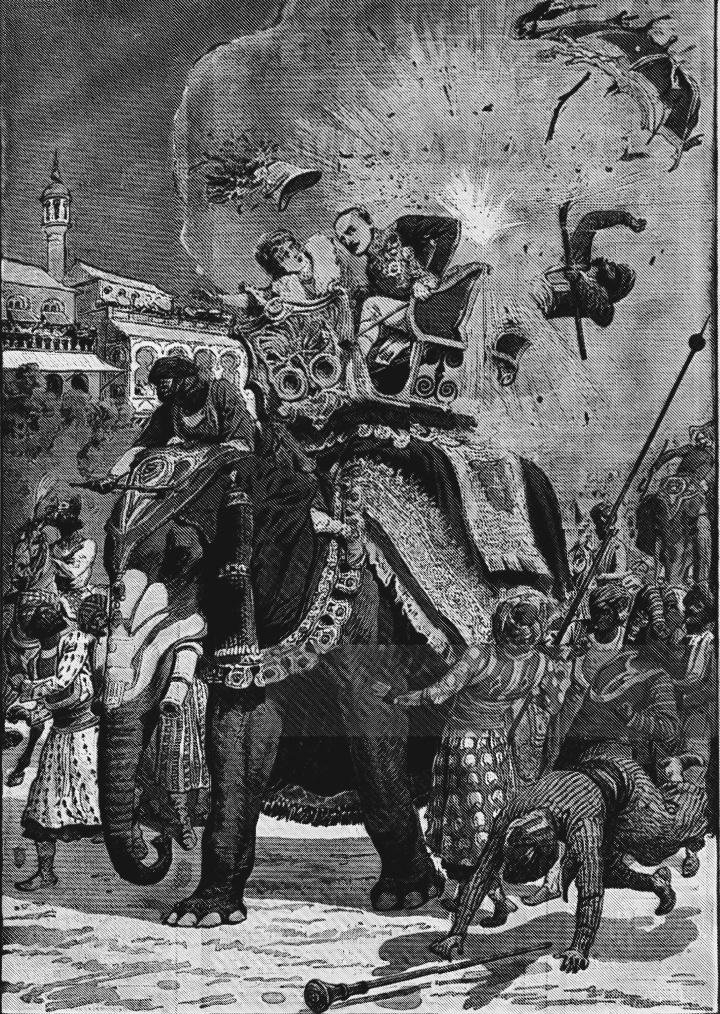
The Delhi Conspiracy Case, also historically referred to as the Delhi-Lahore Conspiracy Case, was one of the most daring and significant episodes in the history of the Indian revolutionary movement. Occurring on December 23, 1912, this event shattered the British illusion of security and showcased the organized capability of Indian revolutionaries to strike at the very heart of the colonial administration. By targeting the Viceroy of India, the revolutionaries sent a clear message to the world that the struggle for independence had transitioned into a more militant and uncompromising phase.
1 Historical Background:
The roots of the conspiracy were deeply tied to the British decision to change the seat of their government. In 1911, King George V announced the transfer of the capital of British India from Calcutta to Delhi.
The Motive Behind the Capital Shift
- Neutralizing Nationalism: Calcutta was the epicentre of Indian nationalism and intellectual resistance. By moving the capital to Delhi, the British hoped to distance themselves from the heated political climate of Bengal.
- Imperial Grandeur: The British sought to associate their rule with the historical seat of the Mughals, aiming to lend a sense of permanence and tradition to the Raj.
The Revolutionary Response
Indian revolutionaries viewed this grand “Imperial Entry” as a direct provocation. They decided to use the ceremonial procession into the new capital to demonstrate that British authority was not absolute. By attacking the highest representative of the British Crown—the Viceroy—they aimed to demoralize the administration and inspire a nationwide uprising.
2 The Day of the Attack: December 23, 1912
As the grand procession of Viceroy Lord Hardinge moved through the crowded streets of Chandni Chowk in Delhi, he was seated atop a decorated elephant.
- The Bombing: As the procession reached a central point in Chandni Chowk, a locally made bomb was hurled at the Viceroy.
- The Outcome: The bomb exploded behind the Viceroy. While Lord Hardinge survived with serious wounds, his Mahavat (the elephant keeper and driver) was killed instantly in the blast.
- Amidst the smoke and confusion, the primary attackers managed to vanish into the narrow lanes of old Delhi, triggering one of the largest manhunts in British Indian history.
3 The Faces of Resistance: Leading Revolutionaries
The conspiracy was the result of a meticulously planned underground network that connected revolutionaries from Bengal, Punjab, and beyond.
Rash Behari Bose:
Bose was the primary coordinator and brain behind the attack. He managed to weave together various revolutionary cells into a unified strike force.
- Escape: Following the attempt, he eluded the British police by hiding in the Madan Mohan temple.
- He eventually escaped to Japan in 1915, where he continued to mobilize international support for Indian independence and played a foundational role in the Indian Independence League.
Basant Kumar Biswas:
A youth with incredible expertise in explosives and firearms, Biswas was the individual who actually threw the bomb at Lord Hardinge.
- Martyrdom: He was arrested in February 1914 and was hanged in 1915 at the Ambala Central Jail.
Master Amir Chand
A veteran of the Swadeshi movement and a member of the Ghadar Party, he served as a bridge between different revolutionary factions in North India.
- Martyrdom: He was arrested in 1914 and executed in 1915 in Delhi.
Bhai Balmukund
A Punjabi revolutionary who utilized print media to disseminate anti-colonial ideas. He was also accused of a bomb blast in Lahore’s Lawrence Garden in 1913.
- Martyrdom: He was arrested in 1914 and executed in 1915.
Avadh Behari
A close collaborator of Rash Behari Bose, he provided the logistical support necessary for the operation in Delhi.
- Martyrdom: He was executed alongside his comrades in Ambala Central Jail in 1915.
4 The Lasting Impact on the National Movement
The Delhi Conspiracy Case was not just a failed assassination; it was a psychological victory for the revolutionaries that reshaped the Indian political landscape.
- Intense British Repression: The Raj responded with iron-fisted measures, particularly in Bengal and Punjab. This involved mass arrests, increased surveillance, and the implementation of stricter control laws to crush anti-colonial sentiment.
- A Radical Shift in Tactics: The event marked a definitive transition from the “moderate” constitutional methods of the early Congress to militant nationalism. It proved that armed struggle was a viable path for many.
- Inspiration through Martyrdom: The execution of the “Delhi Four” (Biswas, Chand, Balmukund, and Behari) turned them into national icons. Their sacrifice acted as a catalyst, drawing thousands of youth into the revolutionary fold.
- Exposure of Colonial Discontent: The attack demonstrated to the global community that beneath the surface of imperial ceremonies lay deep-seated anger and a yearning for Purna Swaraj (Complete Independence).
FAQs
WHAT IS THE ALTERNATIVE NAME FOR THE DELHI CONSPIRACY CASE?
The event is also widely known as the Delhi-Lahore Conspiracy Case, reflecting the geographical spread of the revolutionary network involved.
WHO WAS THE VICEROY OF INDIA DURING THE 1912 ASSASSINATION ATTEMPT?
The target of the assassination attempt was Lord Hardinge, the then Viceroy of India, who was presiding over the transfer of the capital from Calcutta to Delhi.
WHO ACTUALLY THREW THE BOMB AT LORD HARDINGE IN CHANDNI CHOWK?
The bomb was thrown by the young revolutionary Basant Kumar Biswas, who had been trained specifically for this mission by Rash Behari Bose.
WHAT WAS THE IMMEDIATE CAUSE FOR THE REVOLUTIONARIES TO TARGET THE VICEROY IN 1912?
The primary cause was the ceremonial entry of the Viceroy into Delhi to mark the shifting of the capital from Calcutta, which revolutionaries saw as an opportunity to challenge British sovereignty.
HOW DID RASH BEHARI BOSE ESCAPE ARREST AFTER THE DELHI CONSPIRACY CASE?
After the blast, Bose eluded the police net, stayed briefly in a temple, and eventually managed to escape to Japan in 1915, where he lived in exile.
WHO WERE THE FOUR REVOLUTIONARIES EXECUTED FOR THEIR INVOLVEMENT IN THIS CASE?
The four martyrs were Basant Kumar Biswas, Master Amir Chand, Bhai Balmukund, and Avadh Behari.
WHAT ROLE DID THE GHADAR PARTY PLAY IN THE CONTEXT OF THIS CONSPIRACY?
Many of the key conspirators, such as Master Amir Chand, were associated with or influenced by the Ghadar Party, which aimed to overthrow British rule through an armed revolt.
WHY DID THE BRITISH MOVE THE CAPITAL FROM CALCUTTA TO DELHI IN 1911?
The British moved the capital to curb the rising tide of nationalism in Bengal and to establish a more central and historically symbolic seat of power in Delhi.
WHAT WAS THE FATE OF THE MAHAVAT DURING THE ASSASSINATION ATTEMPT?
While Lord Hardinge survived the blast with injuries, his Mahavat (the elephant driver) was killed on the spot.
HOW DID THE DELHI CONSPIRACY CASE CHANGE THE DIRECTION OF THE INDIAN FREEDOM STRUGGLE?
It signaled a radical shift toward militant nationalism, proving that the youth were prepared to use violence to achieve independence and forcing the British to adopt much more repressive policies.