Context
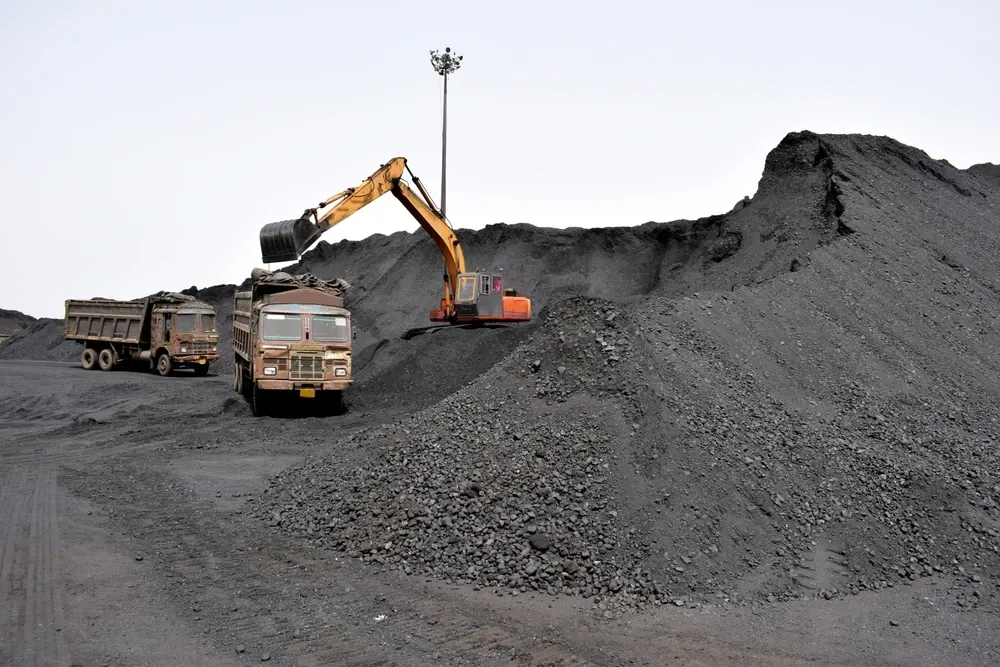
India’s Ministry of Coal has announced coal reserves of 210 million tonnes, enough for 88 days of consumption. Amid global energy disruptions from West Asia, these domestic reserves are vital for ensuring India’s energy security.
Q1. What is Coal?
- Coal is a sedimentary fossil fuel (found mainly in sedimentary rock formations) formed from the remains of plants and vegetation that were buried under sediments millions of years ago.
- Over long geological periods, heat and pressure transform this organic matter into coal, which becomes an important source of energy and industrial fuel.
Q2. What is the current status of the coal sector in India?
- Coal Reserves: India has the 5th largest coal reserves in the world (around 361 billion tonnes).
- Production and Consumption: India is the 2nd largest producer and consumer of coal globally, reflecting India’s rising energy demand due to industrialisation and economic growth.
- Recent Production Trends: Coal production in FY 2024–25 crossed 1 billion tonnes, with the government targeting 1.15 billion tonnes next year.
Q3. Which regions produce coal in India?
Coal production in India is concentrated mainly in eastern and central states.
- Major Coal Producing States: Jharkhand, Odisha and Chhattisgarh. These states contain the largest coalfields in the country.
- Other Coal Producing Regions: Coal is also produced in Madhya Pradesh, Telangana, Andhra Pradesh, Gujarat, Assam and Tamil Nadu.
- Major Coalfields: Most coal deposits are located in river valleys such as Damodar Valley, Mahanadi Valley, Godavari Valley and Son Valley.
Q4. How is coal classified based on carbon content?
Coal is classified into four types depending on its carbon content and energy value.
| Anthracite
1. Carbon content: 80–95% 2. Highest quality coal; hard, shiny, and smokeless 3. Found mainly in Jammu and Kashmir 4. India has very limited reserves |
Bituminous Coal
1. Carbon content: 60–80% 2. Most widely used coal in India 3. Important for power generation and steel production 4. Found mainly in Jharkhand, Odisha and Chhattisgarh |
Lignite
1. Carbon content: 40–55% 2. Also called brown coal 3. High moisture content 4. Found mainly in Neyveli (Tamil Nadu), Rajasthan and Gujarat. |
Peat
1. Carbon content: less than 40% 2. Represents the initial stage of coal formation 3. Lowest calorific value and rarely used as fuel |
Q5. How is coal classified based on geological age?
| Gondwana Coal
1. Age: about 250 million years 2. Accounts for around 98% of India’s coal reserves 3. Contains higher carbon and lower sulphur 4. Found mainly in the Damodar, Mahanadi, Godavari and Son valleys 5. Most Indian bituminous coal belongs to this category. |
Tertiary Coal
1. Age: 15–60 million years 2. Younger deposits with higher moisture and sulphur content 3. Lower calorific value 4. Found mainly in Northeastern India, including Assam, Meghalaya & Arunachal Pradesh. |
Q6. What is the legal and policy framework governing coal mining in India?
- Coal Mines Nationalisation Act, 1973 – brought coal mining largely under government control.
- Coal Sector Reforms: Following the coal block allocation controversy (2012–13), several reforms were introduced to improve transparency:
- Auction-based allocation of coal blocks
- Greater transparency in mining rights
- Commercial Coal Mining Reform (2020): The government further liberalised the sector by allowing private companies to mine coal, coal to be sold in the open market and mining not restricted to captive consumption.
- These reforms aim to increase domestic production, reduce imports, and attract private investment.
Q7. Why is coal important for India?
Coal continues to be a key energy resource because:
- Nearly 70% of India’s electricity generation depends on coal.
- It supports core industries such as steel, cement, and manufacturing.
- It plays a vital role in ensuring energy security.
Conclusion
Coal remains a central pillar of India’s energy system and industrial growth. However, India must balance its coal-based energy needs with environmental sustainability while gradually moving toward a cleaner and diversified energy mix.
FAQs
Q1. What is coal and how is it formed?
Coal is a sedimentary fossil fuel formed from ancient plant remains buried under sediments. Over millions of years, heat and pressure transformed this organic matter into coal, making it a key energy resource.
Q2. What is the current status of India’s coal reserves and production?
India has the 5th largest coal reserves globally (~361 billion tonnes). It is the 2nd largest producer and consumer of coal, with production crossing 1 billion tonnes in FY 2024–25, and a target of 1.15 billion tonnes next year.
Q3. Which regions are the major coal producers in India?
Coal production is concentrated in Jharkhand, Odisha, and Chhattisgarh, with other contributions from Madhya Pradesh, Telangana, Andhra Pradesh, Gujarat, Assam, and Tamil Nadu. Major coalfields lie in Damodar, Mahanadi, Godavari, and Son valleys.
Q4. How is coal classified in India?
By carbon content: Anthracite (highest quality), Bituminous (most used), Lignite (brown coal), Peat (lowest quality). By geological age: Gondwana coal (~250 million years, 98% of reserves) and Tertiary coal (15–60 million years, found in Northeast India).
Q5. Why is coal important for India’s energy security?
Coal generates ~70% of India’s electricity, supports steel, cement, and manufacturing industries, and remains central to energy security and industrial growth.