Important questions for UPSC Pre/ Mains/ Interview:
|
Context
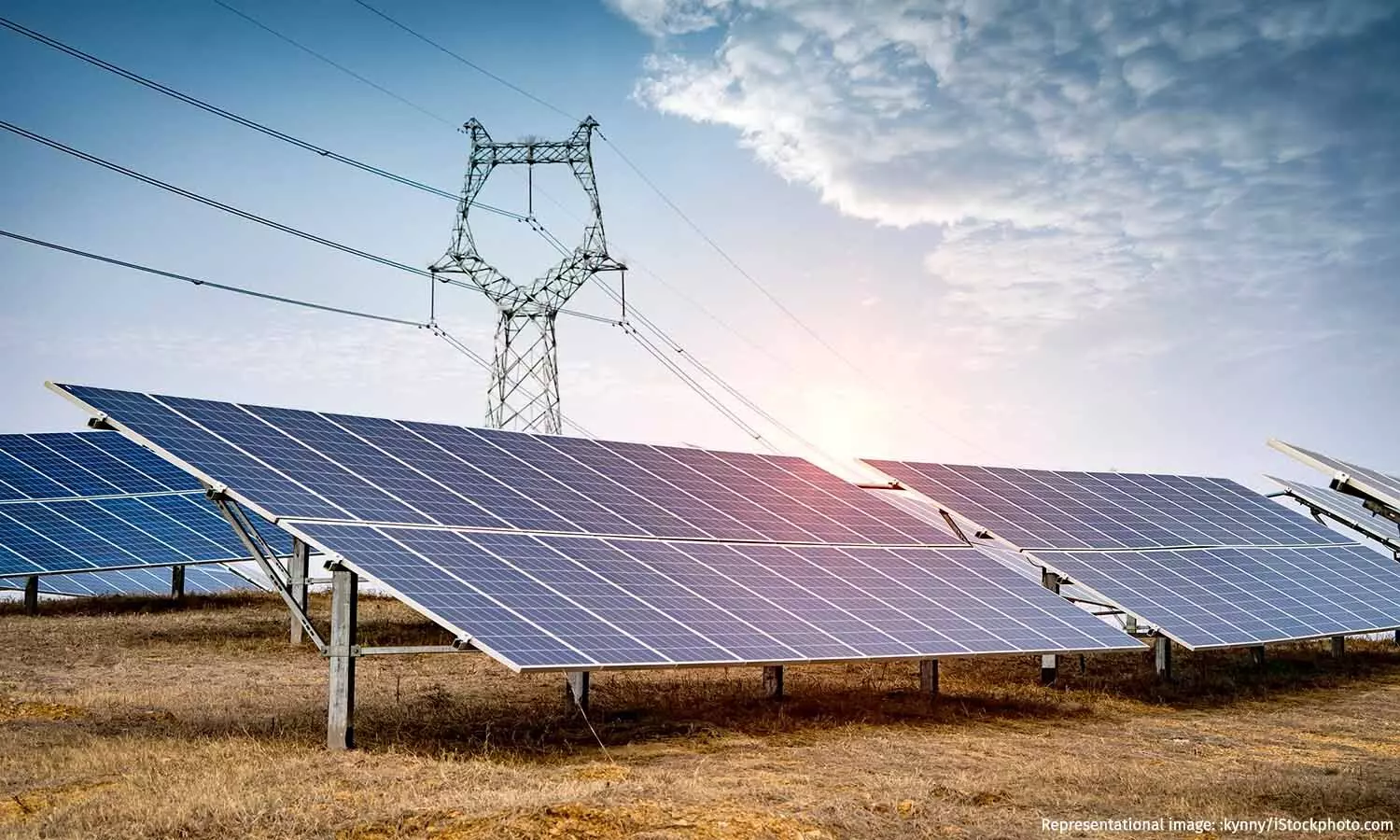
Concerns have emerged over grid congestion and stranded renewable energy capacity in India, where electricity generated from solar and wind projects cannot be transmitted due to limitations in the power grid. This highlights operational challenges in India’s renewable energy transition.
Q1. Why is renewable energy central to India’s energy transition?
- India is rapidly expanding renewable energy to reduce carbon emissions and fossil fuel dependence.
- Government policies, competitive auctions, and falling technology costs have accelerated solar and wind capacity expansion.
- India has set major climate and energy targets:
- 500 GW non-fossil fuel capacity by 2030
- 50% electricity from renewable sources
- Net-zero emissions by 2070
- Renewable capacity has grown particularly in Rajasthan, Gujarat, Tamil Nadu, and Karnataka, which have favourable solar and wind conditions.
- These developments position India as a major global player in clean energy deployment.
Q2. What is stranded renewable energy capacity?
- Stranded power refers to electricity generated from renewable plants that cannot be transmitted to the grid due to network constraints.
- Even fully operational plants may be unable to deliver power to consumers.
- Example:
- Rajasthan has about 23 GW of renewable capacity, but evacuation capacity is only around 18.9 GW.
- More than 4,000 MW of renewable energy remains stranded during peak generation periods.
- This leads to wasted electricity, financial losses for developers, and inefficiencies in the energy system.
Q3. Why does transmission infrastructure create bottlenecks?
- Renewable energy is typically generated in specific geographic regions, while electricity demand is spread across the country.
- Transmission corridors are required to move electricity from renewable-rich regions to demand centres.
- However, several challenges exist:
- Transmission lines are underutilised or poorly coordinated.
- Some 765 kV transmission corridors designed for 6,000 MW operate at only 600–1,000 MW.
- Utilisation levels sometimes remain below 20%.
- These corridors involve large public investments of ₹4,000–5,000 crore per project, and underuse increases electricity costs.
Q4. How do institutional and operational issues contribute to grid congestion?
- Transmission infrastructure planning is carried out by the Central Transmission Utility (CTU) based on projected renewable capacity.
- Developers receive General Network Access (GNA) to connect their power plants to the national grid.
- However, operational decisions by grid managers sometimes limit actual electricity flow through transmission lines.
- This creates a gap between infrastructure planning and real-time grid operations.
- The mismatch can reduce investor confidence and disrupt project viability.
Q5. What is curtailment and why does it create financial risks?
- Curtailment refers to the forced reduction in electricity generation due to grid limitations.
- Renewable power plants may be asked to shut down temporarily despite having available generation capacity.
- Projects with Temporary General Network Access (T-GNA) are sometimes curtailed more frequently than those with permanent access.
- Since renewable energy projects involve large upfront investments, curtailment can lead to:
- Revenue losses
- Financial stress for developers
- Reduced investor interest in future projects
Q6. What technical solutions can improve renewable energy integration?
Several technologies can improve grid stability and transmission efficiency:
- Reactive power technologies such as STATCOMs (Static Synchronous Compensators) to manage voltage stability.
- Dynamic grid management systems that use real-time monitoring and security assessments.
- Adaptive line rating technologies that allow transmission lines to carry higher loads under favourable conditions.
- Advanced forecasting systems to better manage variable renewable energy generation.
Many countries with high renewable penetration use these technologies to balance grid stability with efficient power transmission.
Q7. What institutional reforms are needed to address the problem?
- Improve coordination between transmission planning agencies and grid operators.
- Introduce transparent curtailment rules so that generation cuts are distributed fairly among developers.
- Enable dynamic allocation of unused grid capacity to maximise transmission utilisation.
- Evaluate grid operators not only on stability but also on efficient utilisation of transmission infrastructure.
- Strengthen regulatory oversight to ensure predictable and fair grid access for renewable developers.
Conclusion
India’s renewable energy expansion is central to its climate and energy security goals, but grid congestion and stranded power highlight structural challenges in integrating large amounts of renewable energy. Addressing transmission bottlenecks, improving grid management technologies, and strengthening institutional coordination will be essential to ensure that renewable capacity translates into reliable and efficient electricity supply.