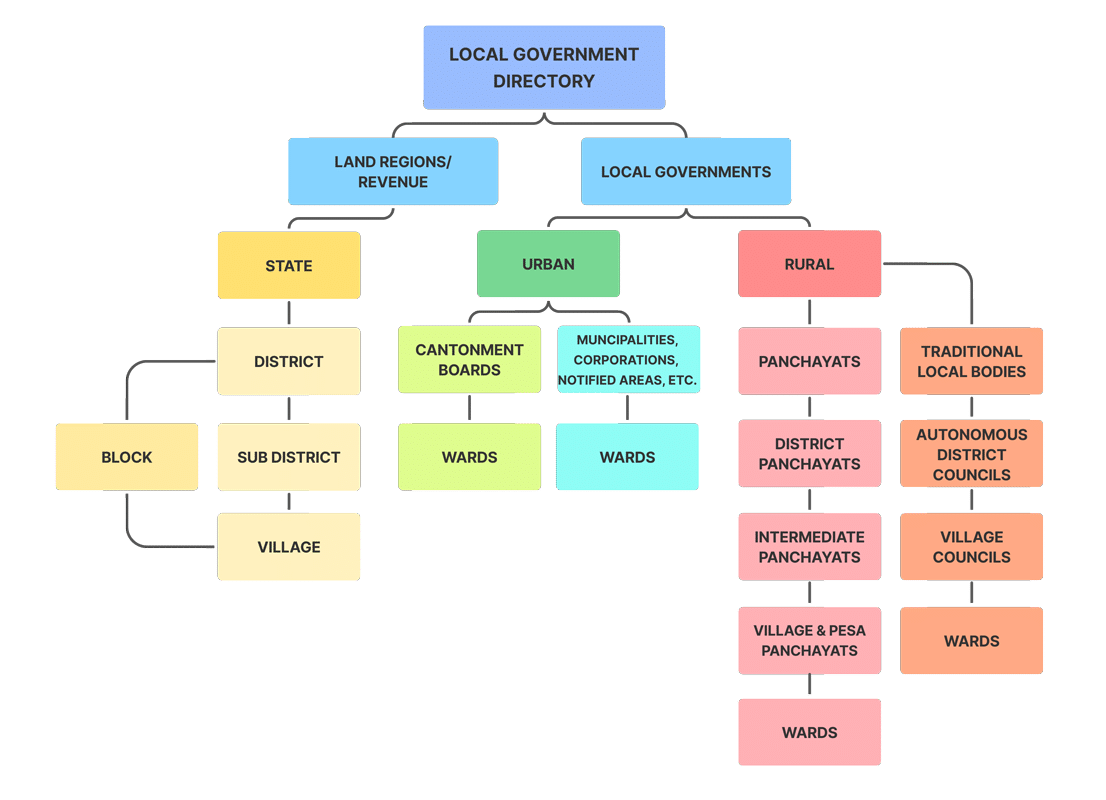
The Schedules of the Indian Constitution are supplementary lists that organize and categorize detailed administrative and legislative provisions. While the main body of the Constitution consists of Articles, the Schedules serve as an appendix that provides additional depth, ensuring the document remains functional and organized.
Originally, when the Constitution was ratified on January 26, 1950, it contained 8 Schedules. However, to address the evolving needs of the Indian polity, this number has expanded to 12 Schedules through various constitutional amendments.
Significance and Purpose of Constitutional Schedules
Schedules play a pivotal role in the governance of India by serving three primary functions:
Simplifying Legal Complexity: By separating long lists of states, territories, or technical details from the main Articles, the Schedules make the Constitution easier to navigate.
Providing Clarity and Reference: They act as an exhaustive reference for specific provisions, such as the division of legislative powers or the list of official languages.
Facilitating Targeted Amendments: They allow Parliament to update administrative details (like changing a state’s name or adding a new language) without having to rewrite entire constitutional Articles.
Exhaustive List of the 12 Schedules of the Indian Constitution
The following table provides a comprehensive breakdown of each Schedule, the subject matter it covers, and the specific Articles that link to it.
| Schedule | Subject Matter | Related Articles |
| First Schedule | List of States and Union Territories and their territorial jurisdictions. | 1 and 4 |
| Second Schedule | Provisions relating to emoluments, allowances, and privileges of high officials (President, Governors, Speakers, Judges, and CAG). | 59(3), 65(3), 75(6), 97, 125, 148(3), 158(3), 164(5), 186, 221 |
| Third Schedule | Forms of Oaths and Affirmations for Union/State Ministers, MPs/MLAs, Judges, and the CAG. | 75(4), 99, 124(6), 148(2), 164(3), 188, 219 |
| Fourth Schedule | Allocation of seats in the Rajya Sabha (Council of States) to States and Union Territories based on population. | 4(1) and 80(2) |
| Fifth Schedule | Provisions for the administration and control of Scheduled Areas and Scheduled Tribes. | 244(1) |
| Sixth Schedule | Administration of Tribal Areas in the North-Eastern states of Assam, Meghalaya, Tripura, and Mizoram (ATM-M). | 244(2) and 275(1) |
| Seventh Schedule | Division of powers between the Union and States through Three Lists: Union, State, and Concurrent. | 246 |
| Eighth Schedule | List of 22 Official Languages recognized by the Constitution. | 344(1) and 351 |
| Ninth Schedule | Validation of certain Acts and Regulations (primarily land reforms) to protect them from judicial scrutiny. | 31B |
| Tenth Schedule | Anti-Defection Law: Provisions for disqualification of members on the ground of defection. | 102(2) and 191(2) |
| Eleventh Schedule | Powers, authority, and responsibilities of Panchayats (29 functional items). | 243G |
| Twelfth Schedule | Powers, authority, and responsibilities of Municipalities (18 functional items). | 243W |
Key Schedules
The Seventh Schedule: The Federal Backbone
The Seventh Schedule is the engine of Indian federalism, determining who can make laws on what. It is divided into three lists:
- Union List: Includes 100 subjects (originally 97) such as Defence, Foreign Affairs, and Banking.
- State List: Includes 61 subjects (originally 66) such as Police, Public Health, and Agriculture.
- Concurrent List: Includes 52 subjects (originally 47) where both Centre and States can legislate, such as Education, Forests, and Marriage.
The Eighth Schedule: Linguistic Diversity
Currently, there are 22 languages recognized under this Schedule. It is important to note that English is NOT one of the languages listed in the Eighth Schedule, though it is used for official purposes.
The Ninth & Tenth Schedules: Political and Judicial Evolution
- Ninth Schedule: Introduced by the 1st Amendment (1951) to protect land reform laws from being challenged in courts on the grounds of violating Fundamental Rights.
- Tenth Schedule: Added by the 52nd Amendment (1985), it aims to prevent political instability caused by frequent party-switching (defection).
Major Constitutional Amendments Impacting Schedules
Several amendments have been instrumental in shaping the current 12-Schedule structure:
- 1st Amendment (1951): Inserted the Ninth Schedule.
- 7th Amendment (1956): Reorganized States and modified the First and Fourth Schedules.
- 42nd Amendment (1976): Transferred five subjects from the State List to the Concurrent List (Education, Forests, Weights/Measures, Wildlife, and Admin of Justice).
- 52nd Amendment (1985): Inserted the Tenth Schedule (Anti-Defection).
- 73rd & 74th Amendments (1992): Inserted the Eleventh and Twelfth Schedules respectively, formalizing local self-government.
- 91st Amendment (2003): Strengthened the Tenth Schedule by removing the provision that protected a “split” of one-third of members.
FAQs: Schedules of the Indian Constitution
How many Schedules are there in the Indian Constitution currently?
As of 2026, there are 12 Schedules in the Indian Constitution.
Which Schedule deals with the Anti-Defection Law?
The Tenth Schedule establishes the provisions for disqualification of members on the grounds of defection.
What is the difference between the Fifth and Sixth Schedules?
The Fifth Schedule deals with Scheduled Areas and Tribes across most of India, while the Sixth Schedule focuses specifically on tribal areas in Assam, Meghalaya, Tripura, and Mizoram.
How many languages are recognized in the Eighth Schedule?
There are 22 languages recognized, including Assamese, Bodo, Dogri, Maithili, and Santhali.
Which Amendment added the Ninth Schedule?
The First Amendment Act of 1951 added the Ninth Schedule to protect land reform laws.
Which Schedule contains the list of Union, State, and Concurrent subjects?
The Seventh Schedule (Article 246) provides the three lists for the division of legislative powers.
Does the Second Schedule outline the salary of the Prime Minister?
No, the Second Schedule outlines emoluments for the President, Governors, Speakers, and Judges, but not specifically for the PM or Union Ministers.
What was the purpose of the 73rd Amendment?
The 73rd Amendment (1992) added the Eleventh Schedule, which empowers Panchayati Raj institutions with 29 functional items.
Is the Ninth Schedule still completely immune to judicial review?
No. In the I.R. Coelho case, the Supreme Court ruled that laws placed in the Ninth Schedule after April 24, 1973, can be challenged if they violate the Basic Structure of the Constitution.
Which Schedule allocates seats in the Rajya Sabha?
The Fourth Schedule details the distribution of Rajya Sabha seats among the various States and Union Territories.