| Important questions for UPSC Pre/ Mains/ Interview:
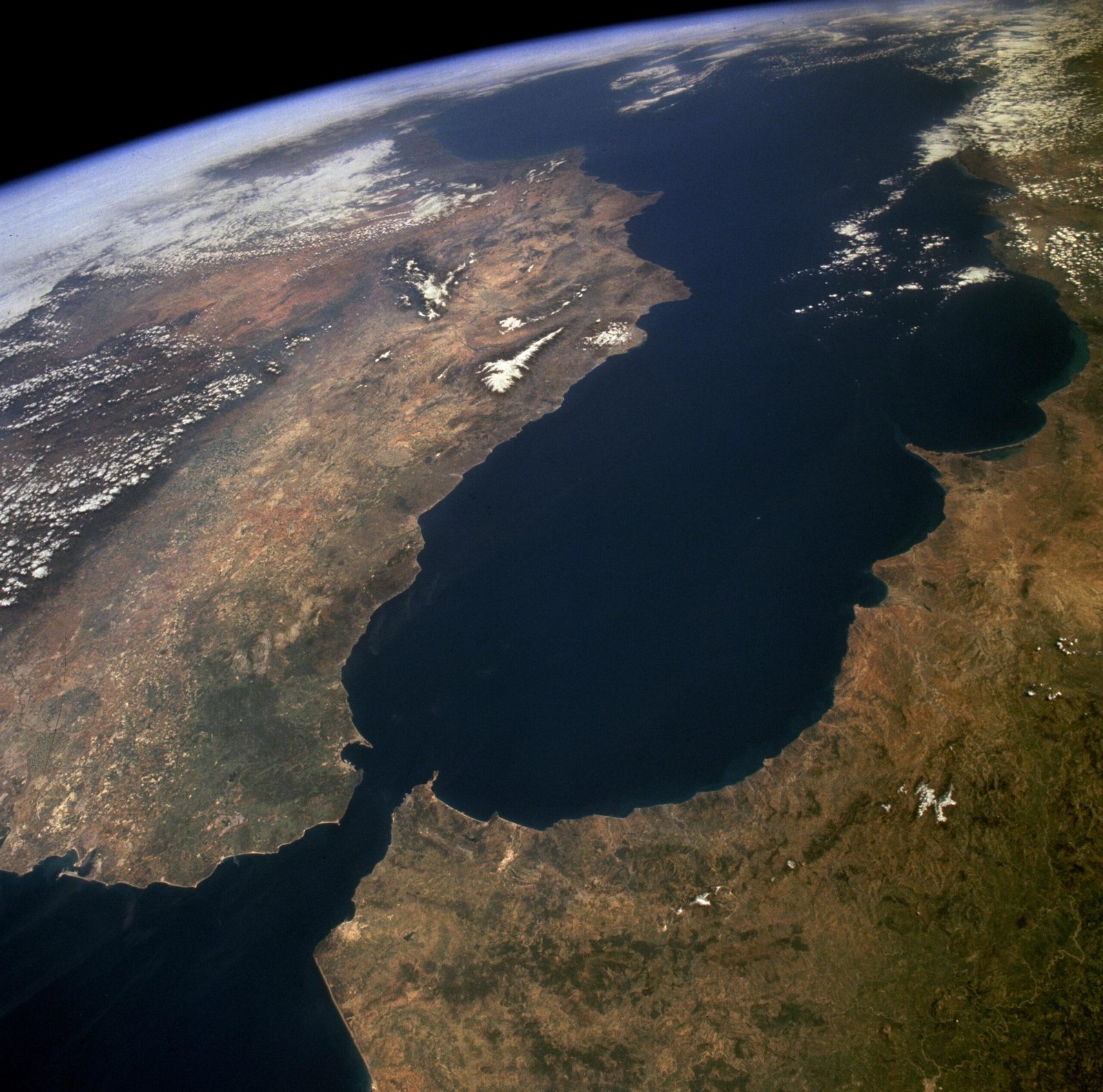
1. What is the Strait of Gibraltar? 2. Which countries border the Strait of Gibraltar? 3. What are its physical and geographical features? 4. How was the Strait of Gibraltar formed? 5. Why is the Strait strategically significant? 6. What is its military and geopolitical relevance? 7. What major ports are located along the Strait? 8. How do water currents function in the Strait? 9. What economic roles does the Strait perform? 10.What vulnerabilities exist in the Strait? 11.Why does naval movement in the Strait attract attention? 12.What safeguards govern navigation in the Strait? |
Context
The nuclear–powered USS Gerald R. Ford recently activated tracking systems while moving toward the Strait of Gibraltar, drawing attention from defence observers. The development highlights the enduring geostrategic importance of this narrow maritime chokepoint connecting the Atlantic Ocean and the Mediterranean Sea.
Q1. What is the Strait of Gibraltar?
- A narrow waterway separating Europe and Africa.
- Connects: Atlantic Ocean (west) and Mediterranean Sea (east)
- Located at the southern tip of the Iberian Peninsula.
- Only natural maritime link between the Atlantic and the Mediterranean.
Q2. Which countries border the Strait of Gibraltar?
- Spain (north), Gibraltar (north), Morocco (south) and Ceuta (south)
- This creates a complex geopolitical maritime zone involving European Union, UK, and North African interests.
Q3. What are its physical and geographical features?
- Length: Approximately 58 km.
- Narrowest width: About 13 km (Point Cires to Point Marroquí).
- Western width: 43 km (Cape Trafalgar to Cape Spartel).
- Eastern width: 23 km (Rock of Gibraltar to Mount Hacho/Jebel Moussa).
- Depth: 300–900 metres.
The eastern landmarks are historically known as the Pillars of Heracles.
Q4. How was the Strait of Gibraltar formed?
- Result of tectonic interaction between: African Plate (northward movement) and European Plate.
- Forms a gap between: Spanish plateau and Atlas Mountains of North Africa.
Geological movement shaped its narrow maritime corridor.
Q5. Why is the Strait strategically significant?
- A global maritime chokepoint: Only natural link between the Atlantic and Mediterranean. Approximately 300 ships cross daily.
- It is crucial for energy transport, commercial shipping and naval deployments
- Importance before 1869: Sole access to Mediterranean prior to opening of Suez Canal. Even after Suez, it remains vital for transatlantic-Mediterranean trade.
Q6. What is its military and geopolitical relevance?
- Key NATO monitoring point.
- Gateway for US and European naval forces.
- Critical for access to Mediterranean theatre.
- Controls naval entry to southern Europe and North Africa.
- Important for surveillance of maritime traffic.
- Movement of aircraft carriers or nuclear vessels through it signals strategic positioning.
Q7. What major ports are located along the Strait?
- Tanger-Med Port (one of Africa’s largest container hubs) near Tangier.
- Major Spanish ports along the Andalusian coast.
Q8. How do water currents function in the Strait?
- Surface current: Atlantic water flows into the Mediterranean. Cooler and less saline.
- Deep current: Mediterranean water flows into Atlantic. Warmer and saltier.
- This bidirectional exchange maintains Mediterranean salinity balance, supports ecological stability and influences global thermohaline circulation.
Q9. What economic roles does the Strait perform?
- Major route for: Oil shipments, LNG transport, European trade and North African exports
- Supports Mediterranean economies.
- Connects European Union trade routes to Atlantic markets.
Q10. What vulnerabilities exist in the Strait?
- Maritime congestion risk.
- Naval tensions during geopolitical crises.
- Illegal migration routes.
- Environmental hazards (oil spills).
- Piracy spillover from nearby regions.
- Its narrowness makes it sensitive to disruption.
Q11. Why does naval movement in the Strait attract attention?
- Aircraft carriers represent strategic signalling.
- Activation of tracking systems suggests heightened alert posture.
- Potential linkage to broader Mediterranean or Atlantic security developments.
- Movement through chokepoints reflects operational readiness.
Q12. What safeguards govern navigation in the Strait?
- International maritime law under UNCLOS.
- Right of transit passage.
- Coordinated maritime traffic monitoring.
- Naval deconfliction mechanisms among major powers.
Conclusion
The Strait of Gibraltar is a critical maritime chokepoint linking two major water bodies and three continents. Its geographic narrowness, intense commercial traffic, and strategic military relevance make it central to global maritime stability. Any heightened naval activity underscores its enduring importance in international security and trade dynamics.