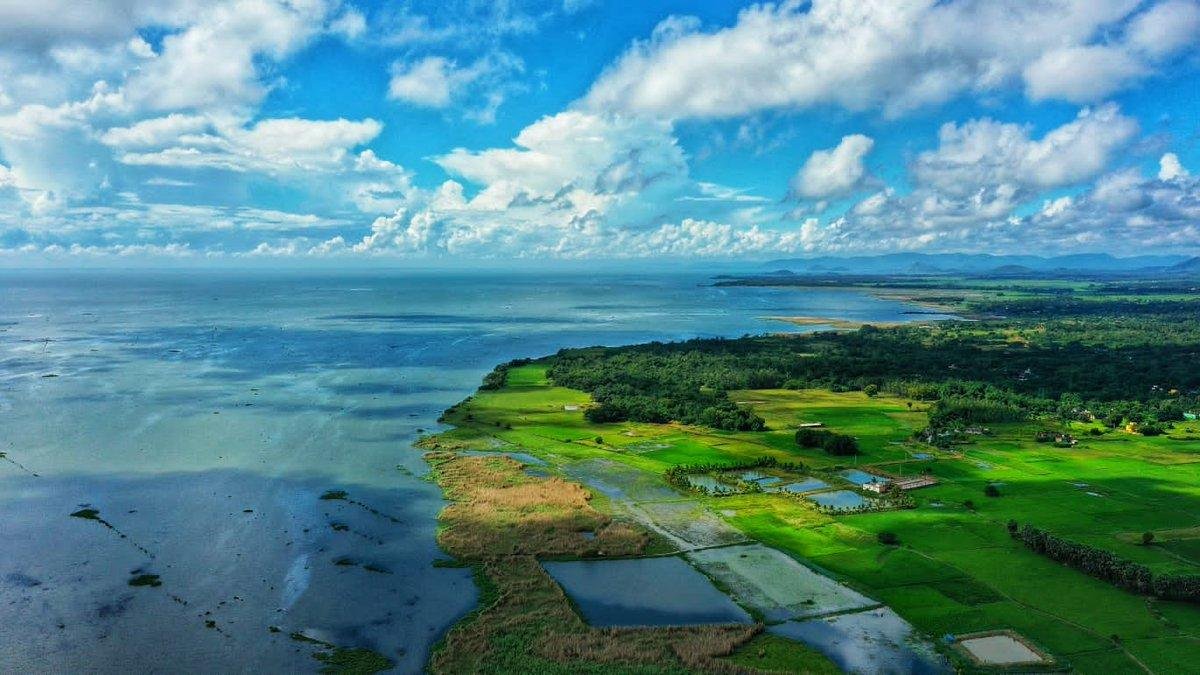
Chilka lake, an ecological marvel on India’s eastern coast, serves as a vital lifeline for the state of Odisha. As a unique shallow lagoon with estuarine characteristics, it blends freshwater from inland rivers with the saltwater of the Bay of Bengal.
The Odisha government has initiated a comprehensive new action plan aimed at the twin goals of biodiversity protection and sustainable development of the surrounding communities.
I. Geographical Profile and Location
Chilika is a massive brackish water lagoon spread across the Puri, Khurda, and Ganjam districts of Odisha.
- Global Ranking: It is Asia’s largest brackish water lake and the world’s second-largest brackish water lagoon (surpassed only by the New Caledonian Barrier Reef).
- Water Spread: The lake is dynamic; its area fluctuates between 900 sq. km during the summer and expands to 1,165 sq. km during the monsoon.
- Connection to the Sea: It is linked to the Bay of Bengal via a 32 km long channel. This channel is narrow (1.5 km wide) and separated from the sea by a sandy spit.
- Inland Source: The lake is primarily fed by the Daya River, which flows into its northern reaches.
II. Major Islands of Chilika
The lagoon is dotted with several islands, each offering unique cultural or ecological value:
- Nalabana Island: The ecological heart of the lake, it was designated a Bird Sanctuary in 1987. During the monsoon, the island often disappears underwater, reappearing as a prime habitat for birds in winter.
- Kalijai Island: A major cultural landmark, home to the revered Kalijai Temple, the abode of the presiding deity of the lake.
- Satpada Island: Famous as the primary spot for viewing dolphins.
- Other Notable Islands: Honeymoon Island, Breakfast Island, Beacon Island, and Birds’ Island.
III. Biodiversity: A Global Sanctuary
Chilika is one of the most biodiverse regions in India and was designated as the first Indian wetland of international importance under the Ramsar Convention in 1981.
1. Avifauna (Birds)
Chilika is the largest wintering ground for migratory birds on the Indian subcontinent.
- Migratory Routes: Birds travel thousands of miles from the Caspian Sea, Lake Baikal, Aral Sea, Mongolia, Central Asia, and the Himalayas.
- Key Species: Graylag Geese, Purple Moorhen, White-bellied Sea Eagles, Jacana, Herons, and Flamingos.
- Flamingos: The lake hosts one of the world’s largest breeding colonies of Flamingos.
2. Aquatic and Terrestrial Life
- Irrawaddy Dolphins: Chilika is one of the few places in the world where this rare species of dolphin can be found.
- Wildlife: The peripheral areas and islands support mammals like the Blackbuck, Spotted Deer, Golden Jackals, and Hyenas.
Ten FAQs on Chilika Lake
Where is Chilika Lake located?
It is located on the eastern coast of India, spread across the Puri, Khurda, and Ganjam districts of Odisha.
What type of water body is Chilika?
It is a brackish water lake and a shallow lagoon with estuarine characteristics.
Which river is the primary source of freshwater for Chilika?
The Daya River is the main river that flows into the lake.
Why is Nalabana Island significant?
Nalabana Island is a designated Bird Sanctuary and a critical habitat for thousands of migratory birds.
Which rare dolphin species is found in Chilika?
lake is famous for its population of the rare Irrawaddy dolphins.
What was Chilika’s milestone in 1981?
In 1981, it became the first Indian wetland to be designated under the Ramsar Convention.
How large is Asia’s largest brackish water lake?
Its area varies seasonally, ranging from 900 sq. km in summer to 1,165 sq. km in the monsoon.
Where do the migratory birds in Chilika come from?
They arrive from remote regions like the Caspian Sea, Lake Baikal, Siberia, and the Mongolian steppes.
Which island in Chilika is famous for its temple?
Kalijai Island is renowned for the Kalijai Temple, a significant pilgrimage site.
What is the latest news regarding the lake’s management?
The Odisha government is implementing a new action plan for biodiversity protection and regional development as of early 2026.