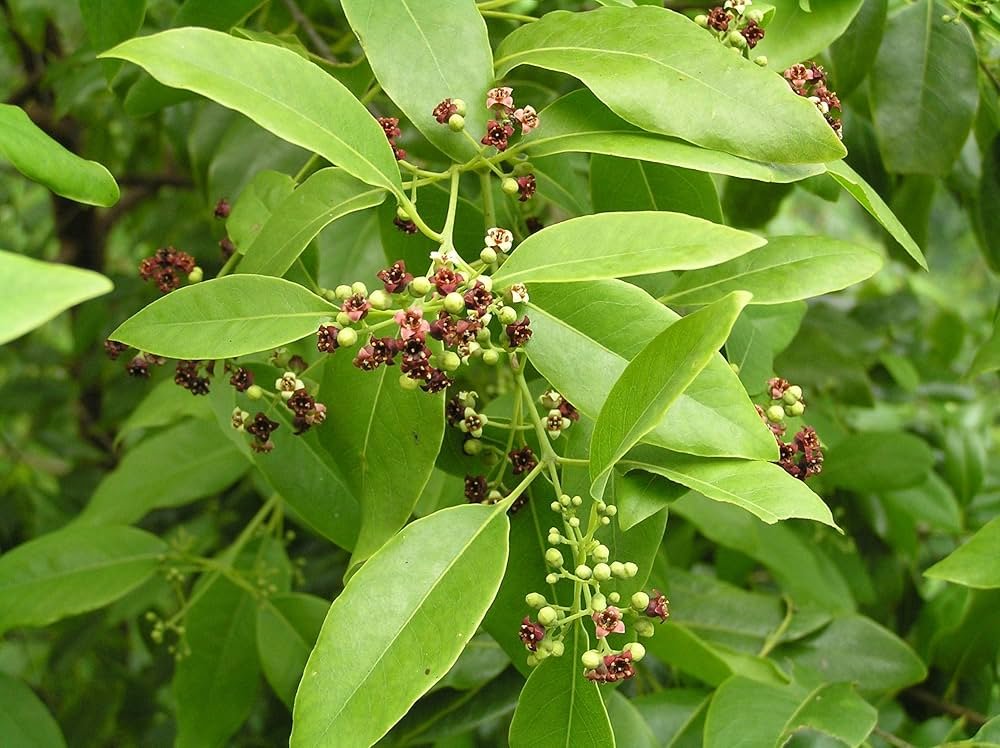
- Recently, a report released by the Sandalwood Development Committee constituted by the Union Government stated that global annual demand for sandalwood is around 5,000–6,000 tonnes.
- What is Indian Sandalwood?
- Indian Sandalwood scientifically known as Santalum album L. belongs to the Santalaceae family and is among the oldest and most valuable natural fragrance sources in the world.
- In India, it is popularly called: Chandan and Srigandha.
- The tree is mainly prized for its heartwood and essential oil, which release a long-lasting aroma.
- Soil: It grows best in slightly alkaline soil. Ideal pH range is 6.7 to 7.5. It requires good drainage and cannot survive in waterlogged areas.
- Climate: It prefers hot and humid regions and the suitable temperature range is 12°C to 35°C.
- Growth Pattern: Indian sandalwood is a slow-growing, long-duration crop which takes nearly 20 years to develop high-quality heartwood (which is the main source of sandalwood oil).
- Regeneration: The tree naturally regenerates in two ways – through seeds or through root suckers, especially after old trees are uprooted and stumps removed.
- Economic Importance: Sandalwood and its oil possess very high commercial value. They are widely used in Aromatherapy, Soap manufacturing, Perfumery, Cosmetics and Pharmaceutical products.
- Major Sandalwood Growing States in India: Karnataka, Tamil Nadu, Andhra Pradesh, Telangana, Maharashtra, Madhya Pradesh, Gujarat and Bihar.
- Reasons for Decline in Sandalwood Production: Despite its value, sandalwood output has reduced significantly due to multiple challenges:
- Illegal felling and smuggling because of high market price
- Loss of natural habitat caused by deforestation
- Slow growth rate, making returns very delayed
- Pest attacks and diseases, affecting plantation survival
FAQs
Q1. What is Indian Sandalwood?
It is Santalum album L., a highly valued aromatic tree from the Santalaceae family, prized for its heartwood and essential oil.
Q2. Where does sandalwood grow best?
In slightly alkaline soils (pH 6.7–7.5) with good drainage, under hot and humid climates (12°C–35°C).
Q3. How long does it take to produce quality sandalwood?
It is a slow-growing tree, requiring nearly 20 years to develop high-quality heartwood.
Q4. What are the main uses of Sandalwood?
Sandalwood and its oil are used in aromatherapy, perfumery, cosmetics, soaps, and pharmaceuticals.
Q5. Why has sandalwood production declined in India?
Due to illegal felling, habitat loss, slow growth rate, and pest/disease attacks.