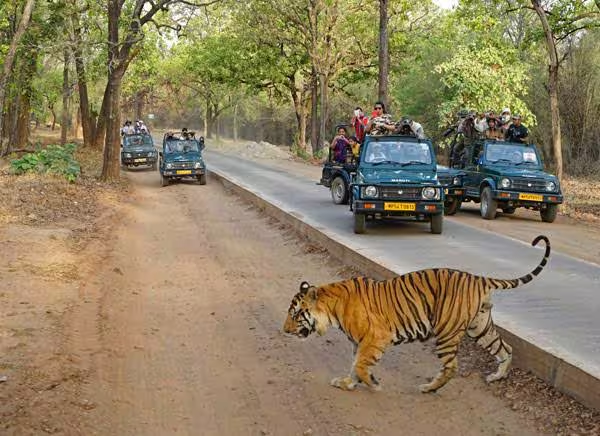
- The Madhya Pradesh High Court directed the Bandhavgarh Tiger Reserve’s field director to submit a detailed report on recent tiger deaths inside the reserve and surrounding areas.
- About Bandhavgarh Tiger Reserve:
- Location: Umaria district (Madhya Pradesh), across Vidhyan Range
- Topography: The terrain is highly varied and includes steep ridges, undulating forested slopes and open grass meadows.
- The reserve gets its name from Bandhavgarh Fort, located on the most prominent hill in the area. According to tradition, Hindu Lord Rama is believed to have given this fort to his brother Lakshmana to keep watch over Lanka. Hence the name Bandhavgarh, meaning “Brother’s Fort” in Sanskrit.
- Bandhavgarh is not only rich in wildlife but also in heritage. The reserve contains around 39 caves with Pali inscriptions and animal carvings and ancient remains such as stupas and statues dating back to the 1st century BCE.
- Vegetation (Flora): Dominated by Sal trees in valley regions and Bamboo stretches on lower slopes. Important plant species include Saj, Dhaora, Tendu, Arjun, Amla, Palas, etc.
- Wildlife Diversity (Fauna): Tigers (one of the highest tiger densities in the world), notable mammals (like leopards, Indian Bison, Sambar Tree, Spotted Deer, Nilgai, rhesus macaque monkeys, etc) and over 250 bird species (like Crested serpent eagle, Malabar Pied Hornbill, White-rumped vulture, Indian roller, etc.)
FAQs
Q1. Where is Bandhavgarh Tiger Reserve located?
In Umaria district of Madhya Pradesh, across the Vindhyan Range.
Q2. Why is Bandhavgarh Tiger Reserve called “Bandhavgarh”?
It is named after Bandhavgarh Fort, believed (by tradition) to have been gifted by Lord Rama to his brother Lakshmana. “Bandhavgarh” means “Brother’s Fort” in Sanskrit.
Q3. What is the topography of Bandhavgarh Tiger Reserve?
Steep ridges, undulating forested slopes, and open grass meadows.
Q4. What heritage sites are found at Bandhavgarh Tiger Reserve?
Around 39 caves with Pali inscriptions, animal carvings, stupas, and statues dating back to the 1st century BCE.
Q5. What kind of vegetation grows at Bandhavgarh Tiger Reserve?
Sal-dominated valleys, bamboo stretches on lower slopes, and species like Saj, Dhaora, Tendu, Arjun, Amla, and Palas.