On August 23, 2023, India etched its name in the annals of space history as the first nation to successfully soft-land a spacecraft near the Lunar South Pole. Launched by the Indian Space Research Organisation (ISRO), Chandrayaan-3 was a “follow-on” mission to Chandrayaan-2, designed to demonstrate end-to-end capability in safe landing and roving on the lunar surface.
With this success, India became the fourth country, joining the United States, Russia, and China, to achieve a soft landing on the Moon.
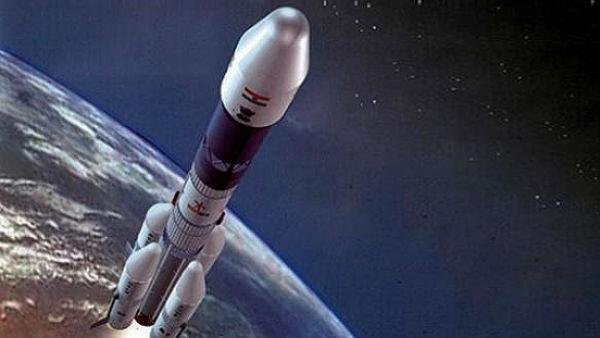
Chandrayaan-3 was launched on July 14, 2023, from the Satish Dhawan Space Centre, Sriharikota. The mission utilized the Launch Vehicle Mark-III (LVM3 M4), ISRO’s most powerful rocket.
- Launch Vehicle: LVM3 is a three-stage rocket (two solid strap-on motors, one liquid core stage, and one cryogenic upper stage).
- Initial Orbit: The rocket placed the spacecraft into an Elliptic Parking Orbit (170 x 36,500 km) before it began its journey toward the Moon.
- Mission Profile: Unlike direct-trajectory missions, Chandrayaan-3 used a cost-effective, circuitous route, leveraging Earth’s gravity to gain velocity.
Objectives of Chandrayaan-3 Mission
The mission was driven by three primary technological and scientific goals:
- Safe and Soft Landing: To prove India’s ability to land a module gently on the lunar terrain.
- Rover Demonstration: To deploy the Pragyan rover and demonstrate its mobility.
- In-situ Scientific Experiments: To conduct chemical and elemental analysis of the lunar surface near the south pole.
- Water-Ice Exploration: To search for frozen water in permanently shadowed craters, which is vital for future human habitats and rocket propellant.
Parts of the Chandrayaan-3 Mission
The total mass of the spacecraft was 3,900 kg. It consisted of two main modules:
1. Propulsion Module (2,148 kg)
The Propulsion Module (PM) acted as the “ferry,” carrying the Lander configuration from the launch orbit to a 100 km circular lunar orbit.
- SHAPE Payload: The PM carried the Spectro-polarimetry of Habitable Planet Earth. This tool studies Earth from lunar orbit to identify light signatures that could help scientists find smaller, habitable planets elsewhere in the universe.
2. Lander Module (1,752 kg)
The Lander Module comprised the Vikram Lander and the Pragyan Rover (26 kg).
- Landing Mechanism: It used an Automatic Landing Sequence (ALS) and four thruster engines to descend safely.
- Mission Life: Both the Lander and Rover were designed to operate for 1 Lunar Day (approx. 14 Earth Days).
Scientific Payloads and Their Roles
| Module | Payload | Scientific Objective |
| Lander | RAMBHA | To measure plasma density near the lunar surface. |
| ChaSTE | To measure the thermal properties of the lunar polar region. | |
| ILSA | To measure seismic activity and map the lunar crust and mantle. | |
| LRA | A passive experiment to understand the dynamics of the Moon system. | |
| Rover | APXS | To determine the chemical/mineral composition of soil and rocks. |
| LIBS | To analyze the elemental constitution (magnesium, aluminum, etc.). |
Timeline of the Chandrayaan-3 Mission
- July 14, 2023: Successful Launch.
- August 05, 2023: Lunar Orbit Insertion.
- August 17, 2023: Lander Module separated from the Propulsion Module.
- August 18 & 20, 2023: Deboosting maneuvers to slow the craft and lower its orbit to 30 km x 100 km.
- August 23, 2023: Historic Touchdown at 69.36°S, 32.34°E (the “Shiv Shakti Point”).
- August 24, 2023: Pragyan Rover rolled out to begin exploration.
What Differentiates Chandrayaan-3 from Chandrayaan-2?
Following the 2019 failure of the Chandrayaan-2 lander, ISRO shifted from a “success-based design” to a “failure-based design.”
- Expanded Landing Area: The target zone was increased from 500m x 500m to 4km x 2.4km, giving the lander more flexibility.
- Structural Robustness: The lander’s legs were strengthened to withstand higher landing velocities, and its weight was increased for better stability.
- Thruster Modification: The central 5th thruster was removed, leaving 4 engines to provide better control.
- Increased Fuel/Power: Vikram was equipped with more fuel for longer travel to alternative sites and additional solar panels to ensure power generation regardless of orientation.
Chandrayaan-3 vs. Russia’s Luna-25
While India and Russia were racing for the South Pole, their approaches differed significantly:
| Factor | Chandrayaan-3 (India) | Luna-25 (Russia) |
| Path | Economical, circuitous (23 days to orbit) | Direct trajectory (6 days to orbit) |
| Payload | 3,900 kg (Includes Rover) | 1,750 kg (No Rover) |
| Mission Life | 14 Earth Days | Planned for 1 Year |
| Outcome | Successful Landing | Crashed during orbit reduction |
Significance of the Chandrayaan-3 Mission
The success of this mission has far-reaching strategic, economic, and scientific implications:
- Global Reputation: India is now a leading player in the “exclusive space club,” enhancing its standing in the Artemis Accords.
- Economic Growth: The success has boosted investor confidence in India’s space-tech startups and private sector (e.g., satellite deployments).
- Scientific Temper: It serves as a catalyst for space education and inspires future generations of Indian scientists.
- Strategic Positioning: With the global space race heating up, Chandrayaan-3 positions India as a cost-effective and reliable alternative for international space cooperation.
- Future Missions: The data gathered provides a foundation for Chandrayaan-4 and the LUPEX mission (collaboration with Japan) to establish a sustainable lunar presence.
Way Forward
Chandrayaan-3 marks the beginning of the Lunar Economy. As we move toward 2030, the focus shifts to using the Moon as a “pit-stop” for deep space exploration. The low lunar gravity and availability of resources (like oxygen and hydrogen from ice) could revolutionize interplanetary travel, making it cheaper and more sustainable. India’s Space Policy 2023 continues to support this vision by encouraging private participation and ensuring that space remains a sustainable frontier for all mankind.