| Important Questions for UPSC Prelims/ Mains/ Interview
1. What is Distributed Renewable Energy (DRE) and how does it differ from conventional energy systems? 2. What is the current status of India’s renewable energy landscape? 3. Why is Artificial Intelligence (AI) crucial for the next phase of India’s energy transition? 4. How can AI transform Distributed Renewable Energy systems? 5. What is meant by the concept of an India Energy Stack? 6. What governance and regulatory challenges arise in AI-energy convergence? 7. How does AI-powered DRE align with India’s strategic goals such as Net Zero 2070 and Atmanirbhar Bharat? 8. What structural challenges must India address to scale AI-powered DRE? 9. What outcomes can be expected from AI-RE convergence in the next few years? |
Context
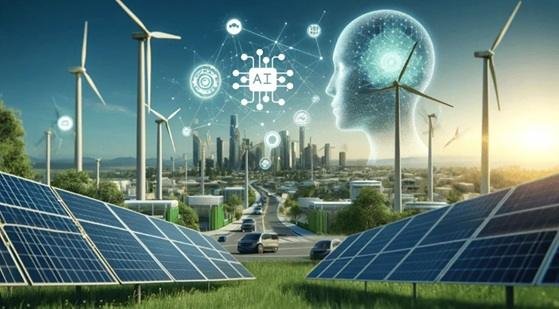
At the India AI Impact Summit held at Bharat Mandapam, policymakers and global experts discussed the theme of building a “Global Mission on AI for Energy” through a citizen-centric India Energy Stack. India’s leadership highlighted the transformative potential of Artificial Intelligence (AI) in scaling Distributed Renewable Energy (DRE). As India accelerates its renewable transition, the focus is shifting from merely expanding capacity to intelligently managing decentralised energy systems through digital innovation.
Q1. What is Distributed Renewable Energy (DRE) and how does it differ from conventional systems?
- Distributed Renewable Energy (DRE) refers to decentralised renewable power systems located close to the point of consumption.
- These systems operate at small scales, ranging from a few kilowatts to megawatts.
- Examples include:
- Rooftop solar panels
- Solar irrigation pumps
- Small wind turbines
- Biomass-based units
- Unlike centralised grids, DRE promotes energy decentralisation.
- It enables consumer participation, transforming users into prosumers (producer-consumers).
- It reduces transmission losses by generating power locally.
- It enhances energy access in rural and remote areas.
- It supports community-level energy resilience.
Q2. What is the current status of India’s renewable energy landscape?
- Around 52% of India’s installed power capacity now comes from non-fossil sources.
- Solar energy constitutes a significant portion of this capacity.
- The DRE segment has expanded rapidly in recent years.
- Major government schemes driving this growth include:
- Pradhan Mantri Surya Ghar Muft Bijli Yojana
- Pradhan Mantri KUSUM Yojana
- Public expenditure has been substantial in rooftop solarisation and agricultural solarisation.
- Technology integration has improved coordination among consumers, vendors, banks, and DISCOMs.
- India is transitioning from centralised generation dominance toward decentralised participation.
Q3. Why is Artificial Intelligence crucial for the next phase of energy transition?
- Traditional grids were designed for unidirectional power flow.
- The rise of prosumers creates bidirectional energy flows.
- Increasing renewable penetration introduces variability and intermittency.
- Grid stress increases with decentralised generation.
- Real-time balancing of demand and supply becomes complex.
- AI enables predictive rather than reactive system management.
- It supports demand response and load optimisation.
- AI reduces operational inefficiencies through data-driven insights.
Q4. How can AI transform Distributed Renewable Energy systems?
- Forecasting and Predictive Analytics
- AI improves weather forecasting accuracy.
- It predicts solar generation patterns.
- It enhances scheduling efficiency.
- Asset Monitoring and Maintenance
- AI tracks performance of rooftop systems across regions.
- Predictive maintenance reduces downtime.
- Grid Stability Management
- AI enables real-time load balancing.
- It mitigates voltage fluctuations.
- Energy Trading Enablement
- Facilitates peer-to-peer electricity trading.
- Supports business-to-business renewable transactions.
- Demand Response Systems
- Predicts peak demand patterns.
- Optimises distribution infrastructure.
- Cost Efficiency
- Reduces wastage.
- Improves utilisation of existing assets.
Q5. What is meant by the concept of an India Energy Stack?
- The India Energy Stack refers to interoperable digital layers for the energy ecosystem.
- It draws inspiration from India’s Digital Public Infrastructure model.
- It aims to integrate generation, distribution, metering, and trading systems.
- Key components may include:
- Smart meters
- AI-based analytics platforms
- Digital identity for energy assets
- Open APIs for energy markets
- It promotes interoperability and open standards.
- It seeks to prevent monopolisation by global AI corporations.
- It enhances data-driven governance in the energy sector.
Q6. What governance and regulatory challenges arise in AI-energy convergence?
- Energy transition increases system complexity.
- Data governance becomes critical due to large-scale energy data generation.
- Risks of AI monopolisation by major technology companies may emerge.
- Cybersecurity threats may increase with digital grid integration.
- Absence of open standards can lead to vendor lock-in.
- Regulatory clarity is needed to balance innovation and oversight.
- Open-source AI ecosystems can promote decentralised innovation.
- Data sovereignty concerns must be addressed.
Q7. How does AI-powered DRE align with India’s strategic goals?
- It supports India’s Net Zero 2070
- It aligns with India’s Nationally Determined Contributions (NDCs).
- It promotes Atmanirbhar Bharat by fostering indigenous technological capacity.
- It enhances industrial competitiveness through reliable energy supply.
- It reduces fossil fuel dependency.
- It strengthens energy security.
- It promotes citizen-centric development models.
Q8. What structural challenges must India address to scale AI-powered DRE?
- Legacy Grid Constraints
- Infrastructure must be modernised for bidirectional flows.
- Smart transformers are needed.
- Financial Stress of DISCOMs
- Financial restructuring is required.
- Revenue models must adapt to decentralised generation.
- Digital Infrastructure Gaps
- High-speed connectivity is essential.
- Data interoperability must be ensured.
- Skill Development
- Workforce training in AI-energy integration is necessary.
- Capacity-building in rural regions is critical.
- Policy Coordination
- Harmonisation between energy and IT ministries is required.
- Clear guidelines for AI deployment must be established.
Q9. What outcomes can be expected from AI-RE convergence in the next few years?
- Reduction in overall electricity costs for consumers.
- Improved grid stability under high renewable penetration.
- Greater prosumer participation in energy markets.
- Enhanced industrial productivity due to reliable power supply.
- Better predictive governance in energy planning.
- Improved rural energy access.
- Stronger integration of climate and energy objectives.
- Emergence of India as a global innovator in AI-energy systems.
Conclusion
India stands at a critical intersection of energy transition and digital transformation. With a rapidly expanding renewable base and growing Distributed Renewable Energy capacity, the next phase of progress depends on intelligent system management. The convergence of AI and DRE can transform India from a reactive energy administrator into a predictive, citizen-centric energy innovator. However, success will depend on regulatory clarity, open digital standards, infrastructure modernisation, and balanced governance. If implemented strategically, AI-powered DRE can position India not merely as a technology adopter but as a global leader in sustainable and decentralised energy systems.