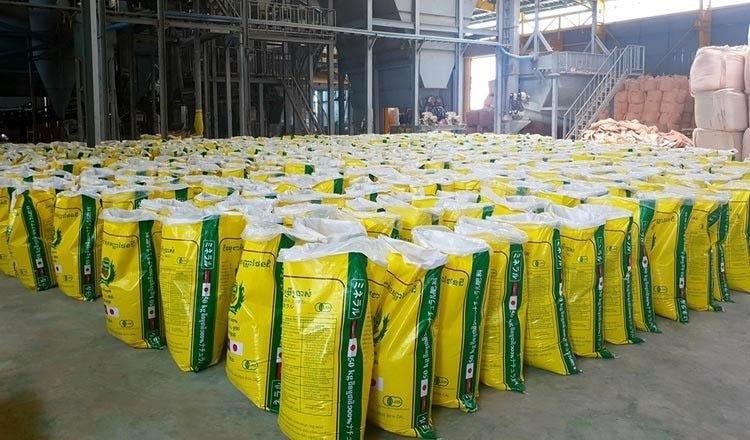
| Important Questions for UPSC Prelims/ Mains/ Interview
1. What is the structural framework of the fertiliser industry in India? 2. How does the government regulate pricing in the fertiliser sector? 3. How are distribution and movement of fertilisers controlled? 4. What are non-subsidised and speciality fertilisers, and why are they important? 5. What is the significance of the recent Uttar Pradesh ban on non-subsidised fertilisers? 6. What are the broader structural challenges in India’s fertiliser sector? 7. How do excessive controls affect market efficiency and investment? 8. What reforms are necessary to ensure sustainability and food security? |
Context
Recently, the Government of Uttar Pradesh prohibited the sale of non-subsidised fertilisers by urea manufacturers and suppliers in the state. The decision was taken in response to allegations of “tagging,” wherein farmers were allegedly compelled to purchase speciality fertilisers along with subsidised urea. The move has reignited debate on the extent of state control in India’s fertiliser industry, one of the most heavily regulated sectors in the country. The issue raises fundamental questions regarding subsidy dependence, nutrient imbalance, investment climate, and long-term agricultural sustainability.
Q1. What is the structural framework of the fertiliser industry in India?
- The fertiliser industry is among the most regulated sectors in India due to its direct link with food security.
- Chemical fertilisers such as urea, DAP (Di-Ammonium Phosphate), MOP (Muriate of Potash), and NPK complexes form the backbone of Indian agriculture.
- The sector operates under extensive government oversight in pricing, subsidy allocation, and distribution planning.
- Both public and private sector companies function within a tightly controlled regulatory framework.
- Despite partial decontrol measures, effective market freedom remains limited.
Q2. How does the government regulate pricing in the fertilizer sector?
- The Maximum Retail Price (MRP) of urea is fixed at ₹266.5 per 45-kg bag and has remained largely unchanged since 2012.
- Although some fertilisers are officially decontrolled, pricing remains indirectly regulated.
- Companies receive fixed subsidies per bag.
- Subsidy eligibility requires adherence to government-notified price ceilings.
- Excess profits may be adjusted against subsidy claims.
- The subsidy regime ensures affordability for farmers but distorts price signals.
- Artificially low prices, especially for urea, encourage excessive nitrogen use.
- The fertiliser subsidy bill constitutes a significant fiscal burden on the government.
Q3. How are distribution and movement of fertilisers controlled?
- The Department of Fertilisers (DoF) prepares an agreed supply plan based on projected agricultural requirements.
- Allocation is determined state-wise, season-wise, and month-wise.
- At the state level, district authorities allocate fertilisers dealer-wise.
- Companies must dispatch fertilisers according to official rail and road movement plans.
- Once fertilisers reach designated railheads, local agriculture officers control their distribution.
- As a result, private companies have limited autonomy over quantity, location, and timing of sales.
Q4. What are non-subsidised and speciality fertilisers, and why are they important?
- Non-subsidised fertilisers include speciality nutrients such as:
- Water-soluble fertilisers
- Calcium nitrate
- Zinc sulphate
- Bentonite sulphur
- Micronutrients and bio-stimulants
- These products are primarily used in high-value crops like fruits, vegetables, and sugarcane.
- They are applied in smaller quantities but offer higher nutrient-use efficiency.
- Unlike subsidised fertilisers, they are significantly more expensive due to the absence of subsidy support.
- Though their market size is small compared to bulk fertilisers, they play a key role in promoting balanced fertilisation.
Q5. What is the significance of the recent Uttar Pradesh ban on non-subsidised fertilisers?
- The state government prohibited urea manufacturers from selling non-subsidised fertilisers.
- The action was based on allegations of “tagging,” which refers to forced bundling of products.
- Industry representatives argue that:
- Cross-selling is a standard commercial practice.
- Both categories are sold through the same dealer network.
- The speciality fertiliser market is relatively small.
- The ban raises concerns regarding regulatory overreach.
- It may restrict farmer access to efficiency-enhancing fertiliser products.
Q6. What are the broader structural challenges in India’s fertiliser sector?
- Overdependence on subsidies creates fiscal stress and discourages efficiency.
- Imbalanced nutrient application results from artificially cheap nitrogen fertilisers.
- Excessive nitrogen usage affects soil health and environmental sustainability.
- Supply constraints occasionally lead to urea being sold above MRP in certain regions.
- Multiple layers of regulation reduce market responsiveness.
- The sector faces challenges in aligning food security goals with environmental sustainability.
Q7. How do excessive controls affect market efficiency and investment?
- Frequent regulatory interventions create policy uncertainty.
- Capital-intensive industries require stable regulatory frameworks to attract investment.
- Restrictive controls discourage private innovation in advanced fertiliser technologies.
- Banning organised players may create space for unregulated and low-quality operators.
- Reduced competition can weaken product quality and farmer awareness.
- Investor sentiment may deteriorate due to unpredictable policy decisions.
Q8. What reforms are necessary to ensure sustainability and food security?
- Gradual rationalisation of fertiliser subsidies should be undertaken to reduce distortions.
- Direct Benefit Transfer (DBT) mechanisms can improve targeting efficiency.
- Balanced nutrient use should be promoted under initiatives such as Soil Health Card schemes.
- Encouragement of speciality fertilisers can enhance nutrient-use efficiency.
- A transparent and predictable regulatory framework should be established.
- Technological innovation in nano-fertilisers and precision agriculture should be incentivised.
- Policy reforms must balance affordability, environmental sustainability, and industrial competitiveness.
Conclusion
The fertiliser industry is central to India’s agricultural productivity and food security. However, excessive regulatory controls, heavy subsidy dependence, and market distortions pose long-term sustainability challenges. The recent Uttar Pradesh ban highlights the delicate balance between preventing unfair practices and avoiding regulatory overreach. Moving forward, India must gradually reform its fertiliser policy to promote balanced nutrient use, encourage innovation, attract investment, and ensure fiscal prudence while safeguarding farmers’ interests. Sustainable agricultural growth requires not just affordable inputs but efficient and rational policy design.