Context
Researchers have developed a new genome-editing strategy to tackle genetic disorders, especially those caused by nonsense mutations. This is being seen as a major breakthrough in genetic medicine. This new approach, known as PERT (Prime Editing–Mediated Read-Through), shifts the paradigm from expensive, personalized gene therapy to a “universal repair” mechanism that could treat thousands of different genetic conditions at once.
What are Nonsense Mutations and why are they so destructive?
Nonsense mutations are unwanted genetic changes that prematurely stop protein synthesis, leading to incomplete or non-functional proteins. Nearly 25% of all human genetic disorders are caused by a specific error called a nonsense mutation.
- DNA acts like a manual for building proteins. A nonsense mutation introduces a premature “stop sign” (termination codon) in the middle of a gene sequence.
- Incomplete Proteins: When the cell’s machinery hits this stop sign, it stops building the protein. The result is a short, “truncated,” and non-functional protein.
- The Consequence: Without these essential proteins, the body cannot function correctly, leading to inherited diseases like Cystic Fibrosis, Duchenne Muscular Dystrophy, and certain cancers.
How does the new PERT strategy differ from traditional CRISPR methods?
- Traditional Approach (Mutation-by-Mutation): Scientists had to identify the specific mutated gene and design a custom CRISPR tool to fix it. This was extremely slow, technically complex, and expensive.
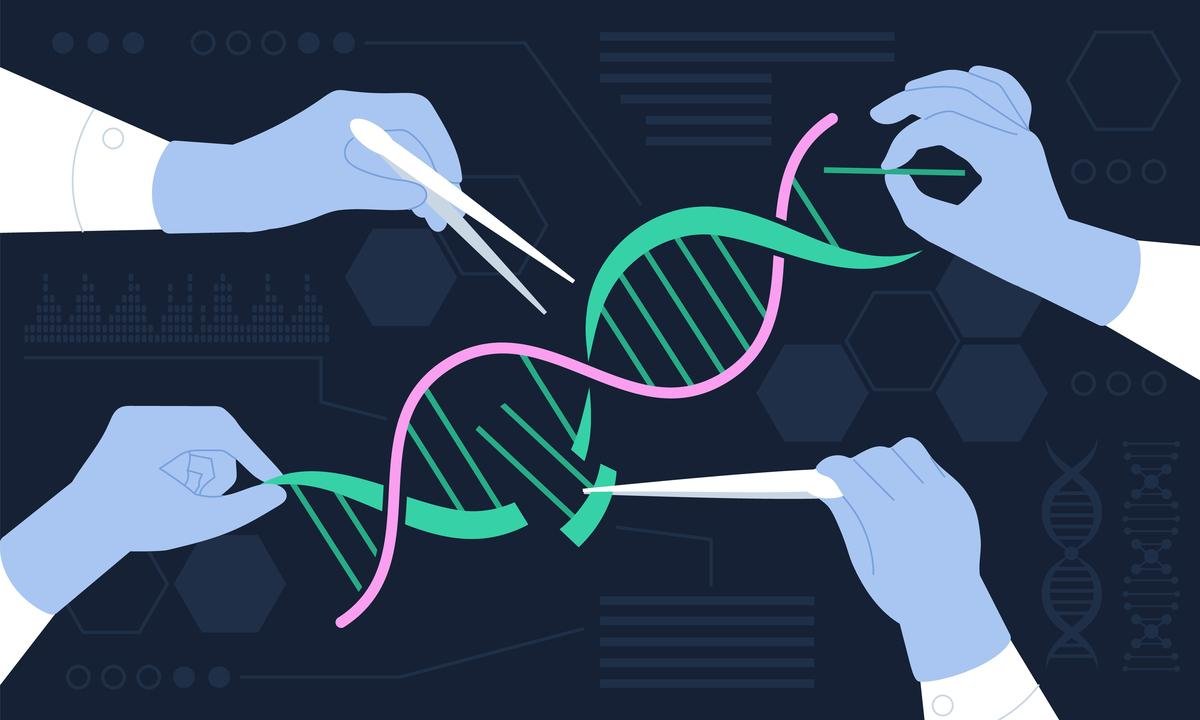
- PERT uses a highly precise version of CRISPR called Prime Editing. Unlike standard CRISPR, which cuts both strands of DNA (double-strand breaks), Prime Editing acts like a “search-and-replace” tool that edits the DNA without damaging the structure.
What is the role of “Engineered tRNA” in this universal repair?
The real innovation of the PERT strategy lies in its use of engineered transfer RNA (tRNA).
- The Bypass Mechanism: Scientists engineer a specific tRNA that is programmed to ignore the “fake” stop signs created by nonsense mutations.
- Protein Restoration: When this engineered tRNA is introduced into the genome, it allows the cell to “read through” the premature stop signal and continue building the full, functional protein.
- A genome is the complete set of genetic instructions (DNA) found in an organism, containing all the information required for it to function, develop, and reproduce. In humans, this includes 23 pairs of chromosomes in the nucleus plus mitochondrial DNA, totaling over 3 billion base pairs, which are present in nearly every cell.
- Universal Application: Because the same stop signals are used across many different genes, this single intervention can potentially correct thousands of different types of nonsense mutations simultaneously. You don’t need to customize the treatment for every patient; one tool fixes them all.
Strategic Importance
This breakthrough represents a major leap in Biotechnology and Genomics.
- Precision Medicine vs. Universal Therapy: While the world has been moving toward “Precision Medicine,” PERT shows that “Universal Repair” might be more practical for mass public health.
- By avoiding double-strand DNA breaks, Prime Editing reduces the risk of “off-target” mutations, making it a safer candidate for human clinical trials.
- Economic Impact: this could drastically lower the cost of gene therapy, making it accessible for patients in the Global South.
- Ethical Considerations: As with all genome editing, this brings up debates on “Germline vs. Somatic” editing. For now, PERT is targeted at Somatic cells (non-reproductive cells) to treat existing diseases.