- The Chattisgarh Forest Department, in order to conserve the rare Malabar Pied Hornbill, has started setting up special “hornbill restaurants” inside Udanti Sitanadi Tiger Reserve (Gariband district).
- What are Hornbill Restaurants: These “restaurants” are naturally created patches of fruit-producing trees that provide regular food for hornbills.
- About Malabar Pied Hornbill (Scientific name: Anthracoceros coronatus)
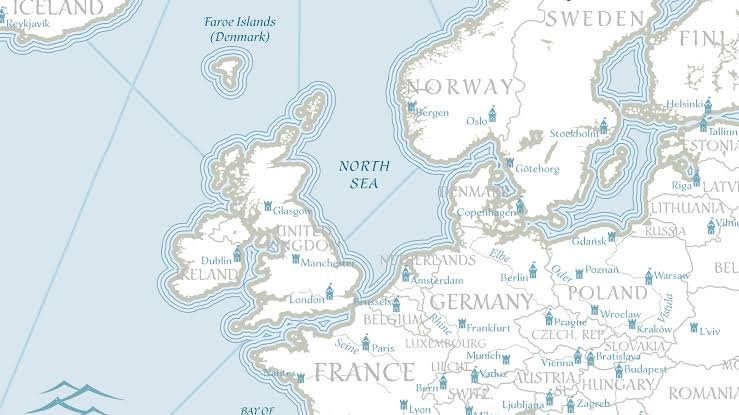
- It is native only to the Indian subcontinent with main habitats including the moist forest of the Western Ghats, Himalayan foothills of India and Nepal, Central Indian Satpuda Hills and forest regions of Sri Lanka.
- This limited geographical spread makes the species vulnerable to habitat loss.
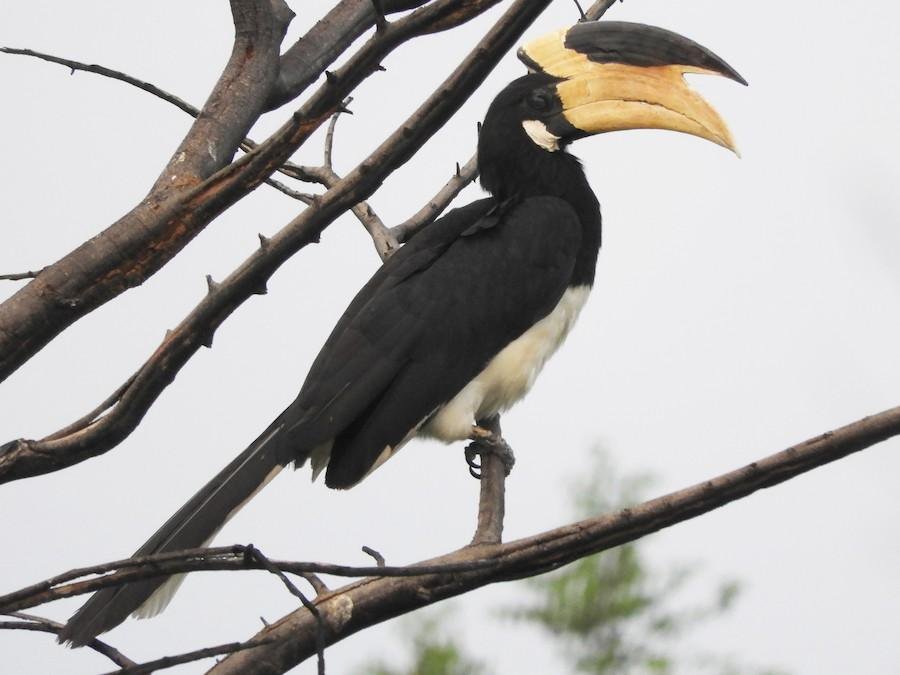
- Physical Features
- Mostly black body with white underparts
- Long, pale-coloured tail
- Large yellow-and-black bill with a casque on top
- Strong wings adapted for forest flight
- Diet Pattern: It is primarily frugivorous (eats fruits) while consuming small insects occasionally.
- It is also a keystone species as it helps in seed dispersal after eating fruits which supports natural regeneration of trees.
- Conservation Status: Near Threatened (IUCN status). The bird is not yet endangered but faces growing risks from deforestation, habitat fragmentation, and food scarcity.
- Hence, proactive steps like hornbill restaurants are being taken before the situation becomes critical.
FAQs
Q1. What are hornbill restaurants?
They are patches of fruit-bearing trees created to provide regular food for hornbills.
Q2. Where is the Malabar Pied Hornbill found?
It is native to the Indian subcontinent – Western Ghats, Himalayan foothills, Satpuda Hills, and Sri Lanka.
Q3. What does the bird (Malabar Pied Hornbill) look like?
It has a black body, white underparts, a long pale tail, and a large yellow-and-black bill with a casque.
Q4. Why is Malabar Pied Hornbill called a keystone species?
Because it disperses seeds after eating fruits, helping forests regenerate naturally.
Q5. What is the conservation status of Malabar Pied Hornbill?
It is listed as Near Threatened by IUCN due to habitat loss and food scarcity.