Context
- The Bihar government has proposed a tourism development project worth ₹62.87 crore inside Bhimbandh Wildlife Sanctuary.
- The proposal has attracted attention because construction in protected areas is subject to legal restrictions, including a Supreme Court order restraining construction in such areas.
About Bhimbandh Wildlife Sanctuary
- Location
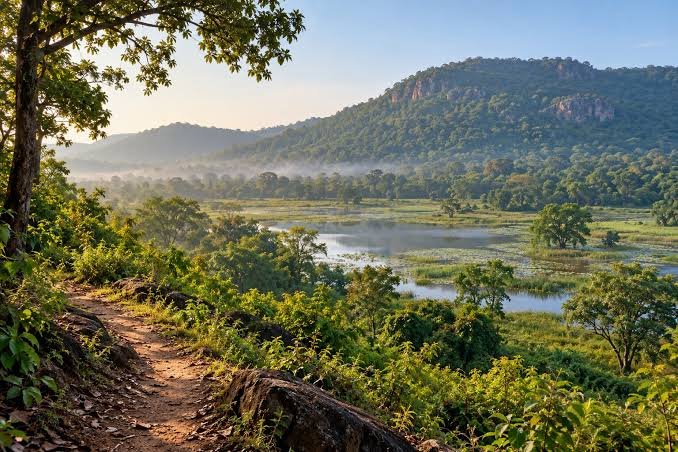
- Located in Bihar, in the Kharagpur Hills.
- Situated south of the Ganga River, along the northern edge of the Chota Nagpur Plateau.
- Covers an area of approximately 682 sq. km.
- Drainage System: Its drainage network is associated with four major river systems Ganga, Gandak, Kosi and Son.
- Special Feature: The sanctuary is particularly known for its natural hot springs.
- Vegetation: Its dominant vegetation type is Northern Tropical Moist Deciduous Sal forest.
- Flora (Plant Life): Important plant species found here include: Sal (Shorea robusta), Terminalia tomentosa, Adina cordifolia, Syzygium cumini and Aquatic macrophytes (aquatic plants visible to the naked eye).
- Fauna (Animal Life): The sanctuary provides habitat to several wild animals, including: Leopard, Sloth bear, Hyena, Wolf, Large Indian civet and Barking deer.
Frequently Asked Questions (FAQs)
Q1. Where is Bhimbandh Wildlife Sanctuary located, and what is its geographical significance?
It is located in Bihar’s Kharagpur Hills, south of the Ganga River, along the northern edge of the Chota Nagpur Plateau. It covers approximately 682 sq. km.
Q2. What is Bhimbandh Wildlife Sanctuary particularly known for?
The sanctuary is particularly known for its natural hot springs, which are a distinctive geographical feature of the protected area.
Q3. What type of vegetation is found in Bhimbandh Wildlife Sanctuary?
Its dominant vegetation is Northern Tropical Moist Deciduous Sal forest. Important plant species include Sal, Terminalia tomentosa, Adina cordifolia, Syzygium cumini and aquatic macrophytes.
Q4. Which major wild animals are found in Bhimbandh Wildlife Sanctuary?
The sanctuary provides habitat to several animals, including leopards, sloth bears, hyenas, wolves, large Indian civets and barking deer.